The team fitness options that actually work in North Vancouver are the simple ones: booking a group class together, running a step challenge designed for teams rather than heroes, putting a properly supported Grouse Grind day on the calendar, and building small movement defaults into the workweek. The options that fail are the grand annual gestures with no follow-through.
Here is each one, with the design details that separate morale-builders from HR headaches.
Book a coached class as a team outing
A coached, station-based session suits mixed-fitness groups better than almost any other format, because stations let each person work at their own load and pace while still sharing the room — the deconditioned newcomer and the marathoner both finish tired, and nobody is publicly last. When you approach any studio, ask three things: how many people they can host, how the coach scales for beginners, and whether your group joins a public session or gets the room to itself.
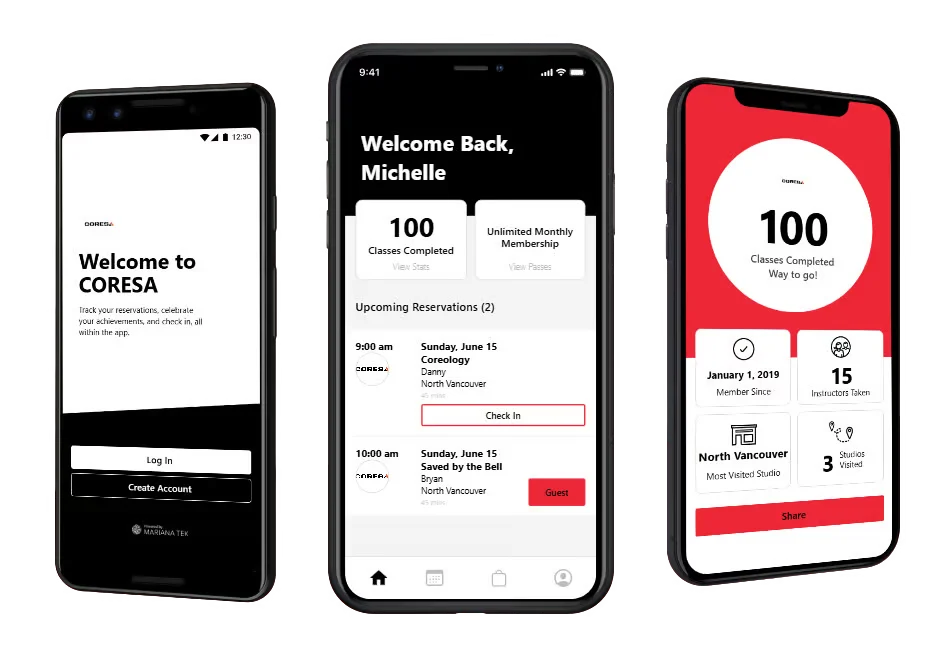
At Coresa, ask about group bookings on a free consult or through the contact page — a fifteen-minute walkthrough answers those questions faster than any email thread.
Step challenges that don't backfire
Step challenges collapse when they become individual leaderboards: the already-active lap the field, and everyone else disengages by day four. The fixes are structural, not motivational.
- Score team totals, not individual rankings, with teams mixed at random
- Set targets relative to each person's own baseline so improvement wins, not fitness history
- Keep the duration modest — a few sharp weeks beat a quarter-long slow fade
- Give honourable mention to North Vancouver's free vertical: hills and staircases deserve more credit than the step counter gives them
The Grind as a team event — responsibly
A team Grouse Grind day is a genuine North Shore bonding ritual, but it needs a runway. Announce it far enough ahead that people can prepare, make participation truly optional with a parallel plan for those who pass — riding the gondola up to cheer the hikers at the top is a perfectly good role — and confirm trail status through Grouse Mountain's official channels, since the route closes seasonally. Nothing sours a wellness initiative faster than an event that quietly pressures people into an ordeal.
Give the group a preparation runway too: circulate a simple weekly build-up — stairs, hill walks, a class or two — in the weeks beforehand, so the day itself feels like a graduation rather than an ambush. The teams that summit together trained together first, even loosely.
Small defaults beat annual gestures
The highest-return workplace fitness is not an event at all. Walking one-on-ones that head up the hill and come back down, a norm that short meetings can happen on foot, leadership that visibly leaves for a midday session — these boring defaults compound while the annual mountain-conquering photo op fades from memory by Thursday. If the team wants structure behind the culture change, a shared block of small group personal training is the coached version of the same idea.
Common questions
What group size works for a studio class visit?
It depends entirely on the studio's room and coaching model, which is why capacity should be your first question rather than an assumption. Some rooms handle a full department; others do their best work hosting a team of eight.
How do we include colleagues at very different fitness levels?
Choose formats where scaling is built into the structure — stations, intervals by effort rather than pace, movement options at every difficulty. Avoid anything race-shaped, since races reward existing fitness and embarrass everyone else in front of their coworkers.
Is a one-off event or an ongoing program better for morale?
Ongoing-but-light beats grand-but-once. A monthly class outing plus weekly walking defaults builds a culture; a single extravagant challenge builds a photo album. Ideally the event launches the routine rather than replacing it.
Does Coresa run corporate fitness programs?
Our honest advice is the same we would give about any studio: ask directly about group bookings and describe your team's size and goals. Come by for a tour and have that conversation in the actual space — it is the fastest way to find out what fits.