You keep progressing in group classes by changing your inputs, because the format won't change them for you. Five levers do most of the work: picking honest loads, writing down what you lift, recruiting the coach to your specific goal, adjusting how often you attend, and — eventually — pairing classes with dedicated strength work. Plateaus in a class setting almost always trace to the same root: the sessions kept varying while your effort settled into a comfortable groove.
Load honesty: the rack is your progression system
A class hands you the structure, but you choose the resistance — which makes the dumbbell rack the real progression mechanism. The most common stall is silent: months of grabbing the same familiar weights because they're proven and pleasant. A workable rule: when the final reps at a strength station stop demanding your full attention, the weight goes up next round. You'll oscillate — heavier on good days, lighter after rough nights — but the trend line should climb across months.
Track something, because memory flatters
Recall smooths everything into "about the same," which is exactly how stalls stay hidden. Thirty seconds after class — the key loads, a treadmill speed, one word on how it felt — is enough to expose a flat month that memory would have varnished over. A falling heart-rate cost for a repeated interval, week over week, is progress you can bank without lifting anything heavier; why studios put heart rate on screens explains how to read those numbers as your own baseline.
Make the coach part of your program
Coaches calibrate to what they know about you, so tell them what you're chasing — a first full push-up, a faster interval pace, a heavier hinge. Then use them deliberately:
- Ask for the harder progression on movements you already find easy
- Request a form check on one lift per week rather than vague general feedback
- Say the word plateau out loud — it changes what a coach watches for
- Report back: what you tried since last week and how it went
Frequency and the recovery that funds it
If you've attended twice weekly for months and flatlined, a third session is often the cleanest lever left: more practice, more total work, more chances to push. But adaptations are paid for during recovery, so protect sleep as you add volume and keep at least one deliberately easy day in the week — a stretch and recovery session can be that easy day instead of a third hard one.
When classes need a strength partner
The one thing a class format can't hand you is long rest, and genuinely heavy lifting is built on it. After a year or so of consistent attendance, people chasing bigger strength numbers usually benefit from adding focused sessions with unhurried sets and a bar plan written for them personally — structured strength coaching fills that gap while classes keep covering conditioning and work capacity. The two compound rather than compete.
Common questions
Is it a real plateau or just a bad stretch?
Give it three weeks of data before deciding. Loads, paces, and energy all dip with poor sleep, stress, or a heavy season of life; a genuine plateau is flat numbers across several weeks while everything else is normal.
Should I lift heavier or attend more often first?
Heavier first — it costs zero extra time and usually uncovers months of untapped progress. Reach for frequency once you're loading every station honestly and still not moving.
Do I need an app to track class workouts?
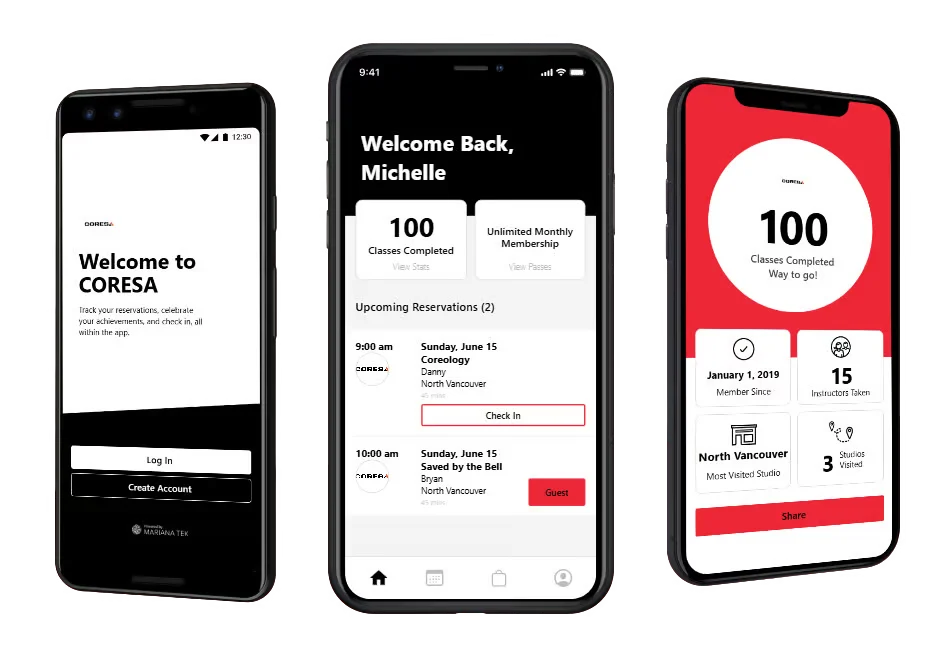
No — a dated note on your phone with a few numbers beats any abandoned app. The tool matters far less than the ten-second habit of recording something after every session.
Does switching class types count as progression?
Variety is a stimulus, not a strategy. Rotating formats can break monotony and expose weak spots, but progress still means doing more, or doing it better, over time — measured within whatever formats you rotate through.