You keep weight off by treating maintenance as its own skill — something you practise deliberately, not a prize that arrives with the goal weight. Most regain doesn't come from one disastrous month; it comes from quietly retiring the behaviours that produced the loss, because the finish line felt like permission. The people who hold their results keep a training floor they never negotiate below, anchor the habits to identity rather than to a completed goal, and act on small regain signals while correction is still cheap.
Why maintenance fails by default
The diet was a project with an end date; the body you now have is a permanent commitment with no ribbon to cut. Meanwhile biology leans the wrong way — after weight loss, appetite tends to run higher and expenditure a little lower than before, and the environment that produced the original gain is still standing exactly where you left it. Walk back into old defaults and old defaults win. Maintenance needs a plan the way losing did; almost nobody writes one.
Trade the goal for an identity
Goal-based habits expire on achievement — that's their design. Identity-based ones don't. "I'm doing twelve weeks" ends; "I'm someone who trains Tuesdays and Saturdays and walks every day" has no expiry. The rebuild from milestone-chasing to default-living is genuinely coachable, and it's the territory of habit and lifestyle coaching — arguably more valuable after the loss than during it.
Set two floors: training and movement
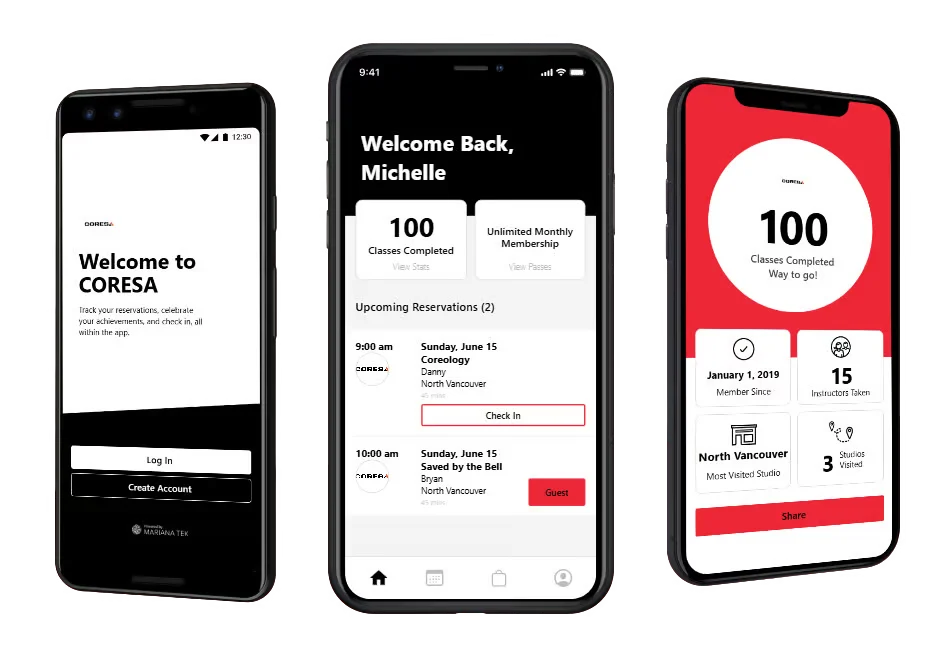
A floor is the minimum that survives every season — sickness-adjacent weeks, work crunches, Decembers. Something like two sessions a week plus a daily walk holds muscle, engine and routine at a defensible line; good seasons build above it, bad seasons never dip below it. Keeping the floor structural rather than aspirational is what booking is for — standing slots in the Coresa app outlive any given week's enthusiasm.
Build a regain early-warning system
- Define a weight band, not a single number — bodies breathe, and chasing one digit breeds either panic or denial.
- Choose a checkpoint you'll actually run: a same-conditions monthly weigh-in, or the honest pair of jeans tried on the first of each month.
- Pre-decide the response to hitting the band's top edge — typically re-tightening the two habits that drift first for you, for a few weeks.
- Act at small drift. A little regain caught early is a fortnight's correction; discovered a year later, it's a whole new project.
Surviving the boring middle
Maintenance has no before-and-after, no milestones, no applause — just a life that quietly works, which is the victory and also the motivational problem. Two fixes: point your training at something new (a strength number, a hill, a season), and stay somewhere you're known, because community supplies the feedback the scale no longer does. If you built the loss with support, keep a thread of it — the maintenance version of Coresa's weight-loss coaching is lighter-touch, but the being-expected part still does its job.
Common questions
How long until my new weight feels stable?
The headwinds — elevated appetite, slightly lowered burn — ease gradually rather than on a date, and the first year typically demands the most vigilance. The behaviours, though, are permanent; what changes is how automatic they feel.
Do I have to track my food forever?
No. Most successful maintainers graduate from constant tracking to periodic checkpoints, re-deploying the tighter tools only when the early-warning system flags drift. Tracking is a wrench, not a lifestyle.
Is some regain normal?
Fluctuation within your band is normal and meaningless — water, food timing and training all move the number daily. The skill isn't preventing every wobble; it's responding at the band's edge instead of despairing past it.
Should my training change once I've hit my goal?
Keep the floor, change the point. Shifting from "lose weight" to "get strong" or "own the Grouse Grind" gives training a future instead of a past — and performance goals happen to be excellent weight-maintenance machinery.