Honestly? Neither. Motivation is a mood and discipline is a budget — both run out on exactly the weeks you need them most. The people who actually get fit build a third thing: an environment where training happens by default, so no feeling is required. Booked sessions, fixed slots, staged gym bags — design, not character.
The false choice
The motivation-versus-discipline debate assumes fitness is won by feelings — either the wanting-to kind or the forcing-yourself kind. But motivation reliably peaks at the start and sags around week four, and discipline depletes under work stress, poor sleep and family logistics precisely when life gets full. Building your training on either is building on weather.
Notice that people who've trained for a decade rarely describe themselves as motivated or disciplined. They describe Tuesday. Training is simply what Tuesday is.
Design beats feelings
Defaults do what willpower can't — they remove the decision entirely:
- Fixed slots. Same days, same times, recurring in the calendar like any other standing appointment
- Pre-commitment. A reserved class spot converts “should I go?” into “I'm expected”
- Friction removal. Bag packed the night before; a studio that sits on your existing route
- Social gravity. Train where people know your name and notice your absence
- Identity framing. “I'm someone who trains Tuesdays” outlasts any goal weight
The test of a good default is whether it holds on your worst realistic week — not the inspired one you're picturing while reading this. Design for the version of you that's tired, busy and mildly annoyed, and the good weeks look after themselves.
A booked session is borrowed discipline
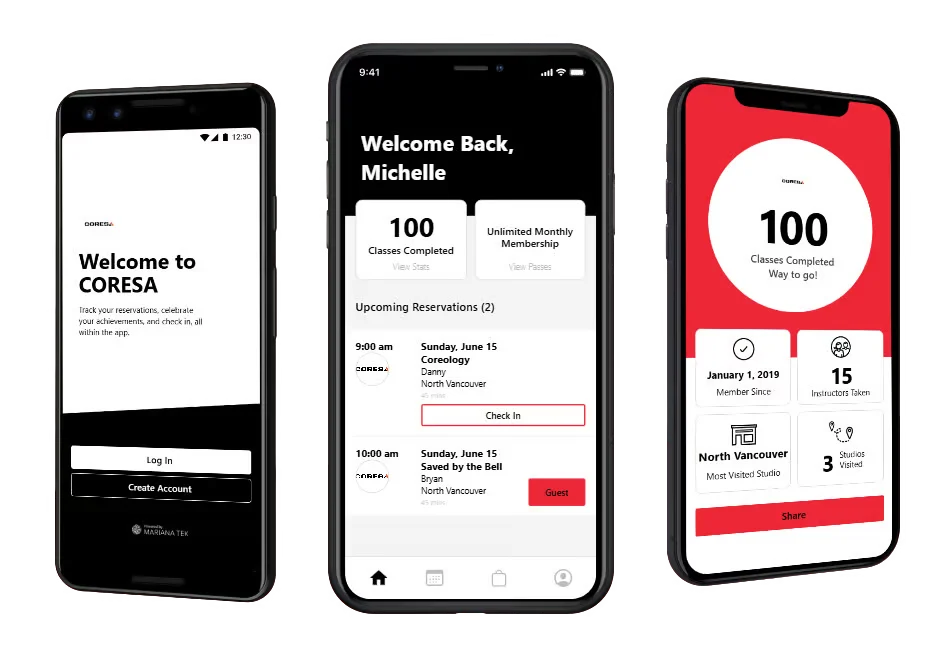
Reserving a class is the single highest-leverage item on that list, because it outsources the hard part. The decision was made on Sunday when you felt fine; Thursday-you just has to keep an appointment — and appointments involving other humans get kept at rates lonely intentions never match. Coresa's Coresa app exists for exactly this: lock the week in while resolve is high.
This is also the honest case for coached environments generally — structure, expectation and follow-up are adherence technology. It's the entire premise behind habit and lifestyle coaching: build the system around the person instead of bending the person around willpower.
For the days when the system wobbles
Some days every default fails and you genuinely don't want to go. Two moves help. Shrink the ask: commit only to arriving and doing the warm-up, with full permission to leave after — you almost never will. And protect the streak's spirit rather than its letter: a shortened session counts, a walk counts; the only entry that damages the ledger is quitting the ledger. For the first while, track attendance rather than outcomes — the showing-up streak is the one metric your system controls directly.
Common questions
Am I just lazy if I can't stay consistent?
Almost certainly not — you're under-systematized. People who look disciplined from the outside are usually running strong defaults: fixed times, booked spots, social expectation. Copy the architecture before you indict your character.
How long until training becomes automatic?
Longer than the internet's favourite 21 days — habit research suggests wide variation, from weeks to several months, depending on the person and the routine. Plan on your defaults doing the carrying for at least a season.
Should I train on days I really don't feel like it?
Show up and start; feelings usually follow action rather than precede it. The exception is genuine illness or serious sleep deprivation — then a lighter session or a rest day is the smart entry, not a failure.
What's the single highest-impact change I can make?
Book sessions in advance for a fixed weekly slot — ideally one a meeting can't take, like early morning. One reservation replaces a dozen daily negotiations with yourself.