
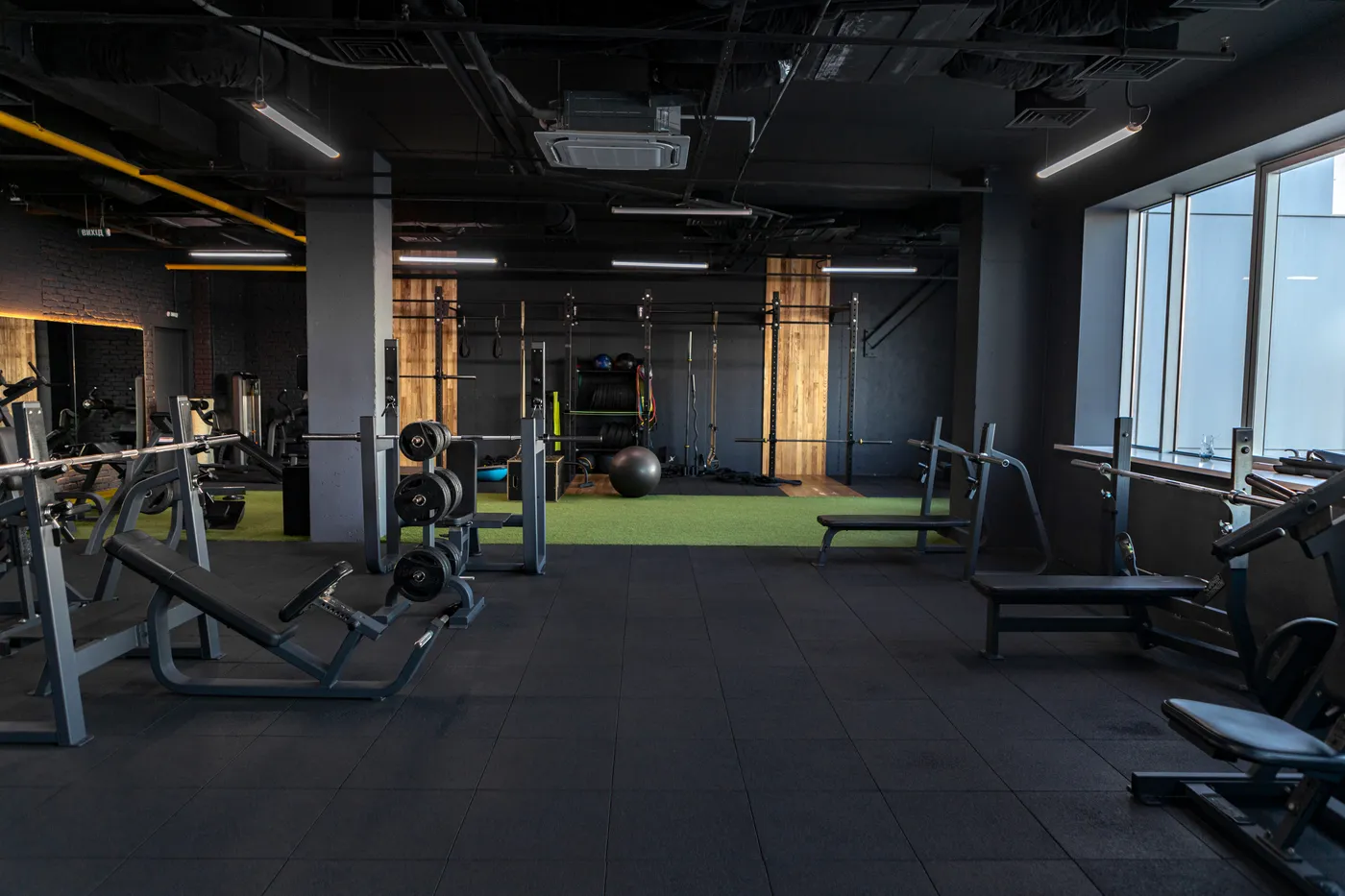
The difference is the access model, and everything else follows from it. A commercial gym sells open access: anyone with a membership, any time the doors are open, on a floor built for hundreds. A private gym limits who is in the room — by booked session, appointment or member cap — and usually wraps coaching into the price.
Neither is the better product. They are priced on different scarce things, and the right choice depends on which scarce thing you are missing: space to train alone, or a reason and a plan to train at all.
Side by side
| Commercial gym | Private gym | |
|---|---|---|
| Access | Open floor, long hours, sometimes 24/7 | Booked sessions or capped membership |
| Monthly cost | Low — you are the labour | Higher — coached hours are in the price |
| Crowding | Real at peak hours | Controlled by design |
| Programming | Yours to bring | Usually included and progressed for you |
| Supervision | Optional, billed separately | The core product at most studios |
| Equipment breadth | Wide — rows of everything | Curated — what coaching actually uses |
| Anonymity | Complete, for better and worse | Impossible, for better and worse |
| Who thrives | Self-directed lifters with a plan | People who want coaching, accountability, or a calmer room |
The honest case for the commercial gym
If you have a program, push yourself honestly and enjoy training alone, the commercial floor is the best deal in fitness: enormous equipment variety for the price of two coffees a week. The anonymity that sinks beginners is freedom for the experienced — nobody interrupts, nobody schedules you, and 6 am or 10 pm are both yours. Plenty of strong, consistent people never need anything else.
Where each model fails, and who it fails
The commercial model fails the anonymous: the beginner who does not know what to do, the restarter who drifts after three weeks, the injured-once who now hovers near the machines. Its business model tolerates — arguably depends on — memberships that outlive attendance, and no one on a floor of three hundred notices your absence.
The private model fails the solitary: if your training is your headphones hour, a coached room of eight is company you did not order. It also fails the budget-first shopper on a per-month comparison, because attention costs more than access — the arithmetic only flips when you count sessions actually attended and progress actually made.
Choosing, and the hybrid
Choose from your record: the last three attempts at consistency, and what ended them. Anonymity endings point private; logistics endings point to whichever is closest; boredom endings point commercial with a new program, or a box with a whiteboard. And the hybrid is legitimate — a cheap floor for solo cardio plus coached strength sessions is how a lot of experienced people structure a week. The wider category map, luxury clubs included, is in how to choose a gym in North Vancouver, and what "private" specifically buys at Coresa is on the private gym page.
Common questions
Is a private gym worth the extra cost for a beginner?
Usually, and the reason is unglamorous: beginners quit commercial gyms at famous rates, and coached rooms exist to prevent exactly that. Paying more per month for a habit that survives beats paying less for one that ends in March.
Can I get coaching at a commercial gym instead?
Yes — most sell personal training on top of membership, and good trainers work there. You are assembling the private model piecewise; compare the assembled price against a studio before assuming it is cheaper.
Do private gyms have worse equipment?
Less of it, chosen more deliberately. A coached studio needs racks, bars, dumbbells and conditioning tools, not thirty variations of the same machine. What matters is whether the room covers your program, not the inventory count.
Which is better if I travel constantly?
Commercial chains win on ubiquity. The workable compromise: coached sessions as your home anchor, a chain or hotel-gym plan for the road — our workouts library exists for exactly those weeks.