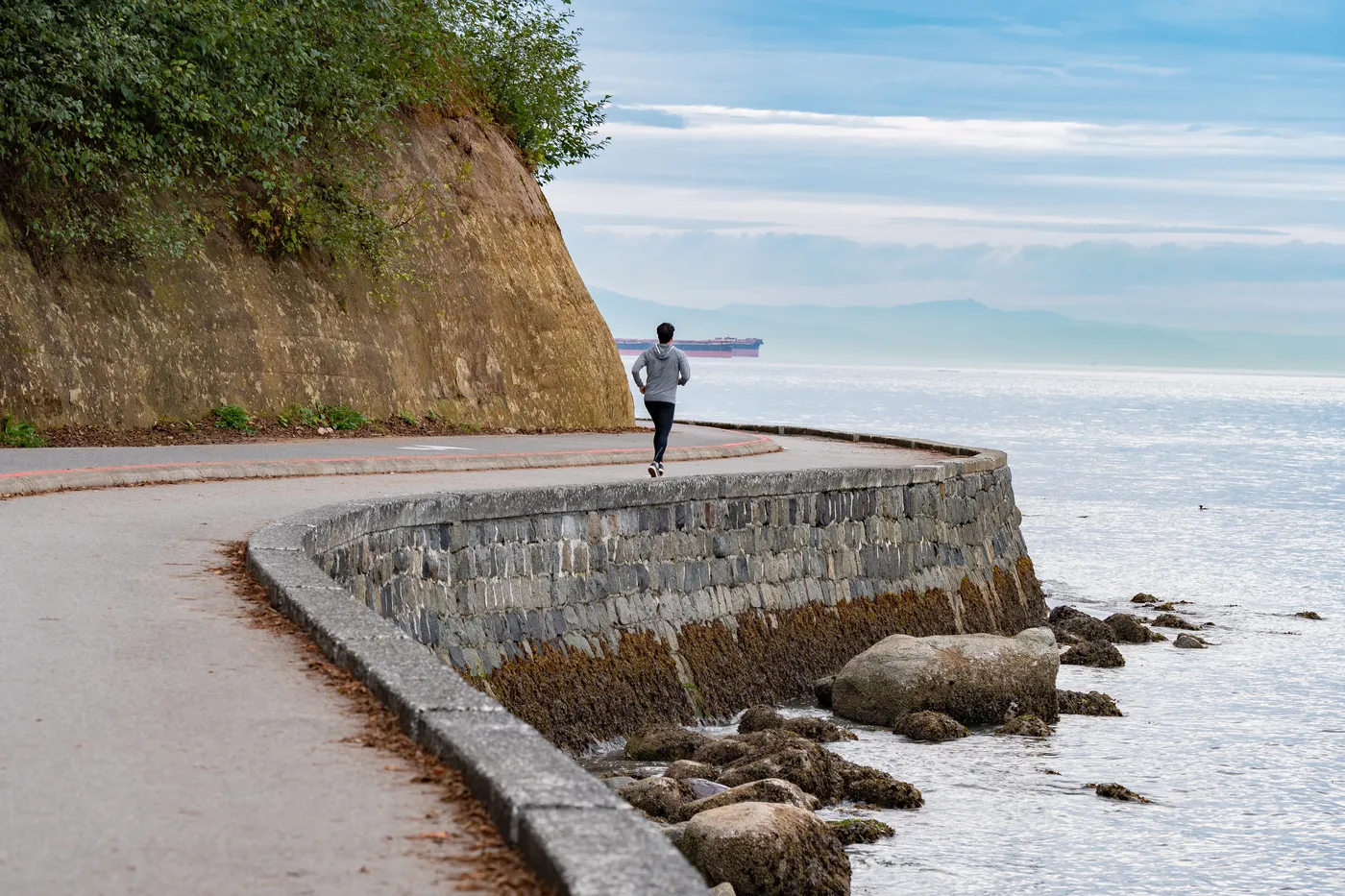
Yes — the Spirit Trail is one of the best running surfaces in North Vancouver precisely because it's the opposite of the North Shore's famous terrain: a mostly flat, mixed-use waterfront greenway with harbour views instead of relentless climbing. That makes it ideal for the easy and steady miles that should make up most of any runner's week.
The trade-off is that it's a shared path, not a race course — walkers, cyclists, dogs and strollers all have equal claim to it, and your training has to fit around that.
What you're actually running on
The trail threads along the waterfront through Lower Lonsdale and the Shipyards District and extends in both directions along the harbour, mixing paved path with boardwalk sections. Grades are gentle — short rises and ramps rather than true hills — and street crossings punctuate some stretches, so it suits rhythm running more than uninterrupted time trials.
The route has been built and connected in phases over the years, so check the City and District of North Vancouver trail maps for current extents rather than assuming any particular distance.
Slotting it into a training week
The Spirit Trail is built for the unglamorous majority of training: recovery jogs, easy runs, and long steady efforts where flat ground lets you hold form. Strides fit nicely on the straighter paved stretches.
For tempo work, go early — before the path fills — and accept that a crossing or a crowd may occasionally interrupt a rep. When a session demands precise, uninterrupted pacing, an indoor option like our treadmill interval classes is the cleaner tool, leaving the trail to carry the easy days.
One honest caveat: flat waterfront miles won't prepare your legs for the North Shore's technical terrain. Pair the Spirit Trail with hills — or the gym work covered in strength training for trail runners — if the mountains are where you're headed.
Etiquette and all-season footing
Keep right, pass on the left with an audible warning, and slow right down around dogs, kids and blind corners. Goodwill on a shared path is part of the running culture here, and it's what keeps the route pleasant for everyone using it.
- Autumn: wet leaves on pavement are genuinely slippery — shorten your stride through the leafy stretches.
- Winter: boardwalk sections stay slick long after the rain stops, and frosty mornings demand caution.
- The dark months: much of the local running window falls in darkness, so carry a light and wear reflective layers rather than assuming the path is lit throughout.
Common questions
How far can I run on the Spirit Trail?
Far enough for most training runs using out-and-back routing, with connecting paths extending the options. The honest answer is to consult current municipal trail maps, because the trail has grown in phases and its endpoints have shifted over the years.
Is it flat enough for a true recovery run?
Yes — that's its main gift to North Shore runners, who are otherwise surrounded by climbs. Heart rate stays where a recovery day needs it, which is much harder to manage on trail terrain.
When is the path quietest?
Early mornings, and rainy days generally. Sunny weekends and summer afternoons around the Shipyards are the busiest windows — better suited to relaxed jogging than structured sessions.
Is it a good place to start running from zero?
Close to ideal: flat, scenic, traffic-free for most of its length, with natural turnaround points. Pair walk-run intervals on the trail with a couple of weekly strength sessions and you have a legitimate beginner program.