Both windows work — Coresa opens at 6 am and closes at 8 pm precisely because morning people and evening people are both real — so this choice is less about physiology than about which hours your life will actually defend. The science, for the record, gives late-day training a slight performance edge that shrinks with routine; we've unpacked that evidence in the best time of day to work out. What follows is the decision itself: finding your calendar's weak points, pricing each window honestly, and committing properly to whichever you pick.
Find your calendar's failure points
Missed workouts aren't random; they're stolen by predictable forces, and each window has its own thieves. Evenings lose sessions to overrunning meetings, dinner plans, kid logistics and the accumulated fatigue of a spent day. Mornings lose them to short sleep, the snooze bar, and cold, dark starts through a Pacific Northwest winter.
So run the audit: list your last half-dozen skipped workouts and note when each was scheduled. The misses almost always cluster at one end of the day, and that cluster is worth more than any study — it's evidence about your life specifically.
The morning case, North Shore edition
Nothing competes for 5:30 am. No meeting will ever be booked there, nobody invites you anywhere, and the day hasn't yet produced a reason to skip — which is why dawn sessions post such high completion rates for anyone who can get out the door. Around here the case compounds: cross-harbour commuters can train before the boat leaves, and through the long wet season an indoor session at first light is immune to the weather that murders evening intentions. Early morning classes exist for exactly this crowd.
The costs are real too. An earlier bedtime becomes mandatory rather than aspirational — dawn training funded by five hours of sleep is failure on an installment plan — and the first sets feel wooden for a couple of weeks until your body accepts the new hour.
The evening case
By late afternoon you're warm, fed, fully awake and near your day's physical peak — heavy lifts and hard efforts genuinely go better, which is why competitive lifters gravitate there. Evening training also does double duty as decompression: the session becomes the wall between the workday and home, and whatever the office did to you gets sweated out instead of carried in the front door.
The bill: your calendar gets a full workday to sabotage you, willpower sits at its daily low, and vigorous exercise close to bedtime disturbs some people's sleep. With doors open until 8 pm the post-work window is wide enough — the question is whether you reach it with the session still intact.
Both windows, side by side
| Morning training | Evening training | |
|---|---|---|
| Biggest threat | Sleep debt and the snooze bar | Meetings, invitations, fatigue |
| Physical readiness | Lower at first; improves with routine | Naturally near its peak |
| What it gives the day | Certainty and done-by-breakfast momentum | An outlet for accumulated stress |
| Sleep interaction | Demands an earlier bedtime | Can push some people's sleep later |
| Tends to suit | Commuters, parents, planners | Slow starters, social trainers |
Choose, then rig the game
- Pick the window with fewer historical failures — trust the audit over your self-image.
- Run it exclusively for a month. Alternating windows reopens the negotiation every single day, and negotiation is where sessions die.
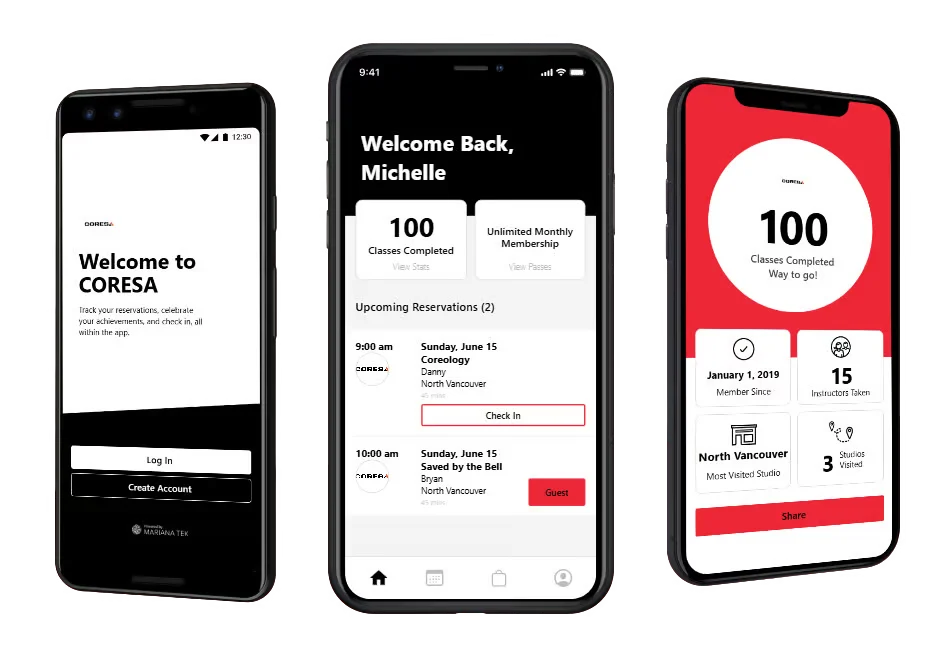
- Book ahead on the Coresa app so each session exists as an appointment before any excuse does.
- After four weeks, judge on one number only: sessions attended. High? Stay. Low? Run the other window for a month and compare the counts.
The window itself was never the prize. A mediocre time slot with a high attendance count beats a perfect one that keeps losing arguments to your life.
Common questions
My week genuinely varies — what if neither window can be fixed?
Then plan week by week instead of adopting one slot: sit down when you know your shifts or meetings and book that week's sessions in a single pass. A varied pattern you schedule deliberately behaves like consistency; a varied pattern you improvise behaves like quitting.
How long before a new window stops feeling terrible?
Give it about a month. The first fortnight of early training feels rough for nearly everyone, so quitting inside that stretch tells you nothing. Weeks three and four are where the honest verdict lives.
Do I have to commit to one window forever?
No — commit per season of life, not per lifetime. A new job, a baby or a changed commute can flip the right answer, and switching deliberately with a fresh month-long trial is entirely different from drifting between slots.
Should I eat before a very early session?
It's individual: plenty of people train comfortably at that hour on water and a coffee, while others need something small and carb-based to feel human. Test both approaches across a couple of weeks — your stomach and your performance will cast clear votes.