
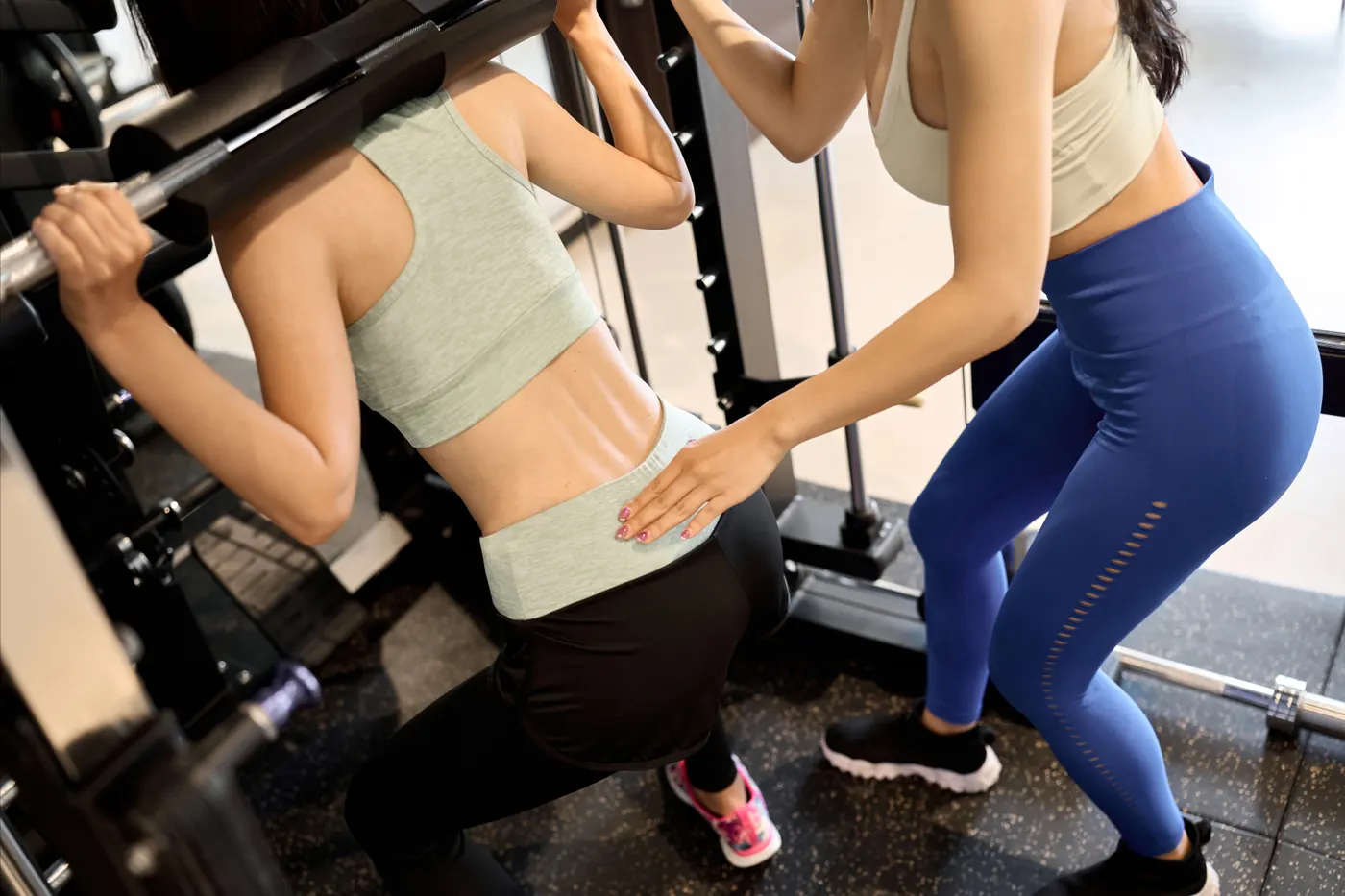
The back squat is the squat pattern's heavy end: bar across the upper back, the whole body braced around it, and more load available than any other squat variation offers. That ceiling is why it exists in the program — and why it is earned through the goblet and front squat rather than started with.
Respect and fear are different things. Coached, progressed patiently and held to the depth-you-control rule, the back squat is a career-length exercise for ordinary people, not just a powerlifting artifact.
What it trains
The whole lower body — quads, glutes, adductors — with the trunk and back working isometrically against the heaviest loads they will meet anywhere in the program. It is also the biggest single systemic stimulus on the strength menu, which is why it sits early in sessions.
Setup
- Bar just below shoulder height in the rack. Step under, set it across the meat of the upper back — high-bar position, on muscle, never the neck bones.
- Hands as close as shoulders allow, elbows pulled down to bind the bar into the back.
- Stand, two steps back, stance at shoulder width with toes slightly out.
- Big breath, full brace, eyes level — then sit between the hips.
The cues we use
- Bend the bar across your back
- Spread the floor with your feet
- Same speed down every rep — the descent is yours
Common faults, and the fixes
| Fault | Why it happens | The fix |
|---|---|---|
| Folding forward out of the bottom | Trunk losing to legs — hips rise, chest dives, the lift becomes a back exercise | Drop the load, pause at the bottom, lead with the chest; front squats for a block rebuild the priority |
| Depth shrinking as weight climbs | The oldest trade in lifting: range sold for numbers | The record tracks depth as part of the rep — a shallower rep is a different, easier exercise, and it does not count as progress |
| Knees caving on the drive up | Hips fatiguing under loads ahead of their strength | Spread-the-floor cue, a brief load reset, and lateral hip work in the accessory slots |
The ladder
Easier: Front squat — Whenever position degrades before legs do — the front rack referees what the back rack lets slide
Harder: Load, on a schedule — The back squat is its own progression: small plates, full depth, patient weeks — per the progressive-overload playbook
How it is loaded here
Nothing in the program rewards patience more. Loads move only on reps with full controlled depth and an intact brace — the last rep should look like the first, and a coach watching bar speed knows before you do. Beginners do not meet this lift until the front squat is boringly stable; that sequencing is deliberate and non-negotiable here.
When we swap it
- a history of back complaints: Front squat or heavy goblet work as the standing default — equal legs, kinder lever arms, per the bad-back page's logic
- shoulder mobility that cannot reach the bar: Wider grip and time, or simply stay with the front rack — no rule requires everyone to back squat
Common questions
Do I need a spotter?
In a rack with safety bars set correctly — which is how it is done here — the rack is the spotter. Failing safely onto pins is a skill worth one deliberate rehearsal.
High bar or low bar?
High bar for general training: it matches the upright pattern the rest of the program teaches. Low bar is a powerlifting tool with its own trade-offs, taught when someone has that specific goal.
Why is my back sore, not my legs?
Position or bracing is leaking — the load found your spine's muscles instead of your hips. That is a form conversation for your next session, not a training-through situation.