
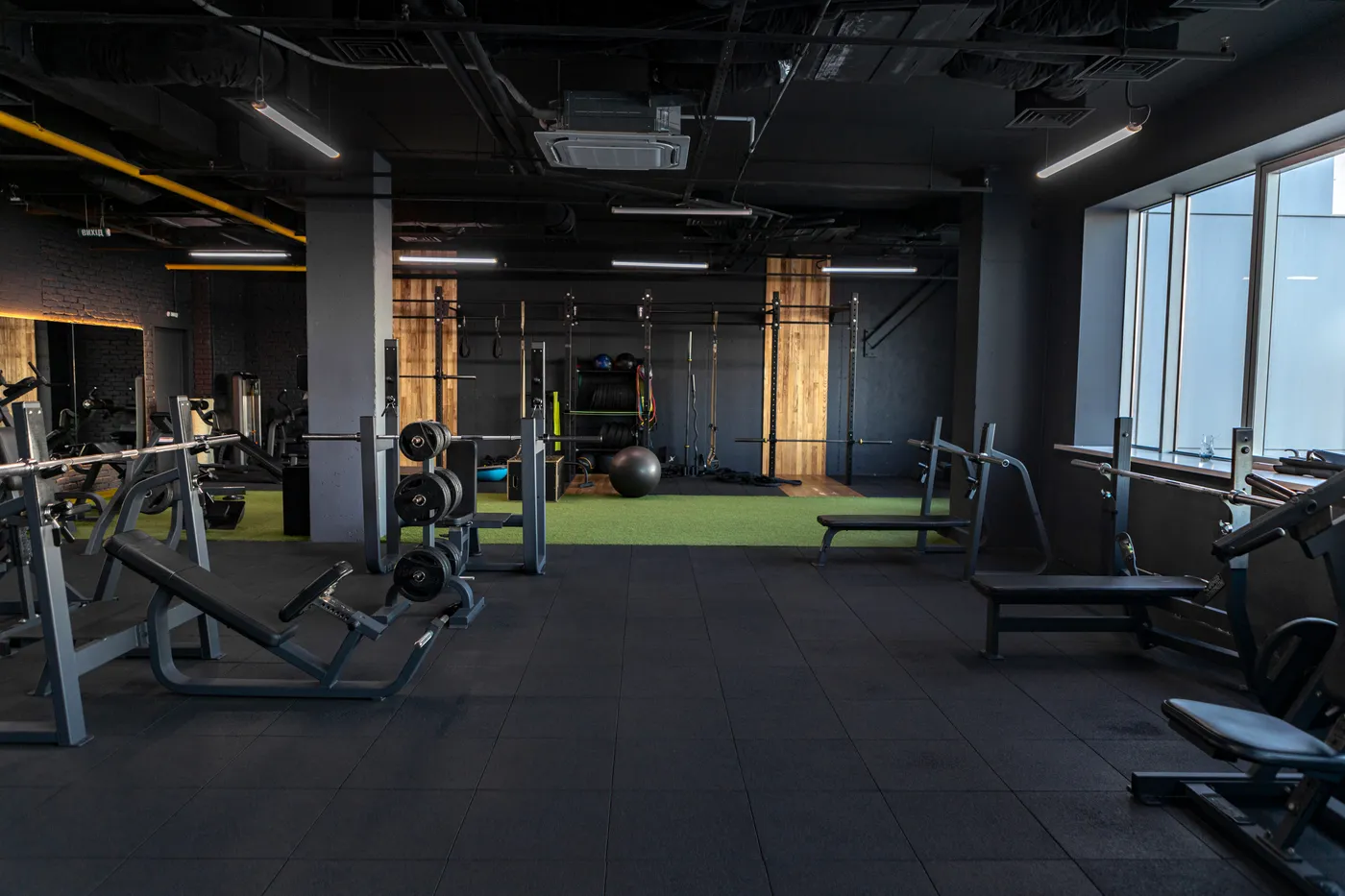
The standing cable chest press turns horizontal pressing into a whole-body event: cables at chest height from behind, and every press forward is matched by the trunk refusing to be pulled backward. No bench does that part for you.
It fills the bench-free slot in the pressing menu — smooth constant tension, easy load changes, and trunk work smuggled into every rep — which is why it appears both as an entry press and as honest volume after heavier work.
What it trains
Chest, shoulders and triceps through the press, with the trunk and hips working anti-extension and anti-rotation the entire set — a standing press is half core exercise, and the single-arm version turns that half into the headline.
Setup
- Cables at chest height, handles in hand, facing away from the stack.
- Staggered stance — one foot forward — ribs down, slight forward lean into the work.
- Press both handles forward to full reach, arms converging slightly.
- Return under control until the chest opens — no stack-slamming, no torso twisting.
The cues we use
- Press the room away
- Hips and shoulders square — no swivel
- Long reach, controlled return
Common faults, and the fixes
| Fault | Why it happens | The fix |
|---|---|---|
| Torso rotating or leaning back | Stack winning the trunk battle — too heavy for today's brace | Lighter, staggered wider, ribs down; the anti-rotation is the exercise, so keep it winnable |
| Short punchy reps | Range surrendered to load | Full reach and full chest-open return, on a stack that allows both |
| Shrugging shoulders toward the ears | Upper traps hijacking a tired press | Shoulders long and low — reset between reps if needed |
The ladder
Easier: Incline push-up — Where the pattern itself is being learned, the ladder's honest angles come first
Harder: Single-arm cable press, then heavier pressing — One handle turns the trunk demand up sharply; dumbbell and barbell pressing carry the load ceiling beyond
How it is loaded here
Moderate stacks, full ranges — the cable rewards smooth, honest arcs, and the trunk gives out before the chest at proud weights, which is information rather than failure. It earns a long second life as high-quality volume after heavy pressing days.
When we swap it
- shoulders mid-rehab-return: The adjustable height and smooth tension make it the press physio guidance often re-enters through — set angles per your assessment
- busy cable stations: Band presses from a rack upright replicate the pattern faithfully
Common questions
Is a cable press as good as a bench press?
For building maximum pressing load, no; for pressing with trunk integration and joint-friendly arcs, it is often the better slot in a general week. Different tools, both earning places.
Why does my balance wobble?
The backward pull is the exercise talking — stagger the stance more and let the wobble train down over sessions.
One arm or two?
Two for pressing volume, one for the anti-rotation feature at full volume. Programs here use both, labelled by intent.