Strip away the buzzword and "functional fitness" has a plain meaning: training the movement patterns your life actually runs on — squatting, hinging, pushing, pulling, carrying, and getting up off the ground — with enough load and range that the gym version makes the life version easier. That is the whole definition. No wobble boards required.
By that definition, most good strength training already qualifies, and plenty of things marketed as functional do not. Here is how we apply the honest version in a Lower Lonsdale training room.
Six patterns, one honest test
The test of a functional exercise is not whether it looks athletic — it is whether it loads a pattern you will use outside the gym:
| Pattern | At a station | In real life |
|---|---|---|
| Squat | Goblet and box squats | Chairs, car seats, gardening, crouching to a toddler |
| Hinge | Deadlift variations | The paddleboard, the compost bin, the flat-pack box |
| Push | Presses and push-up progressions | Roof boxes, heavy doors, a stroller on a hill |
| Pull | Row variations | Starting the mower, hauling a canoe onto the dock |
| Carry | Loaded walks, one- and two-handed | Groceries up from the Quay, a sleeping kid, a toolbox |
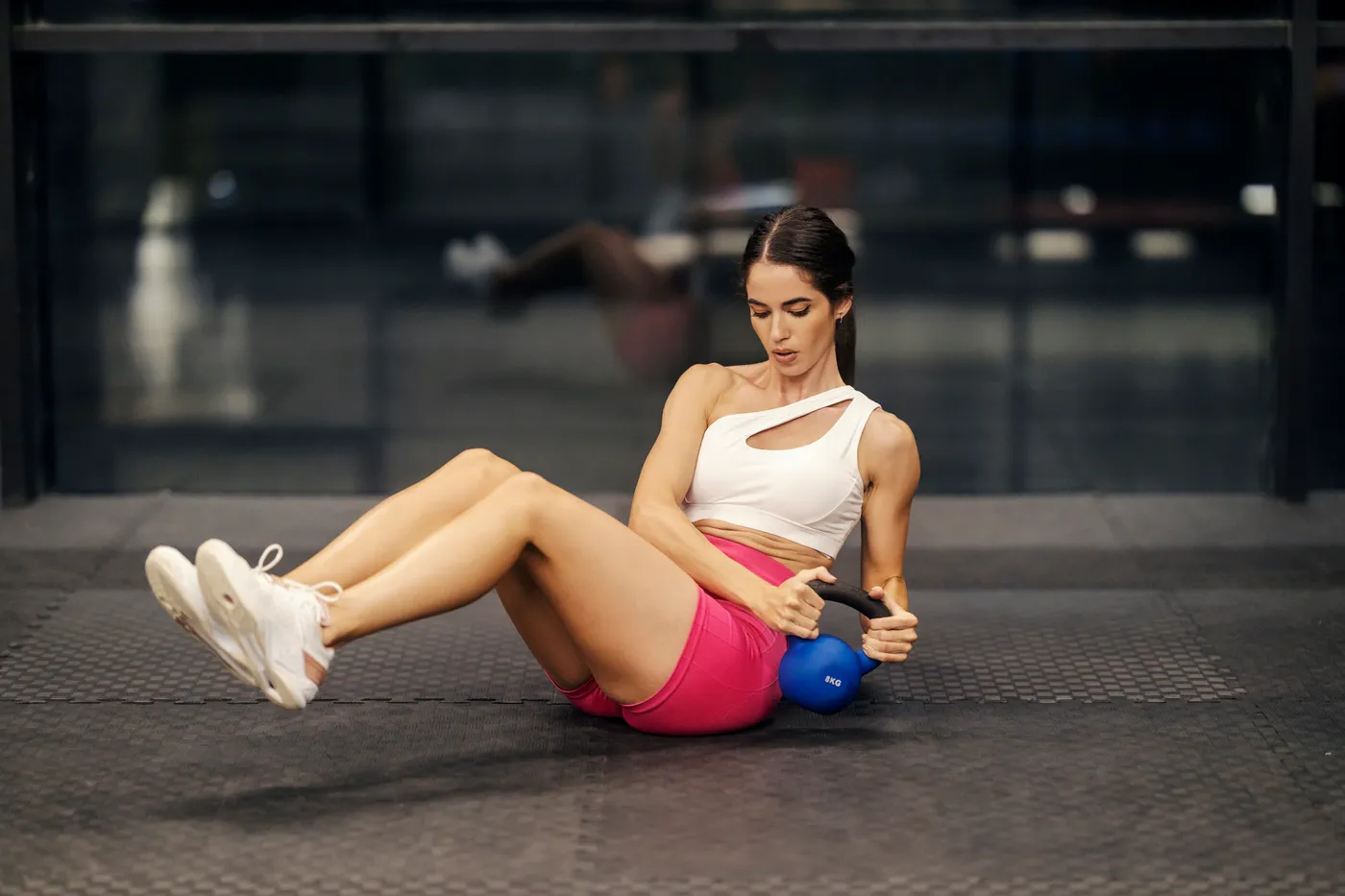
| Ground work | Get-ups and floor transitions | Crawl spaces, campsites, getting off the floor at any age |
Load and range are what turn rehearsal into training. Bodyweight patterns maintain what you have; progressively loaded patterns expand it.
Mountain life is a functional fitness exam
North Shore living grades your movement quality on a regular schedule: shouldering skis across the Cypress lot, stepping down wet granite, hauling a week of food uphill from Lonsdale Quay on foot. Station-based training maps onto it directly — a session might rotate you from a loaded step pattern to a hinge to a carry, which is roughly a North Shore Saturday with the scenery removed. The multiple-station circuit format is what lets a single hour touch that many patterns.
Mobility is half the job
A pattern you can only perform through half its range is half-functional. Range work therefore belongs inside the definition: controlled full-depth practice at the stations, plus dedicated stretch and recovery sessions for the hips, ankles, and upper back — the three areas desk hours quietly steal from. The target is usable range: positions you can get into and produce force in, which is what separates mobility from party-trick flexibility.
Functional does not mean casual
The label has a failure mode worth naming: "functional" sessions that never get harder. Patterns still obey progressive overload — a carry that never gets heavier is a stroll, and a squat that never gains depth or load is a habit, not an adaptation. The same progression logic that governs any strength program governs this one: small, tracked increases in load, range, or duration, week over week. What changes is which qualities get progressed, not whether progression happens.
That is also why coaching earns its keep here as much as in any barbell program — someone has to notice that this week's carry should be heavier, and that your hinge has quietly earned more range.
Who the functional frame fits best
Some people train for a mirror or a race result. The functional frame belongs to people who train for capacity:
- Parents, whose sport is lifting awkward, wriggling loads off the floor at unpredictable hours
- Trades and healthcare workers, whose bodies are their income and whose shifts are squats, carries, and reaches on repeat
- People 50 and up, for whom floor-to-standing ease, grip strength, and hip power are the difference between independence and caution
If that is your frame, say so on a consult call — coaching changes when the goal is "handle my life easily" rather than a number on a bar.
Common questions
Isn't all strength training functional, then?
Most sensible strength training is, and we would rather admit that than pretend to a secret method. The difference is emphasis: a functional frame prioritizes carries, single-leg work, ground transitions, and usable range over maximizing any single lift. Same tools, different scoring.
Do I need balance boards or unstable-surface training?
Rarely. Standing on wobbly things mostly makes you better at standing on wobbly things; loaded patterns on stable ground build the strength and control everyday balance actually draws on. Single-leg exercises deliver plenty of stability challenge with a far better return.
I do physical work all day — don't I already get this on the job?
Work supplies wear, not training: repetitive load with no progression, no recovery plan, and no balancing of neglected patterns. Training runs the equation in reverse — it strengthens what your job hammers and what your job skips, which is why demanding jobs pair so well with two coached sessions a week.
Can functional training work around an old injury?
Usually, because every pattern can be loaded through whatever range and variation your body currently accepts. Bring the history to your coach, and for anything unresolved or painful, see a physiotherapist first — training progresses faster when it starts from an accurate map.