Runners get more from strength training than almost any other group, and need surprisingly little of it: two focused sessions a week, built around calves, hips, and a small dose of jumping, will do more for your durability than another easy run ever could. The reason is tissue capacity — lifting raises the load your tendons, bones, and muscles can absorb, and running injuries are almost always a story of load exceeding capacity.
If your weekly kilometres unfold along the Spirit Trail or across the water on the seawall, consider this page the missing half of your training plan.
Why runners avoid the weight room — and pay for it in physio bills
Every hour a runner spends lifting feels like an hour stolen from running, so most skip it — until a calf strain or a grumpy knee steals six weeks instead. The economics only look bad before the injury. Running is thousands of single-leg impacts per outing; strength work expands what your legs can absorb, and it is far cheaper to build that capacity under a coach's eye than to discover its limit at kilometre eight.
There is a performance case too: stronger legs produce more force per stride, which research consistently links with better running economy — the same pace at a lower cost. You are not lifting instead of building running fitness; you are lifting so you can keep collecting it.
How little lifting a runner can get away with
Two sessions a week, prioritized ruthlessly, covers the minimum. Runners do not need a bodybuilder's menu — they need heavy-ish work on a short list of movements:
- A knee-dominant lift — split squats, step-ups — for the quads that manage climbs and descents
- A hip hinge — deadlift variations — for the glutes and hamstrings that drive propulsion
- Direct calf work, both straight-knee and bent-knee, so the soleus gets its share
- One carry or trunk exercise so posture holds when your form frays late in a long run
Inside our coached strength classes, those patterns form the backbone of the station rotation, with loads set by a coach — useful when free weights are unfamiliar territory.
Calves and hips: where running strength actually lives
The calf complex absorbs and returns more force during running than any other muscle group — working hardest of all at quicker cadences — yet almost no runner trains it directly. Heavy calf raises are boring and transformative in equal measure, and the bent-knee version matters because it reaches the soleus, the deep calf muscle doing much of the work at running speeds.
Hips are the other gap. Your lateral hip muscles keep the pelvis level every time you land on one leg; when they fatigue, the knee drifts inward and downstream irritation follows. Single-leg station work — split squats, lateral lunges, step-up variations — trains exactly that control under load.
Plyometrics: a teaspoon, not a scoop
Jumping teaches tendons to store and return energy — the elastic component that makes fast runners look effortless — but it is potent and easy to overdose. Begin with low hops, skips, and pogo bounces measured in seconds rather than minutes, and only after basic strength is in place. In a coached room the dose is controlled for you, which is precisely the supervision plyometric work demands.
Fitting lifts around your running week
Keep hard things together and easy things easy. Lift on the same day as a quality run — separated by a few hours where possible — or beside your easiest running days, so genuine recovery days stay untouched. Expect some heaviness in the legs after the first few sessions; it fades within weeks as the new stimulus becomes familiar.
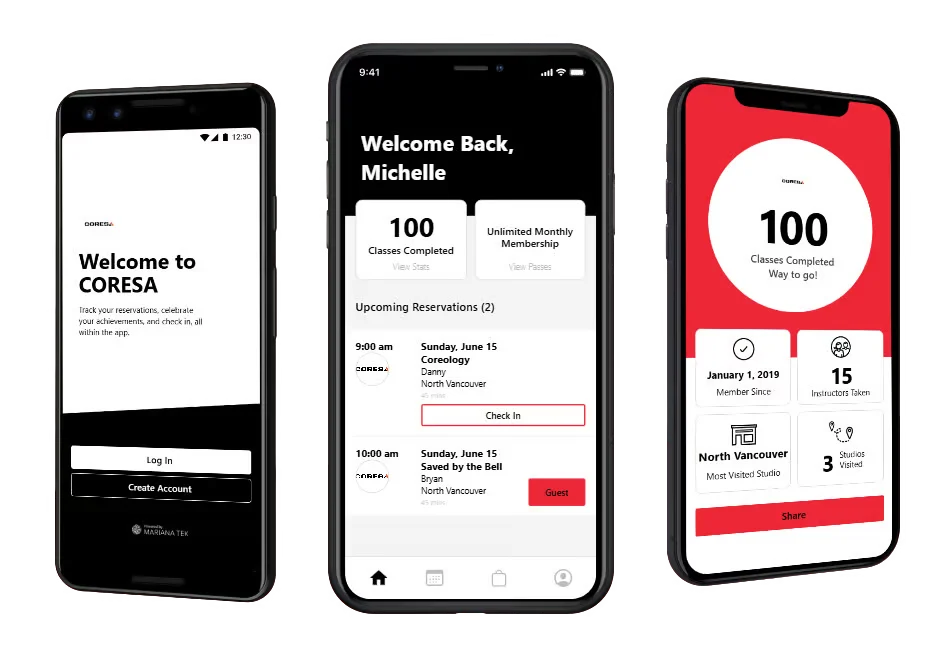
In race season, hold the sessions but trim the loads as your goal event approaches — maintenance is cheap and detraining is quick. Doors open at 6 am daily, so a lift can precede a morning run commute; book through the Coresa app, and drop a stretch and recovery session into your down weeks.
Common questions
Will strength training make me a heavier, slower runner?
Not at the doses runners use. Two weekly sessions of heavy, lower-rep work build strength with minimal added mass, and that strength typically improves economy rather than costing pace. Meaningful bulk requires a volume of dedicated lifting and eating that no distance runner's schedule resembles.
Should I stop lifting during a marathon build?
Reduce, don't remove. Trim volume while keeping some intensity so strength holds as your kilometres peak, then strip lifting right back in the final week or two before race day. Runners who abandon it entirely in the build tend to arrive at the start line less durable, not fresher.
Aren't hill repeats basically strength training?
Hills are excellent running and a poor substitute for lifting — the forces are too small and too brief to drive real strength change in the calf and hamstring tissue that needs it. Treat hill work as a complement; the North Shore supplies plenty of it either way.
My calves keep straining — can lifting actually fix that?
Recurring calf trouble is frequently a capacity shortfall, and progressive calf loading addresses exactly that. But repeated strains deserve a physiotherapist's assessment first — get the diagnosis, then bring their guidance into your training plan.