Here is your whole first visit, in order, so nothing on the day comes as a surprise: arrive a little early, check in, meet your coach, get walked through the stations, train at your own level, cool down, and decide on class two. Below is the honest version of each step — including the parts your coach will simply show you in person.
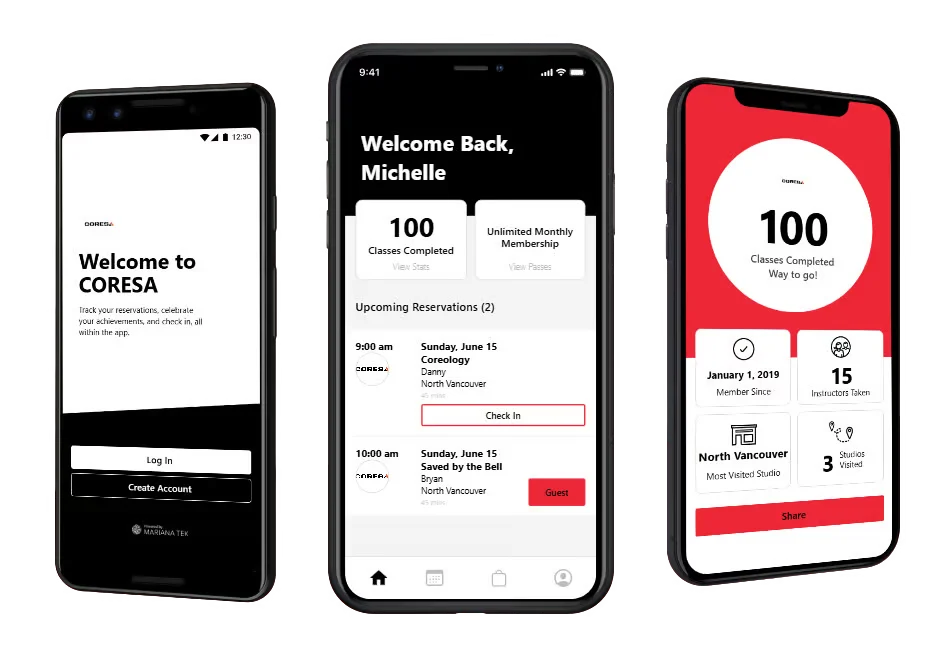
Step zero is booking: pick any session that fits your week on the Coresa app — there's no special beginner entrance, because every class scales. If you'd rather talk to a coach before you sweat, the free consult call exists for exactly that instinct.
Arrive 10 to 15 minutes early
Give yourself a buffer the first time — 10 to 15 minutes covers finding the door at 142B 3rd St West, sorting parking or the walk up from Lonsdale Quay, and settling in without rushing. The visit page has the full getting-here rundown, including the street-parking rhythm by time of day.
Wear clothes you can move in every direction, and bring clean indoor shoes, a water bottle and a towel.
Check-in and the coach's briefing
Tell whoever greets you that it's your first class — say it plainly, because it changes your session for the better. Your coach will introduce themselves, ask what they should know about you (old injuries, long layoffs, nerves), and lay out the day's plan before the room starts moving.
How the briefing runs varies by session and by coach, and that's fine. The constant you can count on: you won't be left guessing, and every movement gets demonstrated before you're asked to do it.
The workout: stations on rotation
Classes run as multiple-station circuits — depending on what you booked, the rotation can blend strength and resistance work, treadmill efforts, and total-body conditioning. You work your station until the rotation moves, which means nobody is ever performing for the room; everyone is busy with their own piece of it.
The clock does the pacing and the coach does the correcting. Expect form cues mid-class, and expect an adjusted version to appear the moment anything doesn't suit your body that day.
Heart rate on the screens
Live heart-rate displays run during class. Effort is measured against your own heart rate — the great equalizer of a mixed room, since a beginner's hard and a veteran's hard register as equally honest work.
Don't study the zones before day one. The coach explains what your numbers mean as you train, and the pattern clicks within a class or two.
Scaling: the smart first-class strategy
Every station can go lighter, slower, or simpler, and asking for the easier version is treated as a coached skill here, never a defeat. Our first-class advice is boring and correct: finish feeling like you had a little more in the tank.
Some soreness a day or two later is normal after time away; wrecked is not the goal, and it's avoidable if you accept the modifications you're offered. Week two already feels different.
Cooldown and class two
Sessions close by downshifting — stretch and breathe rather than sprint for the door. Then do the one thing that best predicts whether this sticks: book your next session before you leave the building.
If the class confirmed this is your place, the schedule runs daily from 6 am to 8 pm and your rhythm builds from there. Still unsure? A 15-minute consult call — or a quick word with the coach you just met — is a fair next step too.
Common questions
How fit do I need to be for a first class?
Fit enough to move — genuinely. Every station scales as far down as you need, and coaches adjust load, speed, and movement complexity person by person.
What if I can't do one of the exercises?
Say so, and the coach swaps in a version you can do — that exchange happens in every class, at every level. Nothing is mandatory exactly as prescribed.
Should I eat before class?
Most people do best with something light an hour or two beforehand, and steady water through the day helps more than any last-minute snack. Stomachs differ, so treat your first class as a test run and adjust from there.
How sore will I be afterwards?
After a long break, expect it to show up a day or two later and fade as your body adapts over the first few weeks. Starting conservatively is the best insurance — and if anything feels like more than muscle soreness, check with a qualified health professional.