
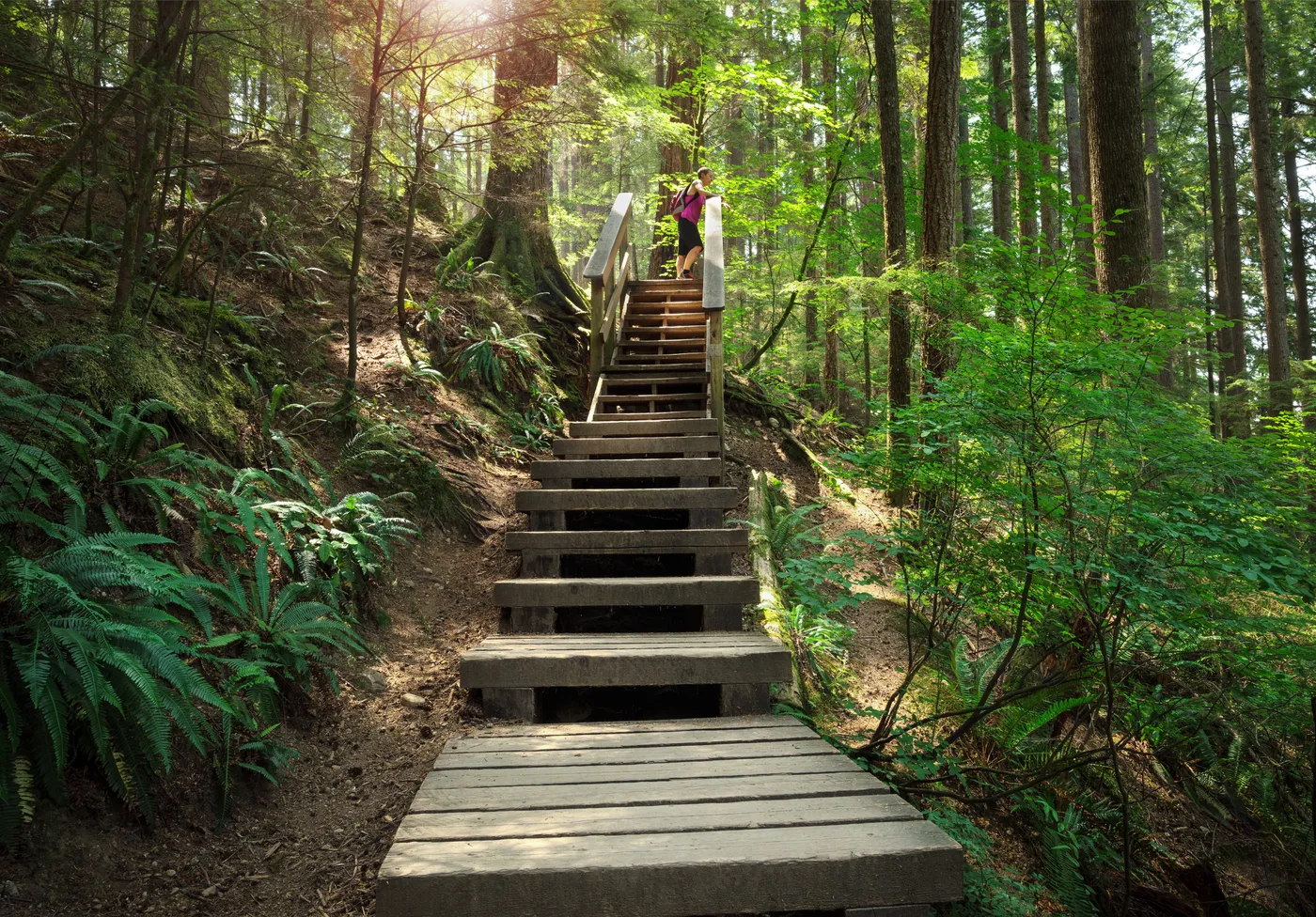
Multi-day trips — the Camino, the Inca Trail, a Kilimanjaro ascent, a week on the West Coast Trail — test one quality that single-day hike training ignores: the ability to do it again tomorrow. Day one is fitness; day four is durability, and durability is trained specifically, with back-to-back loading days, pack conditioning, and feet given their own program.
Twelve weeks is a comfortable runway from a reasonable base. Here is how the build differs from ordinary hiking prep — which it contains, and exceeds.
The quality nobody trains: consecutive days
The classic trip failure is not summit fitness — it is day three, when unrecovered legs meet the trip's biggest stage. So the signature session of trip prep is the back-to-back: two loaded hiking days in a row, introduced modestly around week five and grown until a weekend approximates the trip's hardest consecutive pair. North Vancouver hands you the venue — Saturday Grind plus Sunday BCMC or a long Lynn loop is a genuine rehearsal — and the recovery between them (food, sleep, the unglamorous machinery from the recovery guide) is itself part of what you are practising.
The twelve-week shape
| Weeks | Focus | The week's spine |
|---|---|---|
| 1–4 | Base + strength | Two strength sessions (step-ups, single-leg, carries, calves) · two aerobic pieces · one longer hike |
| 5–8 | Pack + back-to-backs | Pack weight climbing toward trip load · first consecutive-day weekends · strength holds at two |
| 9–11 | Rehearsal | Biggest back-to-back weekends at full pack · trip-day pacing practised · boots and socks finalized the hard way |
| 12 | Taper | Volume halves, legs freshen, packing lists replace training lists |
Strength work stays the whole way through because it is the durability ingredient: loaded step-up patterns, single-leg strength, carries for the pack muscles, and calves trained deliberately — the tissue that multi-day descents actually audit, as the eccentric entry explains.
The details that decide trips
- Train with the actual pack, loaded progressively to trip weight — shoulders and hips adapt to straps only by wearing them.
- Feet are equipment: every long session in the trip's boots and socks; blisters are a training-phase discovery, never a trip discovery.
- Downhill is half the trip: seek descents deliberately — knee-friendly descent mechanics from the hiking guide apply doubled under a pack.
- Altitude is its own subject: for high trips like Kilimanjaro, fitness helps but does not prevent altitude illness — itinerary pacing and medical advice sit outside training's lane, and pretending otherwise is how fit people get carried down.
Common questions
Can a gym fully prepare me for a multi-day trip?
It builds the strength, engine and durability superbly; it cannot rehearse terrain, pack life and consecutive outdoor days. The winning recipe is coached strength midweek, real trails on weekends.
How heavy should training pack weight get?
Build to the trip's realistic load — not beyond it — arriving there two or three weeks before departure. Overloading in training buys injuries, not margin.
What if my trip is four weeks away and I haven't started?
Shrink the goal to durability: strength twice weekly, every weekend on trails with the pack, and honest itinerary expectations. Four disciplined weeks genuinely helps; heroic cramming genuinely hurts.