Most sessions sold as small group training run three to eight people per coach, and the label stays credible up to about ten. Two people is usually called partner or semi-private training; past ten or twelve, you're functionally in a class, whatever the marketing says. No regulator defines the term, so the actual number — and whether the studio enforces it — is worth checking before you hand over money.
The ranges and what studios call them
Labels shift from studio to studio, but the industry clusters into a few recognizable tiers.
| People per coach | Common label | What it usually means |
|---|---|---|
| 1 | Personal training | Undivided attention, fully individual program |
| 2–4 | Semi-private | Near-private coaching at a shared cost |
| 4–8 | Small group training | Individually scaled work, coach circulating |
| 10–25+ | Group class / bootcamp | One shared workout; correction is incidental |
The middle tiers blur in the wild. A studio might cap sessions at six one year and quietly stretch to ten the next, so treat the label as a starting question rather than an answer.
Why the count changes what you get
Every added person divides one finite resource: coach attention. At four people, a coach can watch nearly every working set. At eight, they're triaging — newest members and riskiest lifts first. At fifteen, supervision becomes spot checks. The decline isn't perfectly linear, because well-designed sessions let stations run themselves while the coach mostly observes — how that engineering works is its own question, covered in will I get personal attention in a group session.
The number also changes scaling. Adjusting loads and movement versions for five people is routine coaching; doing it for twenty means most people simply get the default workout, appropriate or not.
What to ask a studio about group size
Four questions separate a real cap from a marketing number:
- What is the hard cap per session, and is it enforced with a waitlist when full?
- Is the cap the same at peak times — early mornings, weekday evenings — as at quiet ones?
- Does a second coach join when sessions run full, or does the ratio simply worsen?
- Can I see a session at its busiest before I join?
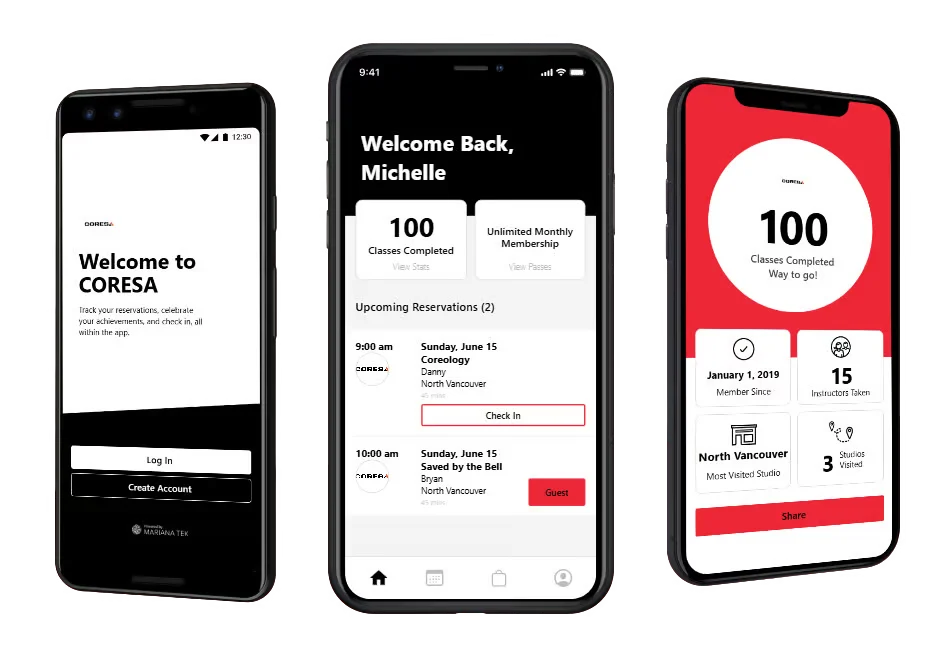
That last one matters most. A number on a website is a claim; a busy weekday session is evidence. A free 15-minute consult call is the easiest way to ask what a typical session at Coresa looks like, and a studio's live schedule often shows how many spots each session holds — check Coresa app and you can read the cap for yourself before you ever ask.
Common questions
Is two people still small group training?
Most studios would call that partner or semi-private training rather than small group. Functionally it's closer to one-on-one coaching with the cost split two ways. If that's what you're after, ask a studio specifically about semi-private options rather than group sessions.
Does the ideal group size change with the type of session?
Yes. Technical strength work rewards smaller groups, because barbell coaching is detail-heavy and slow. Conditioning circuits tolerate a few more people, since timed stations largely run themselves while the coach reads effort and movement quality across the room.
What happens if only two or three people book a session?
Typically the session runs as scheduled and you enjoy an unusually good ratio that day. Minimum-attendance policies do vary by studio, though, so it's worth confirming when you visit.
Why don't all studios publish their caps?
Some treat the ratio as a marketing flourish rather than a promise, and stretch it when demand grows. Studios confident in their coaching model tend to be specific about numbers. Vagueness on this question is itself useful information.