You stay consistent with exercise by building a system that works on the days you don't feel like it — because those days are the whole game. Motivation is weather: it changes hourly, and you don't control it. Systems are the climate you build instead: fixed slots, sessions reserved in advance, people who expect you, a defined bad-day version of the workout, and a rule for restarting fast when life inevitably interrupts.
Fix the slots
Decide once, not daily. Pick specific days and times — say Monday, Wednesday, and Saturday morning — and hold them as standing commitments, the way you'd hold a recurring meeting you chair. Daily negotiation is where habits die; a fixed slot deletes the negotiation entirely, and it lets everyone around you plan for it too. The slot itself matters more than which slot it is.
Be expected somewhere
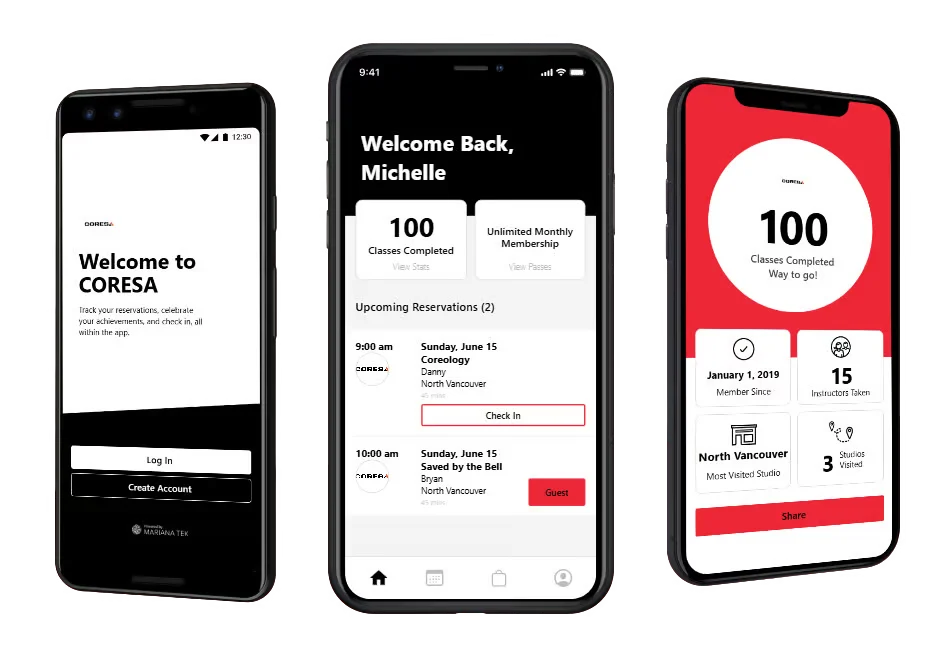
A booked session flips the default: attending is passive, skipping requires an act of cancellation. That reversal is worth more than any pep talk, which is why reserving spots a week ahead through the Coresa app is the single highest-leverage move on this page. Then layer on a social contract — a friend who trains the same slot, a small class where the coach notices an empty spot — and the cost of quietly disappearing climbs again.
Define your minimum viable session
Before you need it, write down the smallest version of training you'll accept on a terrible day: fifteen easy minutes, a walk plus two exercises, one unhurried round of everything. On the bad days, do that version without guilt. The minimum isn't really about fitness — it's about keeping the identity and the routine alive so there's nothing to rebuild next week. A shrunken session leaves the structure standing; a skipped one starts dismantling it.
Adopt a restart rule
Consistency isn't never missing — it's never missing twice. One skipped session is noise; two in a row is the start of a new pattern. Pre-decide the restart: the very next scheduled slot, an easier session than usual, and zero self-negotiation about whether you've "fallen off." People who return fast look, a year later, almost identical to people who never missed at all.
Right-size the dose
Heroic plans collapse; modest plans compound. If a five-day program keeps failing, the fix is fewer sessions held more stubbornly — two well-built sessions a week clears more bars than most people assume. And if the habit itself is what you keep losing, that's coachable: habit and lifestyle coaching exists precisely for the person whose problem was never effort, but architecture.
Common questions
How long until exercise feels automatic?
Longer than the pop-culture answer — for most people it's months of repetition, not weeks, and easier habits automate faster than demanding ones. Plan for the long version and treat anything quicker as a bonus.
Are streaks a good tool?
They motivate until they break, and then the broken streak becomes a reason to quit. Track your weekly attendance rate instead — three-for-three feels winnable again by Tuesday, whereas a dead forty-day streak doesn't.
What should my bad-day workout actually be?
Whatever you would genuinely do at your lowest: a short walk, one easy circuit, ten minutes of stretching. Write it down while you feel good, because you won't design it well while you feel awful.
Does training with other people really help?
Reliably — being expected is a stronger force than being motivated. Group formats add a set time, familiar faces, and a coach who registers your absence, which quietly closes most of the exits.