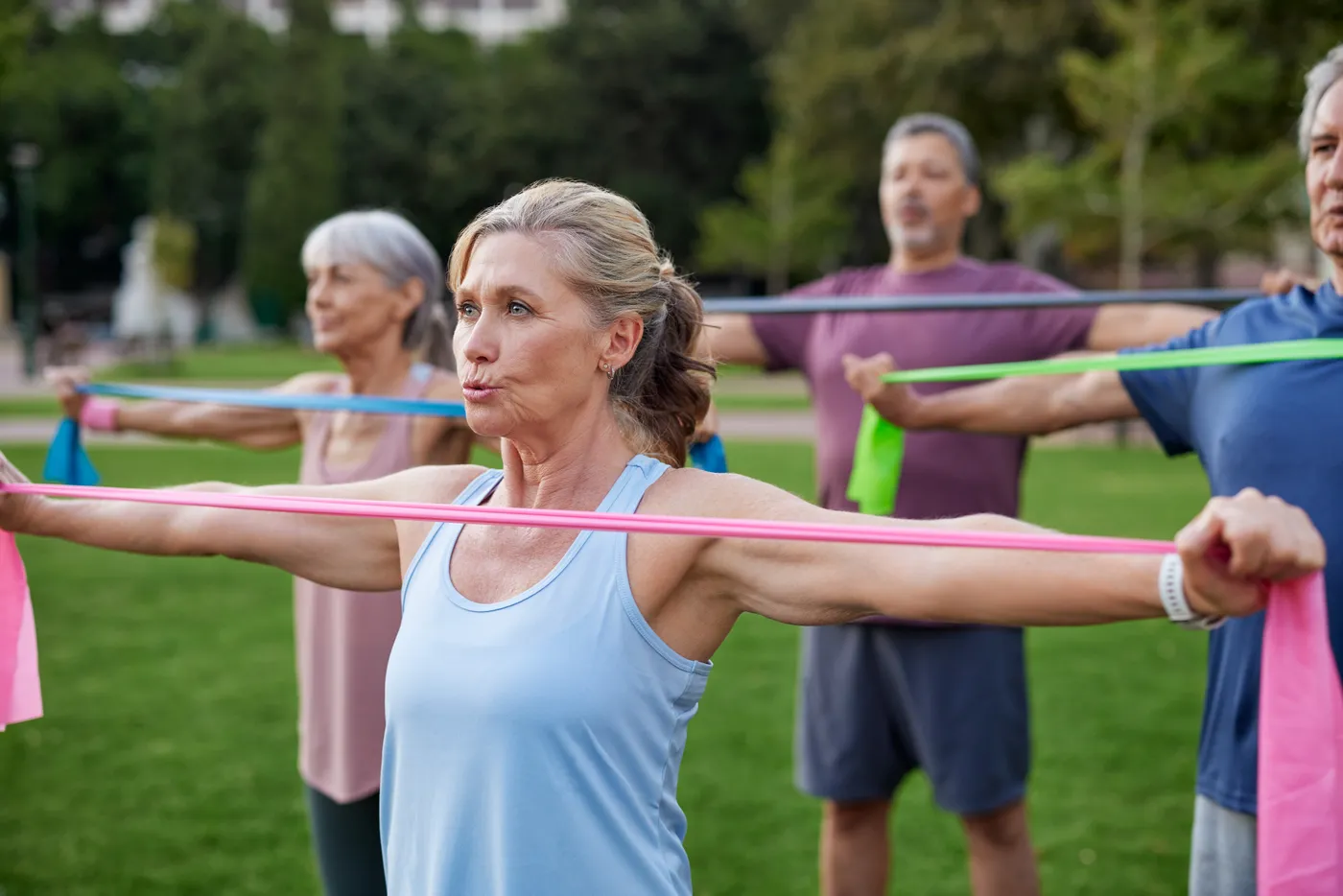
Personal training isn't just suitable for older adults — it may be where coaching delivers its greatest return. Research consistently points to strength training as one of the most effective tools for preserving muscle, bone, balance, and independence with age, and a coach makes that work safer and far more likely to stick.
This page is educational, not medical advice: anyone with health conditions should speak with their doctor before beginning a new training program.
Strength is the independence lever
Muscle and bone respond to loading at every age, and the stakes rise rather than fall over time. The capacities that keep life self-directed — climbing Lonsdale's hills, carrying groceries, getting up from the floor, catching yourself on a slick winter sidewalk — are all trainable, and all quietly erode without deliberate resistance work.
The point isn't athletic ambition. It's keeping the physical margin that makes everything else in a week optional rather than negotiated. Research also links regular resistance work with better bone outcomes — a consistent signal that sensible loading is protective, not hazardous, at this stage of life.
What a coach changes in the programming
Training after 60 isn't a gentler imitation of training at 30 — it's the same principles with different settings. Expect a coach to adjust:
- Warm-ups: longer and more thorough before loading
- Exercise selection: joint-respecting variations chosen from your movement screen, not a template
- Progression speed: loads climb more gradually, with recovery given real weight
- Recovery spacing: more room between hard sessions, because adaptation takes longer
What doesn't change is that the work must be genuinely challenging — weights light enough to be effortless are also light enough to be ineffective. That balance of respect and honest intensity is the core of strength coaching at Coresa.
Balance and falls: train them on purpose
Fall risk responds to training, and the ingredients are unglamorous: single-leg stance work, step patterns, controlled sit-to-stands, and loaded carries. A coach's job is threading these into sessions so balance improves as a by-product of training rather than a separate chore.
Mobility work belongs in the mix too — stretch and recovery sessions complement the strength days by keeping range of motion usable rather than theoretical.
Starting sensibly in Lower Lonsdale
The sequence that works: clear it with your physician if you have any conditions or medications in play, then bring that context to the coach — it shapes the program rather than blocking it. A list of current medications and any physiotherapy history is worth carrying to the first session; details like blood-pressure medication change how a coach paces effort and positions exercises, and none of it counts as oversharing.
From there, a free 15-minute consult call is the pressure-free way to ask about coaching for older adults and judge the fit. The studio's daily 6:00 am to 8:00 pm hours mean quieter mid-morning and mid-afternoon windows are easy to find.
Common questions
Am I too old to build muscle?
No — research consistently shows muscle responds to resistance training well into the later decades of life. Gains may arrive more slowly than they would for a younger trainee, but they arrive, and their practical value is higher.
Is one-on-one coaching necessary, or can older adults join groups?
Many older adults do well in small coached groups once the basics are established, since exercises scale individually at each station. Starting with some private sessions to learn your movement baseline, then blending in small group training, is a common path.
How many sessions a week make sense after 60?
Two strength-focused sessions a week is a strong, sustainable baseline, with everyday walking filling the gaps. Recovery capacity should set the ceiling — a coach will watch how you respond and adjust.
I've never set foot in a gym. Is that a problem?
Not at all — no experience is required, and coaching exists precisely for first-timers. The myth that you need to prepare before getting help is taken apart in do I need to be fit before personal training.