For most people the right frequency is two to three coached sessions a week while you're learning the movements, tapering toward one a week once you can train confidently on your own. Frequency isn't a fixed prescription — it's a dose that should change as your skill grows and your budget breathes.
The mistake is treating it as all-or-nothing: either three sessions a week or no coach at all. The useful frame is phases.
The learning phase: front-load the coaching
Early on, nearly everything you do benefits from supervision — you're building patterns, not just burning calories. Two to three sessions a week during this window means errors get corrected before they harden into habits, and the plan adjusts while you're still figuring out what your body responds to.
This phase is defined by skill, not the calendar. It ends when you can warm up, pick sensible loads, and perform your core lifts without needing a cue every set — for some people that's a couple of months, for others longer, and neither is a failing.
Space the sessions rather than stacking them: a day or two between coached visits lets your body absorb the work and lets you learn what normal recovery feels like. Treat the days between as observation time — how sore, how tired, how hungry — because those reports shape the next session more than anything you could look up.
The independence phase: one coached anchor
Once the patterns are yours, weekly coaching shifts jobs: instead of teaching, the session audits. Your coach reviews technique under heavier loads, updates the program, and keeps a progress record honest, while you handle the other training days solo.
Whether a single weekly session can carry your training on its own is a genuinely different question with its own trade-offs — we work through the setups that make it succeed or fail in is one personal training session a week enough.
The hybrid week: coaching plus classes
A structure many people settle into permanently: one personal session for individual attention, plus two or three coached group sessions for volume and consistency. You get programming oversight without paying private rates for every workout.
It works because the class formats supply what solo days often lack — supervision and effort. Coresa's coached circuit sessions blend strength stations, treadmill efforts, and conditioning, so your non-PT days still get professional eyes. The small group format sits between the two if you want more individual scaling than a class provides.
Let the budget shape the structure, not kill it
If your ideal frequency doesn't fit your budget, stretch the interval rather than abandoning coaching entirely. A session every two weeks with homework in between still gives you programming, accountability checkpoints, and technique audits — a rhythm no app replicates.
When you're comparing what different frequencies actually cost, make sure you're comparing formats and package structures, not just headline rates — the cost drivers behind personal training prices explains what to look at.
Common questions
Can I see a trainer four or five times a week?
You can, but past three sessions the returns thin quickly for most goals — recovery becomes the limiter, not coaching access. Athletes preparing for something specific are the main exception.
How do I know I'm ready to drop from three sessions to one?
When you can run a full session solo — warm-up, load selection, honest effort — and your numbers keep moving between coached visits. If progress stalls the moment supervision drops, you tapered too early.
Do I have to keep the same weekly slot?
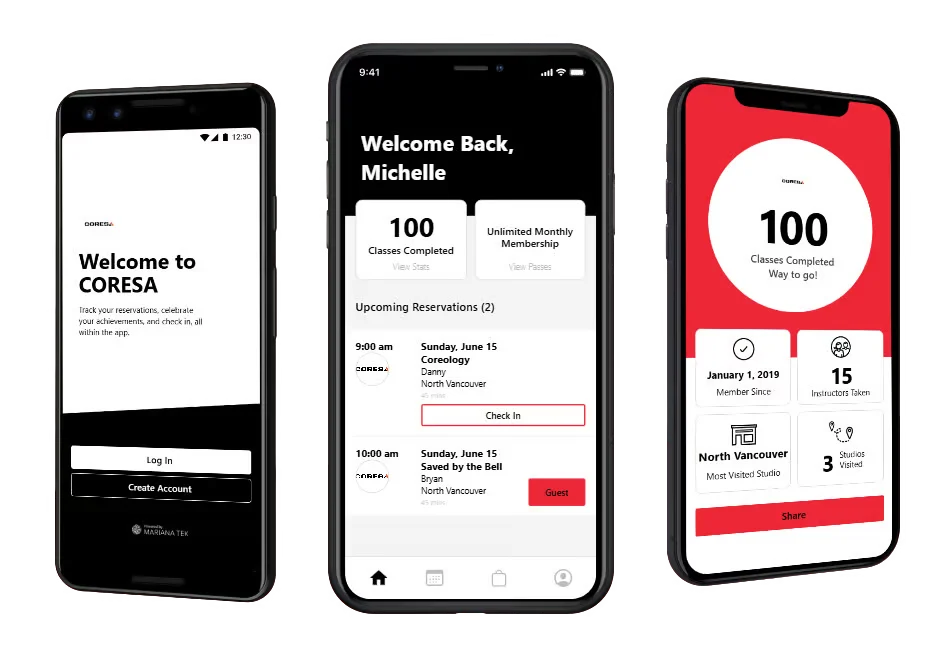
A fixed recurring time protects the habit best, but it isn't mandatory. Coresa is open 6:00 am to 8:00 pm every day, so shift workers and travel-heavy schedules can book around real life through the Coresa app.
Does more frequent coaching mean faster results?
Only up to the point where you're training consistently with good technique — after that, sleep, food, and effort matter more than extra coached hours. See what actually determines how fast results arrive.