Train by your rotation, not by the clock on the wall. Standard fitness advice — same time every day, mornings before work — quietly assumes a nine-to-five, and it collapses on a 4-on-4-off or a rotating days-to-nights pattern. What works instead is anchoring sessions to positions in your shift cycle ("after sleep on my first day shift," "early on my second off-day"), so the routine repeats with your rotation even though it never repeats on the calendar.
Three rules govern everything below: sleep outranks training, transition days get lighter work, and the plan is written per rotation, not per week.
Anchor to the rotation, not the clock
A shift worker's "consistent schedule" is pattern-relative. Instead of "Tuesdays at 6 pm," your slots sound like "after waking on day one of the day block" or "before my first night shift." Those anchors travel with the rotation, which is what makes them keepable. Write your cycle out once, choose two or three anchor points that recur every cycle, and you have a schedule as stable as any office worker's — it just doesn't look like theirs.
Sleep is the senior partner
Shift work already taxes sleep, and sleep is where training adaptations are built — so a workout paid for with sleep is a net loss. The rule: training fits into genuinely available waking windows, never into hours carved out of a day-sleep after nights. Coming off a night shift, sleep first and train after; if a rotation leaves you chronically short, cut training volume before you cut another hour of rest. Protecting sleep isn't skipping training. It's how the training works.
Flip days: back off on purpose
The transition between blocks — last night shift into first off-day, or off-days back into days — is when your body clock is mid-somersault, coordination is duller, and hard training returns the least. Plan those days light by design: a walk, easy mobility, or a stretch and recovery session that moves you without demanding output. Save the hard sessions for the middle of blocks, when your rhythm has settled.
A sample 4-on-4-off shape, as a starting template rather than a prescription:
| Rotation point | Training call |
|---|---|
| Day shifts 1–2 | One solid full-body session after work |
| Day shifts 3–4 | Rest or short easy movement |
| Flip day (first off-day) | Light only — walk, stretch, mobility |
| Off-days 2–3 | The week's hardest one or two sessions |
| Last off-day | Moderate session, then wind down toward the next block |
Long opening hours are the shift worker's friend
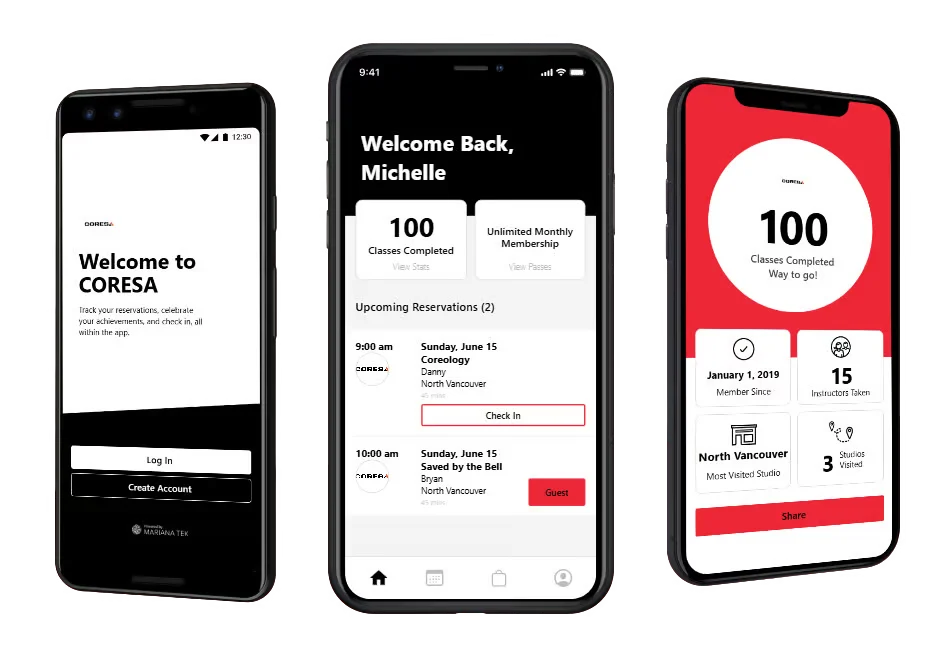
Rotating schedules need a facility whose day is wider than an office worker's. Coresa runs 6:00 am to 8:00 pm daily — a fifteen-hour spread that catches a session before a day shift, after one, or in the mid-afternoon window before nights begin. Booking works in your favour here too: reserve the whole rotation's sessions in one sitting through the Coresa app as soon as you get your roster, so each anchor point already has a class attached to it. And if your pre-day-shift window opens brutally early, the early morning classes exist for exactly that crowd.
Common questions
Should I train before or after a night shift?
Before, for most people — a moderate session in the late afternoon or evening ahead of the shift, when you're most awake. Training after a night shift delays day-sleep and lands on an exhausted nervous system; if you do it, keep it short and easy.
Is it harmful that my workouts happen at different clock times every week?
No — the research case for a fixed time is about habit stability, not physiology, and your version of stability is a repeating rotation anchor. Your body adapts fine to variable timing as long as sleep is adequate.
How should I eat around training on night blocks?
Keep it simple: a normal meal a couple of hours before the pre-shift session, and steady protein through your waking hours whatever the clock says. Overhauling nutrition mid-rotation adds complexity exactly when willpower is scarcest.
My roster changes with short notice. How do I plan anything?
Plan in pencil, per rotation, the day the roster lands — that ritual matters more than any specific slot. Keep a default fallback (one hard session per block plus daily walks) so a scrambled roster downgrades the plan instead of deleting it.