Hiring a personal trainer buys you a plan and a professional accountable for it. Joining group classes buys you a timetable and a room that runs whether you're motivated or not. For someone deciding where their first real fitness money goes, that's the actual choice — and it turns on four inputs: your budget, your temperament, how specific your goal is, and what your weeks honestly look like.
One scope note: this page compares a trainer against group classes in general — boutique sessions, spin and yoga studios, the class schedules bundled into big-box memberships. If you've already narrowed things to coached formats and are weighing shared coaching against private, that's a separate decision covered in small group training vs personal training.
Two different purchases
A trainer starts with you: an assessment, a program written around your body and goal, appointments where every rep is watched, and a professional whose job includes noticing whether the plan is working. You are the product's centre of gravity. What that looks like in practice is laid out on the one-on-one personal training page.
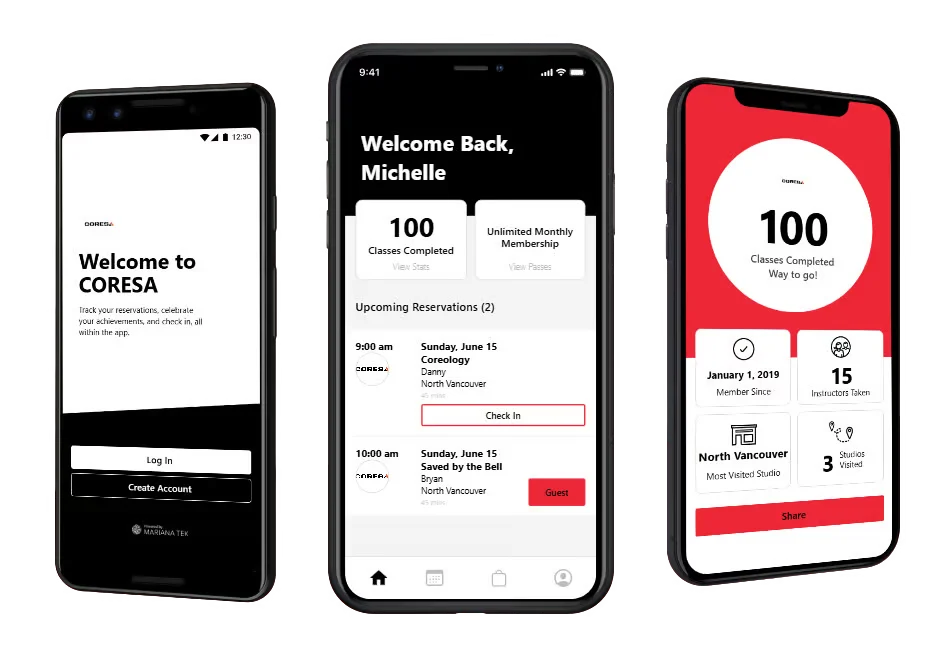
A class starts with a session design, and an instructor delivers it to whoever walks in. Nothing bends around you — but the class exists at a fixed hour, with music on and spots to fill, and that reliability is its own kind of service. The range is enormous, from tightly coached studio sessions to giant gym-floor classes where you're pleasantly invisible; the classes overview shows how Coresa's end of that spectrum works.
Money first, because it filters everything
One-on-one training is the most expensive way to exercise per hour, everywhere, because you're renting the whole of a professional's attention. Classes divide that cost across a room, and classes included with a big-box membership can work out to very little on top of dues you're already paying. On raw price, classes win and it isn't close.
The truer metric, though, is cost per workout that actually happens. A cheap class you skip every week is the most expensive fitness product on earth, and if a booked appointment with a trainer is the only structure you've ever consistently honoured, the premium may be the bargain. Be ruthless with yourself about which pattern your history shows.
Your temperament is data
Some people draw energy from a room — the music, the collective effort, the low-stakes familiarity of regulars. Others find an audience draining and do their best work with one trusted person watching. Neither wiring is better, and both predict which format you'll still be using in six months more reliably than any feature list.
One caution against self-stereotyping: introverts routinely assume they'd hate classes, then discover that a station-based session demands almost no social output — you rotate, you work, nobody requires conversation. If you've never actually stood in a class, treat your prediction as a hypothesis rather than a fact.
Goal specificity and the shape of your week
The vaguer your goal, the better classes serve it. "Fitter, stronger, better energy" is exactly what a good general class delivers on repeat. A specific target — a technical lift that hurts, an event with a date on it, a return from injury once a qualified professional has cleared you — needs programming that generic sessions can't provide, and that's squarely trainer territory.
Schedule cuts both ways. Fixed class times are scaffolding for people with stable weeks and chaos for people without them; appointments flex around volatile calendars but also make it easier to drift into "next week." Match the structure to your week's real shape, not its idealized one.
Factor by factor
| Decision input | Points to a trainer | Points to classes |
|---|---|---|
| Budget | Room for a genuine premium | Tight, or a gym membership already paid |
| Goal | Specific, technical, or dated | General fitness and health |
| Temperament | Thrives under private, direct attention | Feeds off a room's momentum |
| Week shape | Volatile — needs appointments that move | Stable — can anchor to fixed times |
| Learning stage | Wants technique built right from rep one | Comfortable following group instruction |
A decision path for the undecided
- Budget tight? Start with classes and buy nothing else until attendance is a habit — consistency is the prerequisite every other purchase depends on.
- Budget fine and goal specific? Book a trainer for an assessment and a starter block; buying expertise early prevents expensive detours.
- Neither clearly? Use the hybrid: build the habit in classes, then hire a trainer for a short block the moment you hit a question classes can't answer — a lift that hurts, a plateau, a goal that suddenly sharpened.
- And know the middle exists: small group personal training was built to split this exact difference — individual programming and tracking, delivered at a shared-room price.
Whichever branch you take, reading through what a first class involves removes most of the unknowns before you spend a dollar.
Common questions
Do beginners need a personal trainer, or are classes enough?
Most beginners progress well in classes, provided the instruction is real and effort rises gradually. A handful of trainer sessions early can accelerate technique, but it's an accelerant, not a requirement. The non-negotiable ingredient is showing up repeatedly, whichever room you do it in.
How can I tell whether a class is coached or just led?
Watch what the person up front does after the demo. In a coached class, individuals get corrected by name, offered scaled versions, and asked about injuries; in a led class, the leader performs the workout while everyone copies. If you've attended for a month and never once been corrected, you're being entertained.
Can group classes alone actually get me results?
For general strength, conditioning and health — yes, given consistent attendance and honest effort that increases over time. Where classes run out of road is specificity: once your goal narrows to a particular lift, sport or timeline, individual programming starts earning its fee.
What if I'm intimidated by both options?
Look before leaping: a free 15-minute consult lets you watch real sessions with no obligation attached, which deflates gym anxiety faster than any pep talk. Nearly everyone in any class was once the nervous person at the door.