
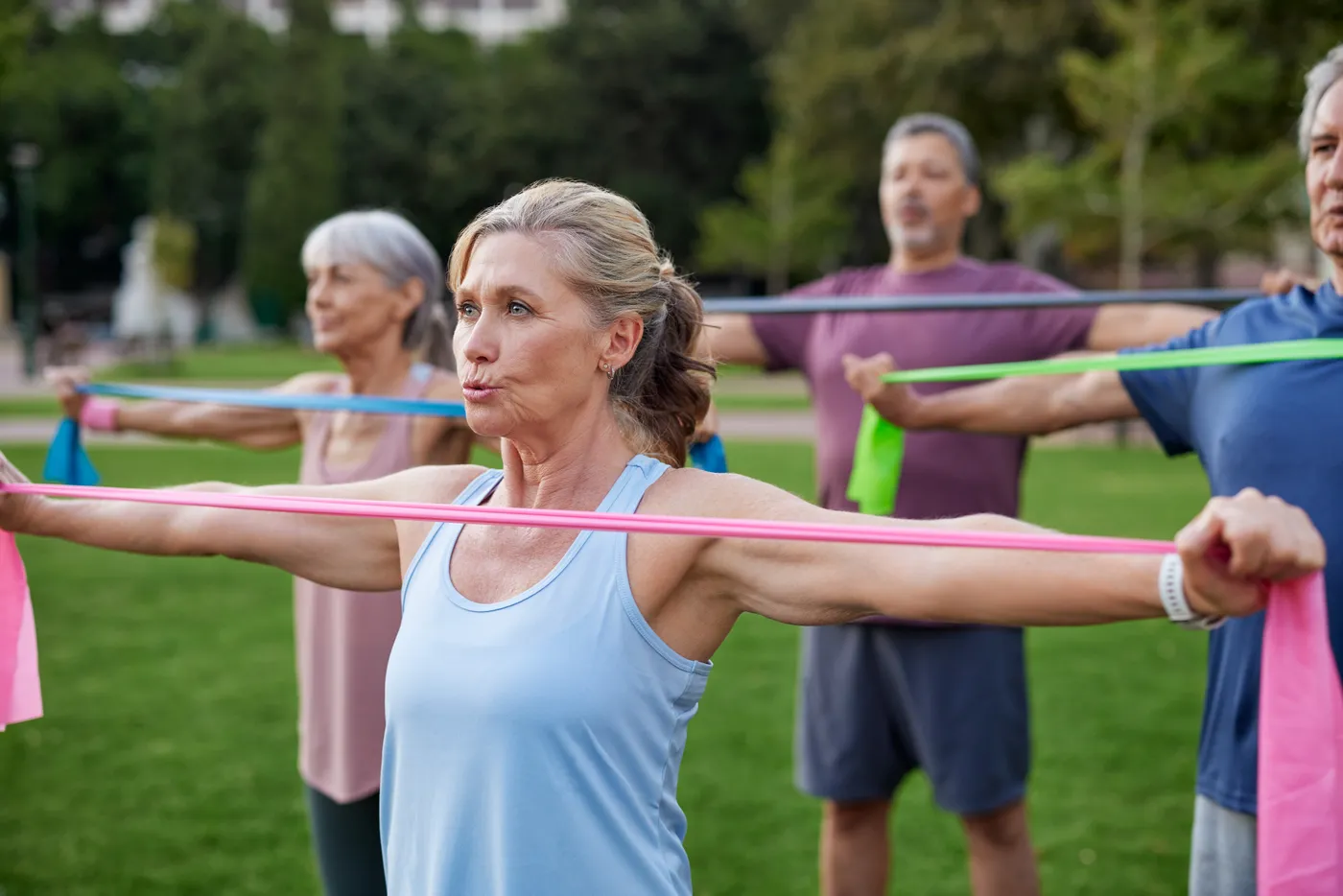
North Vancouver is a demanding place to grow older in the best way: it is built on a hill, the good things are up staircases and trails, and the neighbourhood assumes legs. Fitness after 65 here is not about marathons — it is about keeping the stairs, the garden, the grandkids and the seawall walks non-negotiable for another few decades.
The training that protects all of that is specific and well-evidenced: strength work for muscle and bone, balance trained deliberately rather than hoped for, and an unhurried first month with a coach who starts where you actually are. This page covers what that looks like in practice.
Strength is the independence lever
The research direction is unusually one-sided: muscle and strength respond to training at every age studied, and resistance work is among the most effective tools for preserving the muscle, bone density and balance that independence runs on. The people who benefit most from lifting are, bluntly, the people most often told to be careful with it.
In practice that means the same patterns everyone trains — sit-down-stand-up squatting, hinging to pick things up, pushing, pulling, carrying — loaded to a level that genuinely asks something of the muscle. Cautious little movements with token weights are pleasant and mostly decorative; the adaptations arrive when the last few repetitions require attention. A coach's job is to find that level safely, which is precisely what a group capped at eight allows.
Balance is trained, not hoped for
Falls are the pivot point of late-life health, and balance responds to practice like any other skill. The training is unglamorous: single-leg stands that progress in difficulty, step-ups, controlled lowering, walking with load — the suitcase carry is quietly one of the best balance exercises there is, because it loads one side and dares your trunk to lean.
What we deliberately avoid is the circus version: wobble boards and stunts train wobbling. The balance that prevents falls is built from leg strength, ankle and hip control, and confidence on ordinary surfaces — then tested by North Vancouver's own staircases at your own pace.
What a first month actually looks like
A conversation first: health history, medications worth knowing about, what your body objects to, and what independence means to you specifically — the stairs at Lonsdale Quay, a grandchild, a garden, the Grouse Grind one more time. If your physician has given you guidance, it comes too, and shapes the program rather than your eligibility.
Then two coached sessions a week, deliberately light for the first two, building the movements before the loads. Most people are surprised twice in month one: first by how manageable it is, then by how quickly strength answers — early gains are largely the nervous system relearning recruitment, and they arrive within weeks at every age. Starting fitness over 50 and personal training for older adults cover the on-ramp questions in more depth.
Group or one-on-one?
Both work, and the honest sorting question is confidence. If the gym is unfamiliar territory or the medical history is complicated, a few 1-on-1 sessions build the foundation privately. If you are mobile and mostly need structure and company, semi-private personal training delivers the coaching with the considerable bonus of a room that notices when you miss a Tuesday — adherence machinery that matters more, not less, with age. Plenty of members start private and graduate to the group inside two months.
Common questions
Am I too old to start at 70 or 75?
No — trainability persists at every age researchers have measured, and later starters often progress faster than expected because they begin from an untrained baseline. The program starts lighter and climbs more patiently; the direction is identical.
Do I need my doctor's approval first?
If you have cardiovascular conditions, recent surgery, osteoporosis or anything your physician monitors, check in with them and bring their guidance — it shapes the programming. Otherwise, a conservative coached start is itself the safety mechanism.
Will I be the oldest person in the room?
Sometimes, and it matters less than the worry suggests: everyone in a session works from their own loads, so the room shares effort rather than a standard. Tell the coach if a quieter hour would help and they will point you to one.
What about my knees and hips?
Arthritic joints usually do better with appropriate loading than without it — motion and strength are part of most modern guidance. Movements get chosen around your joints, ranges get respected, and anything currently painful goes to a physiotherapist first.