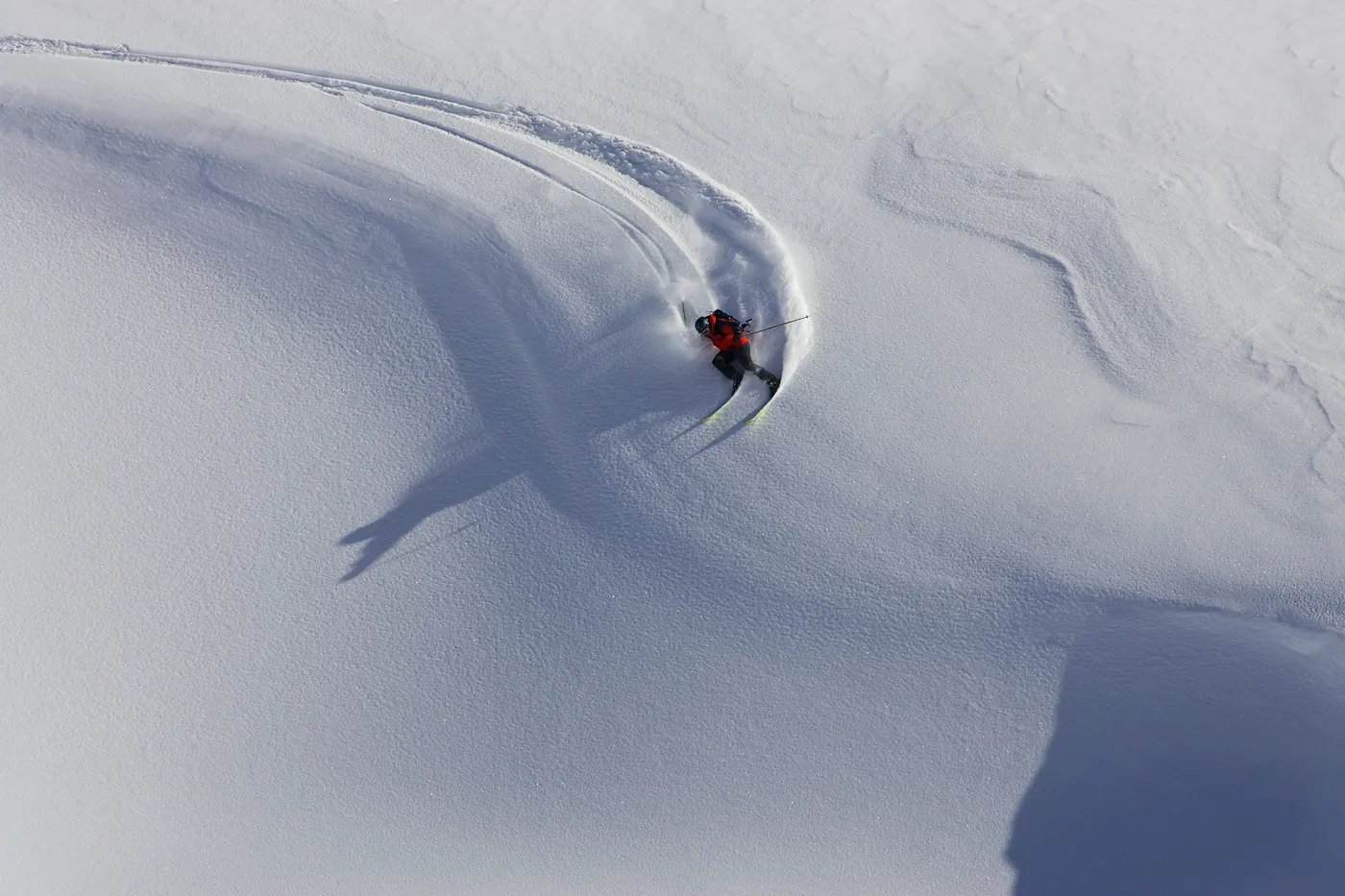
With Grouse, Seymour and Cypress hanging right above Lower Lonsdale, ski season here isn't an annual trip — it's a weeknight habit, night-ski laps after work included. Conditioning for it means three things: quads and glutes that can absorb turn after turn for hours, a trunk that controls rotation, and deceleration mechanics that protect your knees when snow, ice or flat light surprises you.
The riders who feel strong on closing weekend are almost always the ones who did six to eight weeks of this before opening day. Here is what that block actually contains.
Strength-endurance: solving the fourth-run problem
Skiing and riding are less about maximum leg strength than about holding a loaded, bent-knee position through hundreds of turns — a quasi-isometric endurance quality that regular squatting only partly builds. The fix is duration under tension: extended sets of squats and lateral lunges, isometric holds that recreate the thigh burn of a long groomer, and skater-style lateral bounds for the edge-to-edge push. When your legs stop failing on run four, the whole day opens up.
Rotational core: where turns actually come from
Snowboarders steer with trunk rotation; skiers do the opposite — holding the upper body quiet and facing downhill while the legs turn beneath it. Both are core skills in the literal sense. Training needs rotation and anti-rotation: medicine-ball throws and rotational chops for the boarders' pattern, anti-rotation holds and presses for the skiers' separation. Within our multiple-station circuit sessions, trunk stations sit right beside the leg work, which is how riding loads them too.
Landing mechanics and knee protection
Knees are the classic snow-sport casualty, and the mechanism is usually deceleration — a landing, a compression, a sudden catch of an edge. The gym's contribution is teaching your body to absorb force through hips instead of collapsing inward at the knee: hip-hinge landing patterns, controlled depth work, and single-leg balance under fatigue, when sloppy mechanics actually appear. No training makes anyone crash-proof, but prepared tissue and rehearsed mechanics stack the odds considerably.
The pre-season timeline
Local hills typically spin lifts in December, snow permitting — so the conditioning math works backward from there:
- 8+ weeks out (late October): build general leg strength and work capacity — the base everything else sits on. Strength classes carry this phase.
- 4-6 weeks out: shift toward strength-endurance sets, lateral power, and rotational trunk work.
- 2 weeks out: add landing and deceleration emphasis; keep volume honest so you arrive fresh, not fried.
- In season: one to two maintenance sessions a week, scheduled around mountain days — enough to hold your gains without stealing legs from Saturday.
About that first-week soreness
Everyone knows the day-after-opening-day walk: quads so trashed that stairs become a negotiation. That is eccentric shock from braking forces your legs haven't met since spring, and pre-season slow-lowering work largely pre-pays it. Riders who conditioned beforehand ski day two of the season; riders who didn't, recover from day one. Hikers already know this trade-off from descents — the overlap with hiking-specific training runs deep in both directions.
Common questions
Is conditioning different for skiers versus snowboarders?
The base is shared — leg strength-endurance, engine, deceleration — but the trunk emphasis differs: boarders bias rotation and front-leg loading, skiers bias upper-lower separation and symmetric quad endurance. A coached session covers both patterns, so mixed households can train together.
I only get up the mountain a handful of days a year — is conditioning worth it?
Arguably you need it most. Frequent riders maintain sport fitness by riding; occasional riders ask unprepared legs for a huge day out of nowhere, which is exactly when fatigue-driven tweaks happen. A few weeks of preparation converts your rare days from survival into fun.
Should I keep training once the season starts?
Yes, at maintenance dose — one or two sessions a week, kept away from the day before big mountain days. Legs detrain over a season of riding alone faster than people expect, and February you will feel the difference.
Can conditioning prevent ACL injuries?
No training honestly prevents injury outright, and we won't claim it. What the research direction supports is that stronger legs, better landing mechanics and fatigue resistance reduce risk. For a knee with existing history, involve a physiotherapist in your pre-season plan.