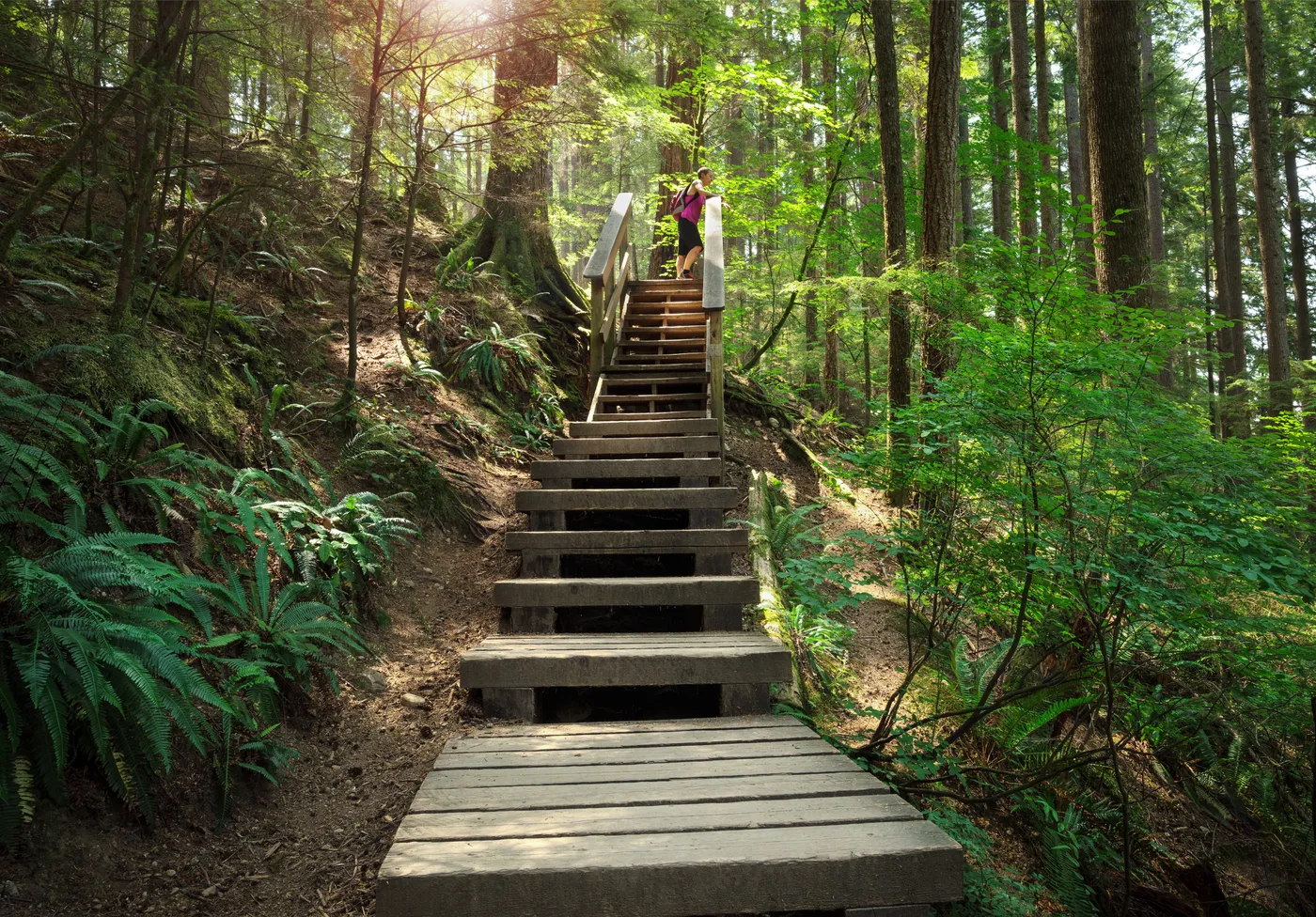
Hiking fitness on the North Shore comes down to four capacities: legs that can step up over and over (the Grouse Grind alone is roughly 2,830 stairs), an engine that holds a steady climbing effort for an hour, eccentric control so descents don't shred your quads, and a core that stays tall under a loaded pack. Train those four in the gym and the trails change character.
None of it requires mountain weather. Most of a hiker's off-trail preparation happens indoors — which, given a North Vancouver November, is a feature.
Step-up strength: the currency of the climb
Every steep North Shore trail is ultimately a single-leg event — one leg drives your entire body weight up each step while the other recovers. So the gym work that transfers is single-leg work done for endurance, not just strength: step-ups, split squats, and lunges in higher-rep sets that teach your glutes and quads to repeat the effort hundreds of times, the way the BCMC demands rather than the way a max-lift day does.
Descent control: the eccentric problem nobody trains
The soreness that ruins the two days after a big hike mostly comes from the way down, not the way up. Descending is eccentric loading — your quads lengthening under braking force on every step — and it is trainable: slow-lowering tempo squats and controlled step-downs build exactly that braking capacity. Hikers who train it walk off Quarry Rock or down from Lynn Valley feeling springy where others feel wrecked.
Worth knowing: the Grind itself is an up-only route for most hikers, with the gondola down — so it barely trains descent at all. Your eccentric work has to come from other trails or from the gym.
Building the climbing engine
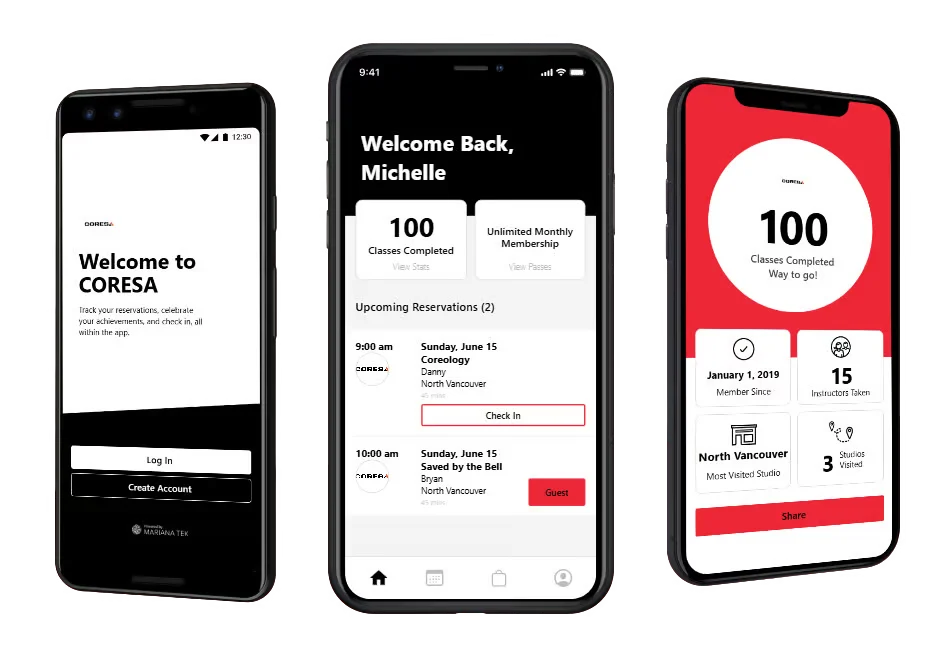
A sustained climb is a pacing exam. Incline treadmill efforts inside our circuit sessions rehearse it directly — grade under your feet, effort held for minutes at a time — and treadmill interval training sharpens the top end for the steep pitches. Heart-rate guidance on the screens teaches the skill most first-time Grinders lack: finding the climbing effort you can hold to the top instead of blowing up at marker one.
If the Grind specifically is the goal, our Grouse Grind training guide turns all of this into a week-by-week preparation plan.
Pack-ready core and grip
A pack does not just add weight — it moves your balance point and taxes your trunk on every uneven step. Loaded carries are the cleanest gym translation: farmer carries for grip and posture, offset single-side carries for the stabilizing muscles that keep you upright when a root grabs your boot. Core work done under fatigue, late in a session, mimics hour-three on the trail better than fresh crunches ever will.
Off-season: don't start from zero every May
The classic North Shore mistake is letting hiking fitness lapse from October to April and rebuilding it painfully every spring. Two coached sessions a week through the rainy months holds your step-up strength and engine at altitude, so early-season hikes are enjoyable instead of humbling. Plenty of hikers pair this with winter mountain days — the crossover with ski and snowboard conditioning is substantial, since both live on leg strength-endurance.
Common questions
How many weeks before hiking season should I start training?
Six to eight weeks produces a noticeable difference on a target hike, which is why spring fills up with Grind-preppers. The better answer is year-round maintenance at two sessions a week — it costs less effort than an annual rebuild and you start every season ready.
Can gym training actually replace time on trails?
No, and we won't pretend otherwise — nothing fully replicates sustained grade, terrain, and time on feet. What gym work does is make every trail hour more productive and less punishing, and it carries your fitness through months when the trails are soup. Check official trail status before heading up; conditions change fast on the North Shore.
My knees complain on descents — will training help?
Often, yes: descent pain is frequently a capacity problem, and building eccentric quad and hip strength raises that capacity. But pain that persists or worsens deserves a physiotherapist's assessment before you load it harder — get it looked at, then train around the answer.
Should I train wearing my actual pack?
Occasionally, on stairs or walks, to calibrate — but you don't need to haul it into a gym. Loaded carries and single-leg work under load develop the same qualities with better control over dose, and your shoulders will thank you.