
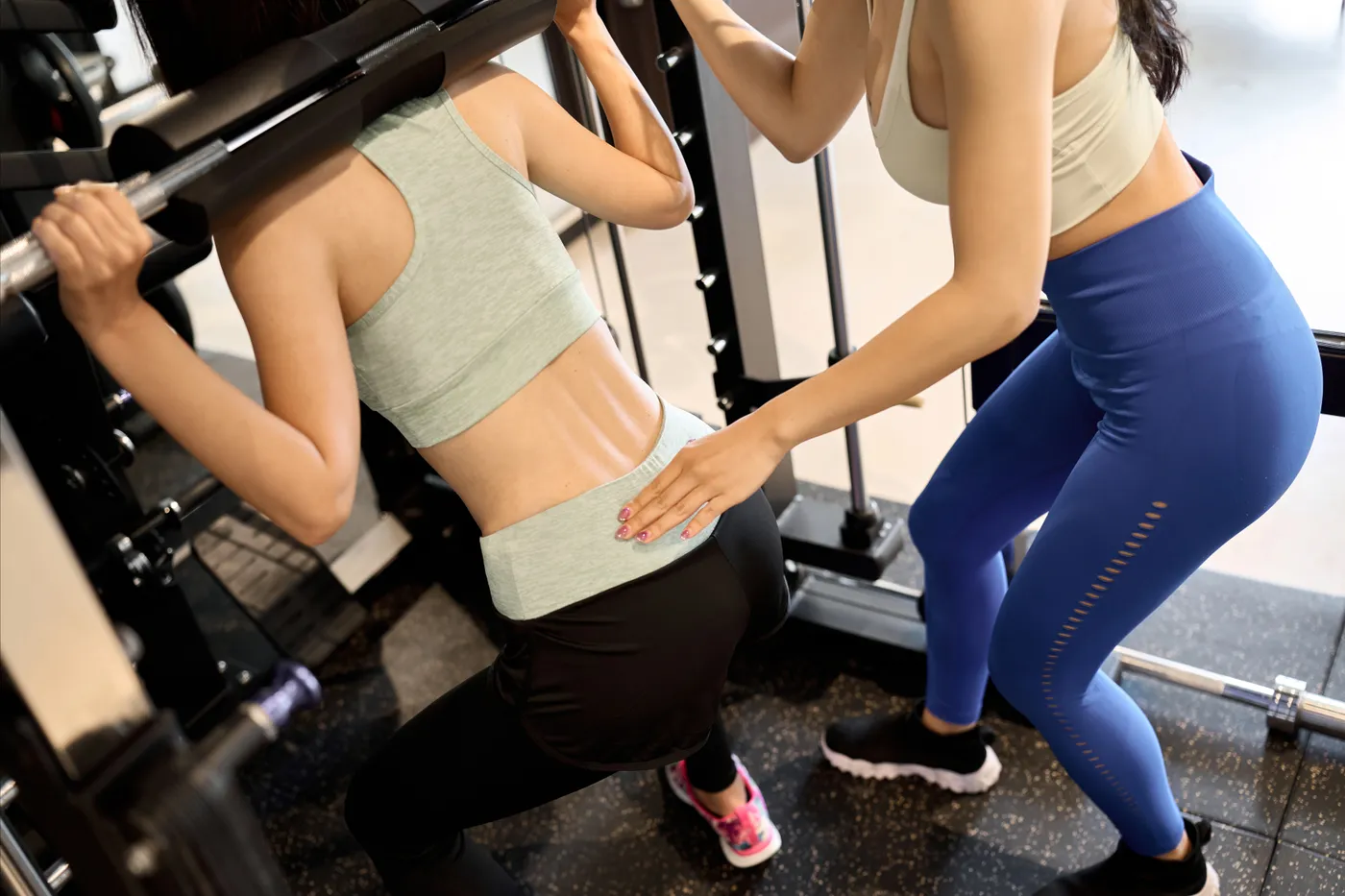
Bracing is creating stiffness through the whole trunk before a lift by drawing a breath into the belly and sides and then tightening the midsection around it. It protects the spine and lets force pass from the legs to the bar without leaking.
Bracing is the act of making your trunk stiff before a load arrives: a breath taken low into the belly and sides, then the midsection tightened around it so ribcage and pelvis stay where you put them. It is the first skill under every squat and hinge, because the legs can only push as hard as the trunk can transmit. A body that leaks at the middle lifts less and feels it in the back.
A worked example: a hand on the ribs
A coach teaching it often skips the anatomy and uses a hand. Holding a dumbbell for a goblet squat, the member puts a palm on the side of their lower ribs and breathes until the palm moves outward, not the shoulders upward. Then the cue: make the middle wide, then lock it. The first squats run one breath per rep: brace at the top, hold through the descent and drive, exhale, breathe again. Once it is automatic, light sets run two or three reps on a breath and heavy sets go back to one. The Romanian deadlift gets the same drill with a bar in the hands, where the urge to let the breath go at the bottom is strongest.
The common confusion: bracing versus sucking in
Most people's first attempt at tightening the trunk is to pull the navel toward the spine. That is hollowing: it narrows the waist, and a narrower cylinder with less pressure inside is easier to bend. Bracing widens the cylinder and fills it. A second confusion is treating the brace as a maximal hold on every rep of everything. A curl does not need it, a set of push-ups needs a moderate version, a heavy deadlift needs all of it.
The caveat is medical. A hard brace with a held breath raises blood pressure briefly, so anyone managing hypertension should tell the coach, brace lightly, exhale through the sticking point, and check the plan with their physician.
Where it shows up in a Coresa session
Everywhere a squat or hinge does. It is taught first on the floor with a dead bug, where breathing while stiff is learned without a load, then moved to the goblet squat, then the barbell; in 1-on-1 personal training that sequence starts in the assessment. Carries are the brace on a walk. In a group of eight, the brace is what the coach checks before the weight goes on, and losing it is why a set gets stopped. The squat and hinge basics page covers the setup around it.
Common questions
Do I brace on every rep or once per set?
Once per rep on anything heavy: exhale at the top, breathe and reset. Light sets of a well-learned movement can run two or three reps per breath. Never release it mid-rep.
How do I brace if I have been told not to hold my breath?
Take the breath, tighten, and exhale slowly through pursed lips during the hardest part of the rep instead of holding. It costs a little stiffness and keeps the pressure spike small. Tell your coach and follow your physician's advice.
Why does my lower back still round even when I brace?
Usually the brace is only happening in the upper abdomen, or the load is beyond the range you can control. Lighter weight, a shorter range and a hand on the low ribs fix most cases; persistent pain is a physiotherapist's question.