A workout habit survives real life when exercise stops being a daily decision and becomes a default — something that happens unless actively cancelled, the way brushing your teeth does. Getting there is an engineering project, not a character test: set the cues, shrink the friction, collect identity evidence, and pre-commit while you're at your best.
What follows is the mechanics: the loop that runs every habit, friction design, identity, pre-commitment, scorekeeping that doesn't curdle into guilt, and a ninety-day map of what to expect.
Every habit runs the same loop
Habits are cue, action, payoff, on repeat. The cue triggers you — an alarm, leaving the office, the sight of your gym bag. The action follows with as little deliberation as possible. And some payoff teaches your brain the sequence was worth keeping. Run the loop enough times and the debate stage quietly disappears.
Two implications for exercise. First, attach training to a cue that already fires reliably — straight off the SeaBus, right after school drop-off — rather than to a time of day you'll renegotiate nightly. Second, manufacture a payoff you feel immediately, because fitness itself arrives far too slowly to reinforce anything: a podcast reserved for training only, the unhurried shower afterwards, the specific good coffee on the walk home. Small, instant, deliberately linked.
How long until it runs itself? Automaticity arrives on its own schedule — quickly for simple routines, slowly for demanding ones like training — so budget a full season rather than the internet's three weeks, and take anything faster as a gift.
Friction decides more than motivation does
Between "I should train today" and the first rep lies a series of small costs: finding kit, choosing a workout, travelling, parking, deciding how hard to go. Every cost you delete raises the odds the intention survives contact with a tired evening. The audit takes five minutes: replay your last skipped workout and mark exactly where it died.
The highest-leverage cuts, roughly in order: train somewhere already on your daily route — near work or near home is a genuine strategy question, not trivia; keep kit permanently staged, a packed bag living by the door or in the car; and outsource the what-workout decision entirely, because a coached session deletes the biggest nightly negotiation of all. People rarely quit exercise. They quit the logistics around it.
Identity is what makes it permanent
Habits anchored to outcomes dissolve when the outcome arrives or stalls — lose the ten pounds, lose the reason. Habits anchored to identity compound, because "I'm a person who trains" has no finish line to fall off. And the identity isn't claimed in one grand declaration; it's assembled from small proofs. Every session you show up for, including the short mediocre ones, goes into the evidence file — and at some point the file gets thick enough that skipping starts to feel out of character.
This is why the terrible workouts matter most. Anyone trains on a good day. Fifteen unremarkable minutes on a bad one is the strongest identity evidence you can generate, precisely because it proves the habit doesn't depend on conditions.
Pre-commitment: decide while you're smart
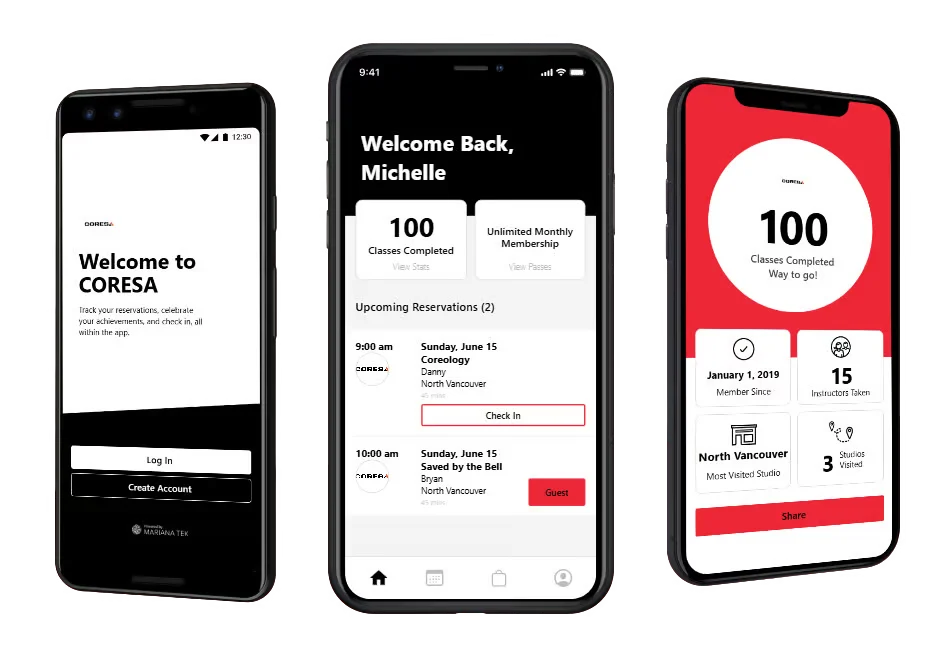
Sunday-evening you and Thursday-6-pm you are different people with different priorities, and the whole trick of pre-commitment is letting the wiser one bind the tireder one. A reserved spot in a scheduled session does this beautifully: a cancellation window on the line, a coach who'll notice, a specific hour claimed before the week's chaos could claim it first. Two minutes on the Coresa app can retire seven days of internal debate.
Layer the social version on top — a standing training partner, a small class where your absence is visible. Obligations to other people hold long after obligations to ourselves have quietly expired.
Keep score without convening a courtroom
Tracking works — what gets recorded gets repeated — but the wrong scoreboard eventually injures the habit it was guarding. Perfect-run counting is the classic case: flawless attendance feels great right up until life interrupts it, and then the zero reads as a verdict instead of a data point.
Score seasons instead. Aim to hit most of your planned sessions across a month — a target that absorbs sick kids and late meetings without collapsing — and review monthly, not daily. Then pre-write your comeback move for the inevitable gap: the first session back is deliberately easy, booked the moment you miss, with no make-up workouts attempting to repay the debt. Gaps only end habits when re-entry was left unplanned.
The ninety-day arc
| Days | What it feels like | What to focus on |
|---|---|---|
| 1-30 | Novelty carries you; logistics fight you | Fix cues and friction; keep sessions modest so the cost stays payable |
| 31-60 | The dip — novelty gone, results not yet visible | Lean on bookings and people; score the month, not the week; expecting this phase is half of surviving it |
| 61-90 | Sessions start happening without internal debate | Defend the slots from calendar creep; add ambition to the workouts, not to the schedule |
By day ninety the habit isn't invincible, but it is established: the default now works for you, and the interesting question becomes training quality instead of attendance. For the condensed tactics, staying consistent with exercise is the pocket edition of this page.
Habit development is also, plainly, what Coresa builds its programming around — the coached structure, the booking rhythm, and habit and lifestyle coaching exist to install exactly the system described above. If seeing the environment would help, the free 15-minute consult makes a very manageable first rep.
Common questions
Should I start with an ambitious plan or a tiny one?
Tiny, then grow. Two sessions a week held for three months beats five a week abandoned in three weeks, and the early phase is about proving reliability to yourself, not maximizing stimulus. Ambition belongs in month four.
Does the time of day I train affect the habit?
Consistency of slot matters more than which slot, but mornings hold a structural edge: fewer meetings and emergencies have happened yet, so fewer things can preempt you. Before or after work weighs the trade-offs honestly.
I've started and quit many times — what should be different this attempt?
Diagnose the previous exits before repeating them: nearly every quit traces back to friction, invisible progress, or an unplanned gap that became permanent. Change the system those failures point at, and this attempt is genuinely different rather than merely more determined.
Do rewards for working out actually work on adults?
Immediate ones do — the payoff has to land the same day, not at a future weigh-in. Pairing training with something you already enjoy, like a saved-up playlist or the good coffee afterwards, quietly outperforms promising yourself a prize in June.