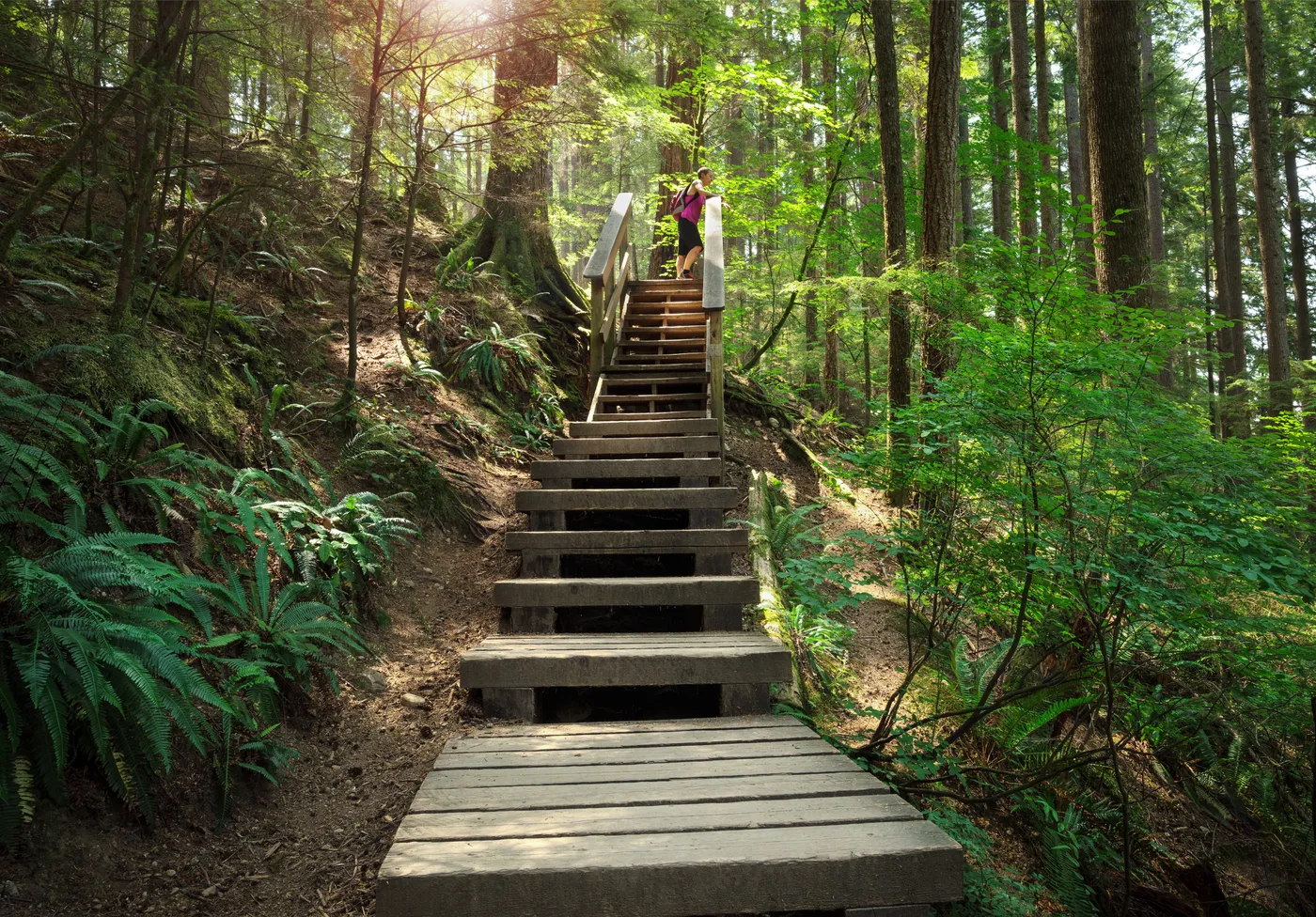
The Grouse Grind packs roughly 2,830 steps and about 800 metres of elevation gain into one short, relentless trail up Grouse Mountain — and preparing for it comes down to three things. You need legs that can climb stairs for an hour or more without fading, an aerobic engine that holds a steady uphill effort, and a pacing plan that keeps you from redlining in the first ten minutes.
This guide covers what the climb actually demands, a six-to-eight-week preparation structure you can adapt to your schedule, the exercises that transfer best, and how to handle attempt day — including the descent, which surprises almost every first-timer.
What the Grind demands of your body
The Grind is a sustained stair climb with almost no flat ground, which makes it a strength-endurance event more than a hike. Your quads, glutes and calves work continuously against gravity, and there is nowhere on the trail where the grade eases enough to fully recover.
Your heart rate rises within the first few minutes and stays elevated to the top. For most people that puts the climb near their threshold — hard enough that conversation comes in short phrases, not sentences.
Most first-timers reach the top somewhere between one and two hours, and repeat climbers chip that down with fitness and familiarity. The trail is seasonal and conditions change, so check Grouse Mountain's official information for current status, hours and access details before you plan an attempt.
A six-to-eight-week preparation structure
Six to eight weeks is enough time for a reasonably active person to arrive at the base feeling ready rather than hopeful. The structure below assumes three to four sessions a week: two strength sessions, one or two climbing-specific efforts, and easy walking on the remaining days.
| Weeks | Focus | Session types |
|---|---|---|
| 1-2 | Base | Easy aerobic walks, bodyweight step-ups, general leg strength, core work |
| 3-4 | Strength-endurance | Longer step-up sets, incline treadmill climbs, split squats, loaded carries |
| 5-6 | Specificity | Outdoor stair sessions, sustained 30-45 minute climbing-pace efforts, single-leg strength |
| 7-8 | Sharpen and taper | One rehearsal effort at target pace, lighter volume in the final week |
If you only have six weeks, compress the first two phases rather than cutting the taper. Arriving rested matters more than squeezing in one last hard session.
If you want the condensed version of this plan, the short answer at training for the Grouse Grind covers the essentials, and when the Grind typically opens explains how the season should shape your timeline.
The exercises that transfer best
Nothing replicates the Grind exactly, but a handful of movements come close enough to matter. Prioritize these in your strength sessions:
- Step-ups — the single closest match. Use a box around knee height, drive through the whole foot, and control the lowering phase instead of dropping off.
- Split squats and lunges — build single-leg strength and hip stability for the trail's uneven, high steps.
- Incline treadmill climbing — trains sustained uphill effort and lets you rehearse pacing by feel or heart rate.
- Calf raises — your calves absorb thousands of loaded contractions on the way up; endurance here prevents the late-climb burn.
- Carries and core work — a stable trunk keeps your posture tall when your legs are cooked, which keeps your breathing open.
Volume matters more than load for this goal. Longer sets of fifteen to twenty-five step-ups per leg build the specific endurance the climb rewards, where heavy sets of five would build strength you can't sustain for an hour.
Pacing, etiquette and attempt day
Start slower than feels natural — noticeably slower. The steepest sustained sections arrive after the quarter mark, and nearly every first-timer who blows up does it by matching the pace of fitter climbers in the opening minutes.
A simple pacing framework
- First quarter: deliberately easy, breathing you could almost talk through.
- Middle half: settle into a rhythm you believe you could hold for a full hour, using small, even steps.
- Final quarter: if you have something left, spend it here — the top comes sooner than you expect.
Trail etiquette
The Grind is busy and narrow. Climb single file, step aside at wider spots to let faster hikers pass, keep headphone volume low enough to hear people behind you, and carry your own water and a layer — the summit is often cooler and windier than the base.
Plan your descent before you start. The Grind is managed as an uphill trail, and most climbers ride the Skyride gondola down; check Grouse Mountain's official information for the current download policy and pricing rather than assuming you can walk back the way you came.
Turning studio sessions into mountain fitness
Everything above can be built inside a coached session. Coresa's circuit format blends leg-strength stations with treadmill efforts, so a single visit can cover step-ups, single-leg work and sustained incline climbing — the exact ingredients this plan asks for. Treadmill interval classes handle the engine work, and the broader program for trail people is laid out on our training for North Shore hikers page.
If you'd rather talk it through before committing to anything, book a free 15-minute consult call — zero pressure, and you can ask exactly how we'd map your Grind timeline onto the schedule.
Common questions
How fit do I need to be before attempting the Grouse Grind?
If you can walk briskly uphill or climb stairs continuously for 30-40 minutes, you can likely complete the Grind at an easy pace with rest stops. If that sounds out of reach today, spend four to six weeks on the base and strength-endurance phases first — the climb will be far more enjoyable.
Can I prepare for the Grind entirely on a treadmill?
Mostly, yes. Steep incline walking builds the sustained climbing effort well, but add step-ups and single-leg strength work too, because the Grind's tall, uneven steps demand more knee and hip drive than a smooth belt does.
How many stair or climbing sessions should I do each week?
One or two specific climbing sessions a week is plenty alongside your strength work. Legs need recovery days to adapt, and stacking daily stair sessions usually produces sore knees rather than faster times.
Do I need to train for the downhill?
Not for the Grind itself if you take the gondola down, which is what most climbers do. If you plan to descend other North Shore trails the same season, add controlled downhill work — the North Shore hiking fitness guide covers descent training in detail.