
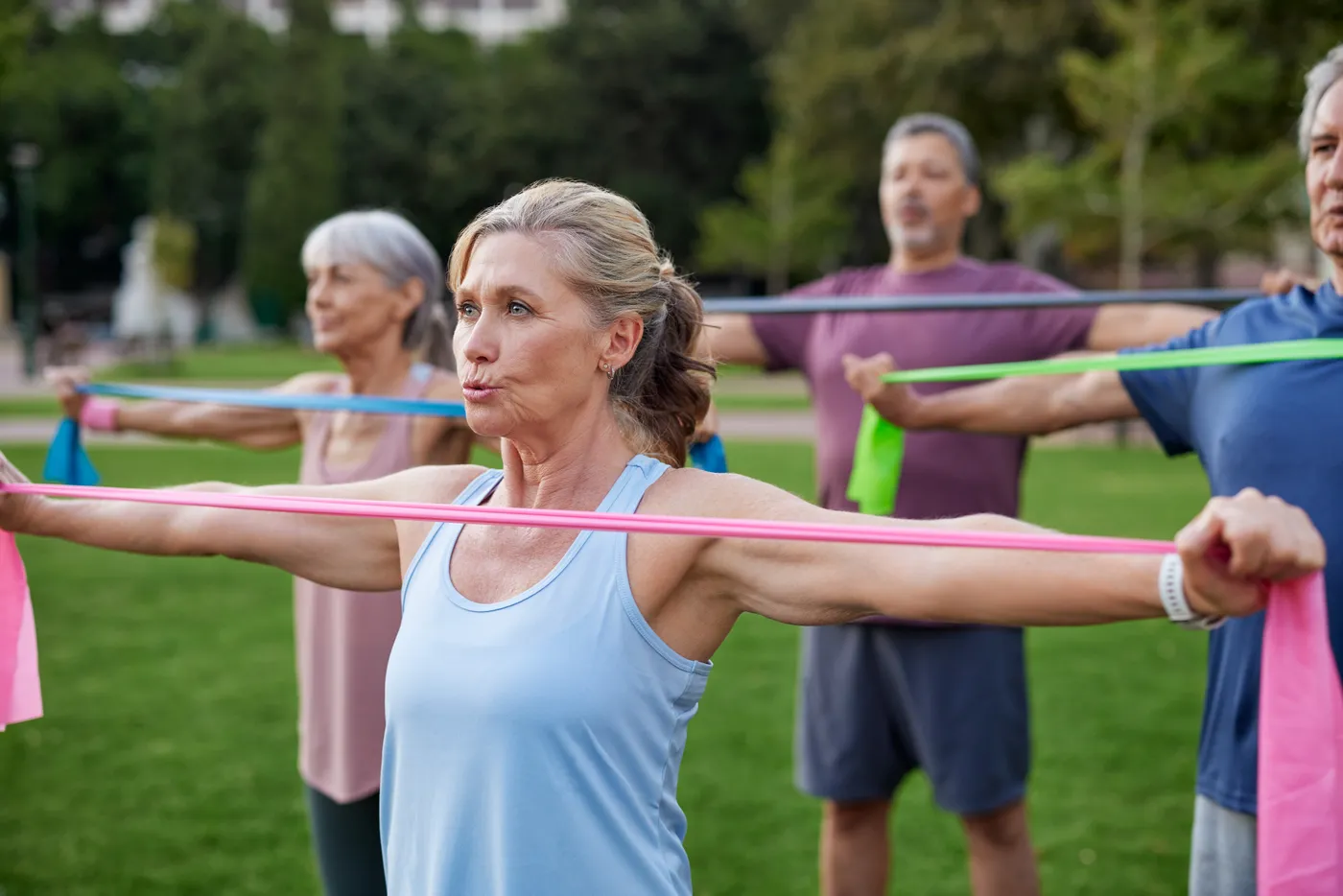
Strength after 50 is built on six everyday patterns: standing up from a chair, stepping, standing on one leg, hinging, carrying and pulling. This thirty-minute session covers all six with a chair, a wall and a pair of dumbbells, with the rests written in. Nothing is rushed and nothing goes to failure.
It is the home version of a first month in a semi-private sessions here, the coach's progressions translated into chair heights, hand positions and slower lowering. The fitness for seniors page covers why balance is trained rather than hoped for; this page is the training.
Time: about 30 minutes
Equipment: a pair of dumbbells, a kitchen chair, a counter or wall within reach
For: Anyone over 50 who wants a home version of a coached session: members between visits, or a beginner with a pair of dumbbells and a kitchen chair.
Not for: A recent fall, a new joint or a dizziness problem; those want a physician or physiotherapist first, then a coached start rather than a page.
Warm-up
- Three minutes of walking, indoors is fine: hallway laps or easy stairs.
- Ten shoulder rolls and ten slow marches on the spot, knees a little higher each time.
- Five sit-to-stands at an easy pace as a rehearsal, hands on the thighs if needed.
Part one: getting up and stepping
Sit-to-stand is a squat with a built-in depth setting. Feet flat, nose over the toes, stand tall without the hands, then sit down slowly rather than dropping.
| Movement | Sets × reps | Effort | Note |
|---|---|---|---|
| Sit-to-stand | 3 × 8 | Steady, three seconds down | Arms crossed once the hands are not needed; a cushion raises the seat, removing it lowers it |
| Reverse lunge to a shallow depth | 2 × 6 each leg | Fingertips on the counter | Step back, lower a few inches, return; the knee need not reach the floor |
Rest: 60 to 90 seconds; sitting down between sets is allowed and sensible.
Part two: standing on one leg
Balance is a skill and trains like one: short, frequent, near something to hold. Stand beside the counter, not mid-room.
| Movement | Sets × reps | Effort | Note |
|---|---|---|---|
| Single-leg stand | 3 × 20 seconds each leg | Fingertip contact allowed | Eyes on a fixed point; progress to slow head turns, then to a lighter touch, then to none |
| Heel-to-toe walk along the counter | 2 × 10 steps each way | Slow | One foot directly in front of the other, a hand hovering over the counter |
Rest: 30 seconds; shake the legs out.
Part three: hinge, carry, row
The patterns that keep groceries, grandchildren and garden bags manageable. Light dumbbells, tall posture, three reps to spare.
| Movement | Sets × reps | Effort | Note |
|---|---|---|---|
| Dumbbell Romanian deadlift | 2 × 10 | 3 reps in reserve | Hips back, back flat, dumbbells sliding down the thighs to just below the knee |
| Farmer carry | 2 × 30 steps | Tall and unhurried | A hallway turned and counted; set the weights down with a bend at the hips, not the back |
| Single-arm dumbbell row | 2 × 10 each side | 3 in reserve | Hand on the chair back, elbow to the hip, shoulders level |
Rest: 60 to 90 seconds between sets.
Make it harder or easier
Harder: Hug one dumbbell for the sit-to-stands, which makes them a goblet squat; remove the cushion; add head turns, and later a brief eyes-closed hold, to the single-leg stands once fingertip contact is no longer needed; and slow every lowering to four seconds before any dumbbell goes up a size.
Easier: Hands on the thighs for sit-to-stands, both hands on the counter for the lunges, two-foot holds with the weight shifted to one leg, and the lightest dumbbells you own for the row and hinge. Two sets of everything makes it twenty minutes.
Common questions
Is it safe to practise single-leg balance alone at home?
With a counter within reach, a clear floor and shoes or bare feet rather than socks, yes for most people. Keep holds short, stop before the wobble gets big, and progress the difficulty rather than the risk. Anyone with a recent fall or a dizziness diagnosis needs a clinician's go-ahead first.
Can I do only the balance part on days I am tired?
Yes, and it is a good habit: the single-leg stands take four minutes and can happen while the kettle boils. Balance responds to frequency more than volume, so a short daily dose beats a long weekly one. Keep the strength parts to two or three days a week.
Why sit-to-stand instead of a squat?
It is a squat, with a chair setting the depth and catching the bottom. Seat height is the progression dial: a cushion makes it easier, a lower chair harder, and a hugged dumbbell makes it the goblet squat coached on the floor here. The pattern never changes.