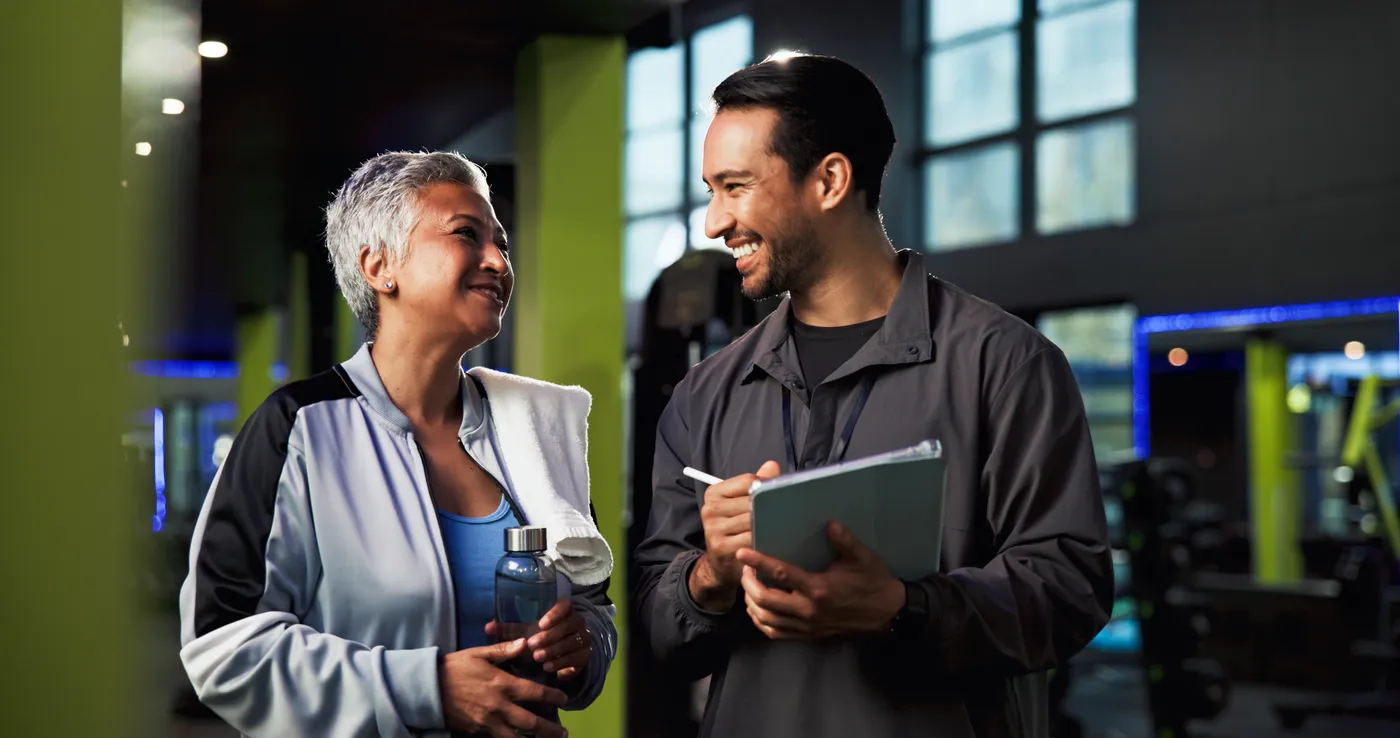
A first personal training session is mostly conversation and assessment, not a hard workout. Expect a goal discussion, a look at how you move through a few basic patterns, and some deliberately light training so the coach can see you in motion — you should walk out feeling informed and a little energized, not destroyed.
If you know roughly what the hour holds, the nerves lose most of their material. Here's the sequence, minute by minute.
It opens with questions, not exercises
The first stretch of the session happens sitting down. A good coach wants your training history, past and current injuries, what your weeks actually look like, what you've tried before and why it fizzled, and what you want to be different in three months. Vague answers are fine — turning "I just want to feel better" into something trainable is the coach's job, not yours.
Be honest about the unglamorous parts: the sore shoulder, the four hours of sleep, the two previous gym memberships that went unused. Every one of those details changes what a sensible program looks like.
The movement screen: a look, not an exam
Next the coach watches you move through fundamental patterns — typically some version of a squat, a hinge, a push, a pull, and a carry, with light or no load. They're looking at range, control, and left-right differences, not scoring you against an ideal.
There is no passing grade. Limited ankle mobility or a shaky single-leg balance isn't a verdict; it's information that decides which variations you start with. Worrying you'll "fail" the screen is like worrying you'll fail a map.
The workout is light on purpose
The training portion samples the plan rather than testing your limits: moderate loads, plenty of feedback, and attention to how you respond between sets. The coach is calibrating — learning how you pick up cues and where your starting loads sit — and you're learning whether their coaching style lands for you.
Use the spare attention the light loads leave you. Notice whether the coach explains the why behind each choice, and whether their corrections make a movement feel better rather than merely different — you're interviewing them as much as they're assessing you.
Finishing with energy left is the design, not a soft-pedal. How this feeds into the weeks that follow is covered on the personal training page, and if your first visit is a group session instead, your first class walks that version.
What a good first session never does
A few behaviours should end the relationship before it starts:
- Crushing you with a brutal workout so soreness "proves" the value
- Skipping the injury and history conversation entirely
- Pushing a large package before hearing what you're actually training for
- Prescribing the identical session they gave the last three clients
If you'd rather size up a studio before committing to a full session, Coresa's free 15-minute consult lets you talk to a coach with zero obligation — a lower-stakes first step than booking coaching cold.
Common questions
Will I be sore after a first session?
Mildly, possibly, since the movements are new — but a well-run first session shouldn't leave you hobbling. Severe next-day soreness usually means the coach pushed too hard, too early.
Do I need a base level of fitness before booking?
No — the session is designed to find your starting point, wherever it is. The full case against waiting is in do I need to get fit before starting with a trainer.
How should I prepare the day before?
Sleep normally, eat a regular meal a couple of hours ahead, and jot down anything you want to ask — this checklist of trainer questions is a good starting list. No special prep workout required, and definitely no crash effort the day before.
What if the coach and I don't click?
Say so — coaching is a working relationship, and a mismatch in the first session costs nobody anything. A professional would rather rematch you than keep a client who dreads showing up.