Two strength sessions a week is the minimum that reliably builds strength for most adults, and three to four is the sweet spot where progress comes fastest without taking over your calendar. Below two you're mostly maintaining what you have; beyond four, each extra day buys less than people expect.
The better question is which number you can hit for six straight months. A three-day plan you actually follow beats a five-day plan you abandon by March.
Why two days is the floor
Research on training frequency consistently points to a threshold around two sessions per week. Below it, each muscle is challenged so infrequently that adaptations fade between visits; at two full-body sessions, every major movement gets worked, recovers, and gets worked again while the stimulus is still fresh.
Two days also survives real life. Shift work, kids' hockey, a rainy-season cold — a two-day floor bends without collapsing, and that durability matters more to your results than any programming detail.
What a third and fourth day actually buy
Adding days doesn't just add volume — it changes how the week feels. The main gains:
- More practice. Squatting three times a week instead of once means the skill sharpens faster, which lets you load faster.
- Shorter, kinder sessions. The same weekly work spread across four days means no single session has to be a marathon.
- Cheaper misses. Skip one of four days and you've still trained three times. Skip one of two and half your week is gone.
Full-body or split? Let your calendar decide
Pick the structure that fits the days you genuinely have, not the one from a bodybuilding forum:
| Days available | Structure that fits | Why it works |
|---|---|---|
| 2 | Full-body, both days | Every pattern trained twice weekly — the frequency floor is met |
| 3 | Full-body, all three | Simple, and robust when a day falls through |
| 4 | Upper / lower alternating | More volume per area while keeping twice-a-week frequency |
| 5+ | Only with recovery to match | Extra days mainly reward advanced lifters who sleep and eat like it |
The classic one-body-part-per-day split is the wrong tool at low frequencies: a "chest day" once a week trains each muscle just once, which is exactly the pattern the research argues against.
Put the days on the calendar, not in your intentions
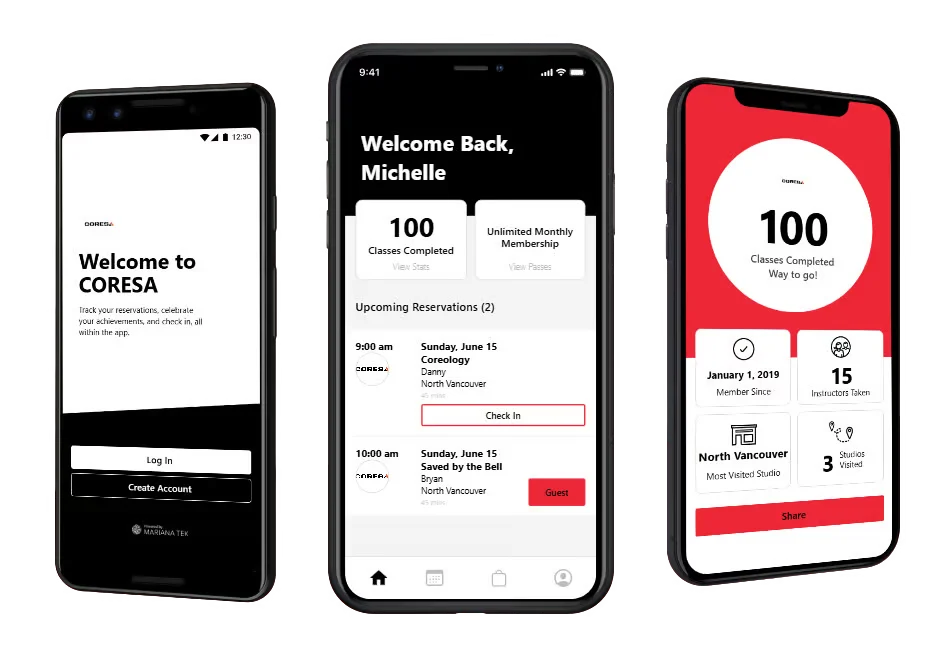
Whatever number you choose, it only counts once it's booked. Fixed days at fixed times — treated like any other appointment — outperform "I'll fit it in" every single week. Booking coached sessions in advance through the Coresa app adds a small social cost to skipping, which is quietly one of the most effective adherence tools there is.
If your week already includes conditioning, note that coached strength classes can anchor your two-to-four strength days while cardio slots in around them — how to combine the two is covered in strength and cardio on the same day.
Common questions
Is strength training once a week completely pointless?
No — one honest session maintains a surprising amount and still nudges a beginner forward. It's just the slowest lane: two sessions is where progress starts to compound rather than crawl.
Do my training days need to be evenly spaced?
Roughly, yes. A day between full-body sessions gives muscles time to rebuild before they're loaded again. Back-to-back days can work if the two sessions emphasize different areas.
Does a circuit class count as one of my strength days?
Partially. A session with progressively loaded resistance stations — like the circuit format — earns partial strength credit alongside its conditioning work. If strength is your main goal, pair circuits with at least one dedicated strength session.
What if a chaotic week leaves me only one opening?
Take it, make it full-body, and don't treat the week as a failure. One session preserves momentum and habit; zero sessions is the only real loss.