Start with two full-body sessions a week built around six movement patterns — squat, hinge, push, pull, lunge, carry — using loads light enough that you could do several more reps at the end of every set. Add weight only when a movement feels smooth and repeatable.
That's genuinely the whole starting recipe. Supplements, splits, and the hunt for a perfect program can all wait until showing up twice a week has become boring.
Patterns before plates
Those six patterns cover almost everything a human body does under load, which is why they're worth learning before anything exotic. Practise them with light dumbbells or kettlebells and you're building positions that stay trustworthy as the weight climbs later. The two that reward the most early attention are the squat and the hinge — the basics of squatting and hinging walks through both in plain language.
A rough shape for month one
- Weeks 1–2: repeat the same short full-body session twice a week. Keep loads light and pay attention to how each rep feels rather than what the dumbbell says.
- Week 3: add a rep or two per set on the movements that feel smooth. Leave the awkward ones alone until they aren't.
- Week 4: nudge the weight up slightly on your most confident lifts. Everything else stays put.
Write down what you lift each session. That scrap of a log — not the workout itself — is what turns four random weeks into the start of a program.
Coached start or solo start?
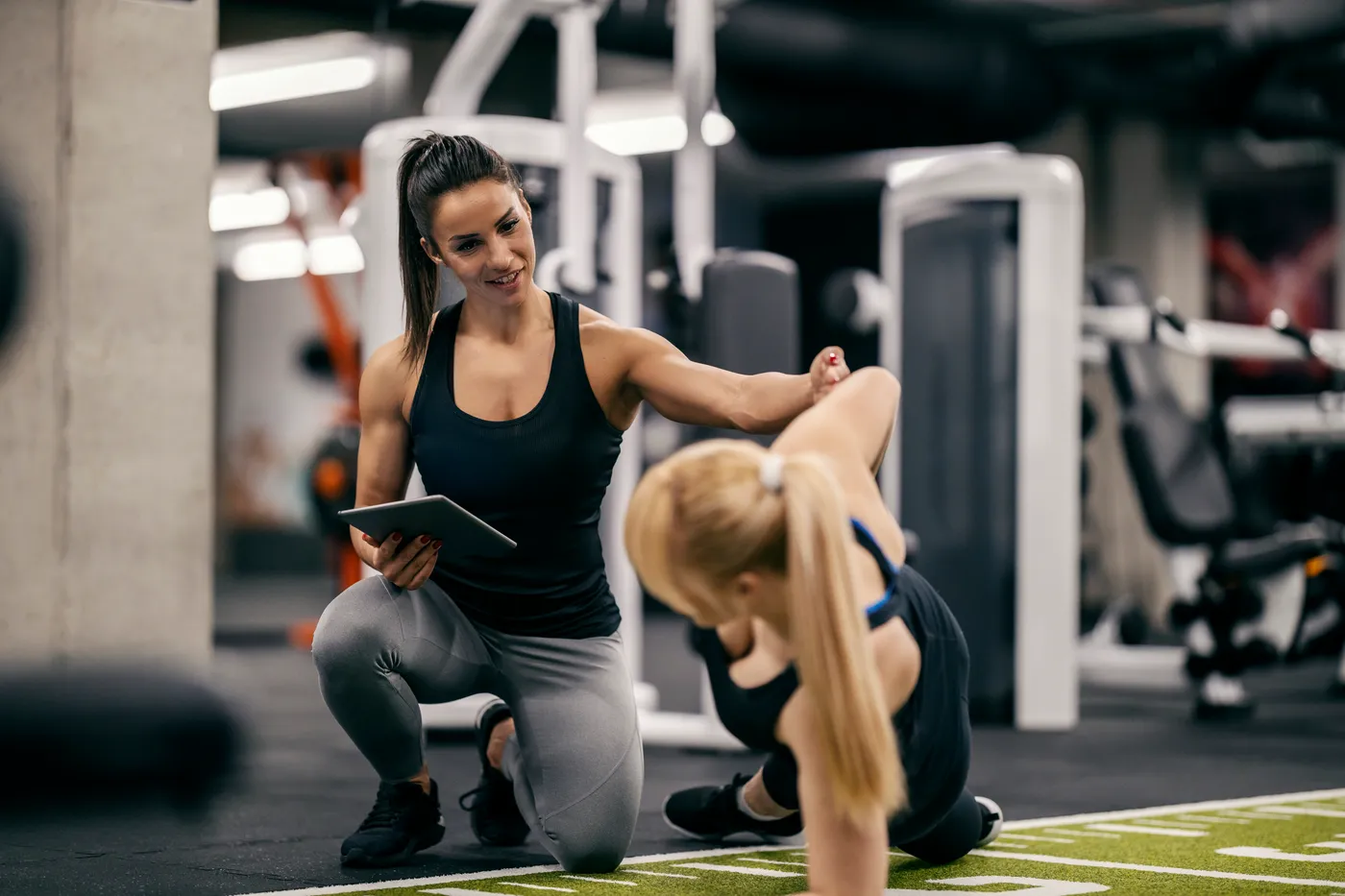
A solo start absolutely works if you're patient: film your sets, compare against good demonstrations, and progress slowly. What coaching changes is the timeline — a coach watching your reps compresses months of guessing into a few weeks and catches habits before they harden. Small group personal training is the middle path: real programming and correction, shared across a handful of people.
Where to go deeper
This answer is deliberately short. When you want the full arc — equipment choices, your first twelve weeks, plateaus, and how progress actually unfolds — the beginner's guide to strength training covers it end to end. And if you'd rather see a coached room before deciding anything, a free 15-minute consult costs you nothing but the walk over.
Common questions
Do I need to get in shape before I start lifting?
No — this is the most common false start there is. Lifting is how you get in shape; the loads scale down to wherever today's version of you actually is.
How long should a beginner session be?
Thirty to forty-five minutes is plenty. A handful of patterns done with attention beats ninety minutes of wandering between machines.
Should I be sore after every workout?
Expect some soreness the first couple of weeks — it fades fast as your body adapts. After that, soreness is a poor scorecard; your log improving is the real one.
What equipment do I actually need to begin?
A couple of dumbbells or a kettlebell covers every pattern for months, whether at home or in a studio. Barbells are a later chapter, not a prerequisite.