Two to four sessions a week is the productive range for small group training: two is the minimum that reliably builds rather than maintains, three is the sweet spot for most working adults, and four or more only pays off if your sleep and recovery keep pace. The best number on paper matters less than the number you'll actually attend — a booked twice-a-week you keep beats an imagined four you don't.
Matching frequency to your goal
Frequency is a dose, and the right dose depends on what you're treating. Someone rebuilding a habit after years away needs a different number than someone chasing a strength goal with recovery to spare — and both need a number their calendar can actually honour through a normal, imperfect month.
| Sessions per week | Best fit for | The catch |
|---|---|---|
| 2 | General health, busy seasons, your first months of training | Progress is real but slower, so consistency becomes non-negotiable |
| 3 | Strength and conditioning gains for most adults | Needs breathing room between hard days to keep quality high |
| 4+ | Ambitious goals with recovery capacity to spend | Sleep, food, and stress now decide whether the extra dose helps or hurts |
These ranges apply to genuinely hard sessions. Easy walking, cycling, and mobility work stack on top freely — the ceiling belongs to intensity, not to movement itself.
Recovery sets your real ceiling
Training creates the stimulus; the days between sessions are where the adaptation actually happens. Stack hard sessions faster than you recover and outputs stall, sleep frays, and small aches start forming a queue. The warning signs are mundane: weights that felt crisp feel heavy, motivation sags, and a session leaves you flattened instead of energized.
At three or more sessions a week, spacing matters as much as counting. Alternate hard days with easier ones where your schedule allows, and treat a stretch and recovery session as a legitimate use of a training day rather than a skipped one.
Why booked beats intended
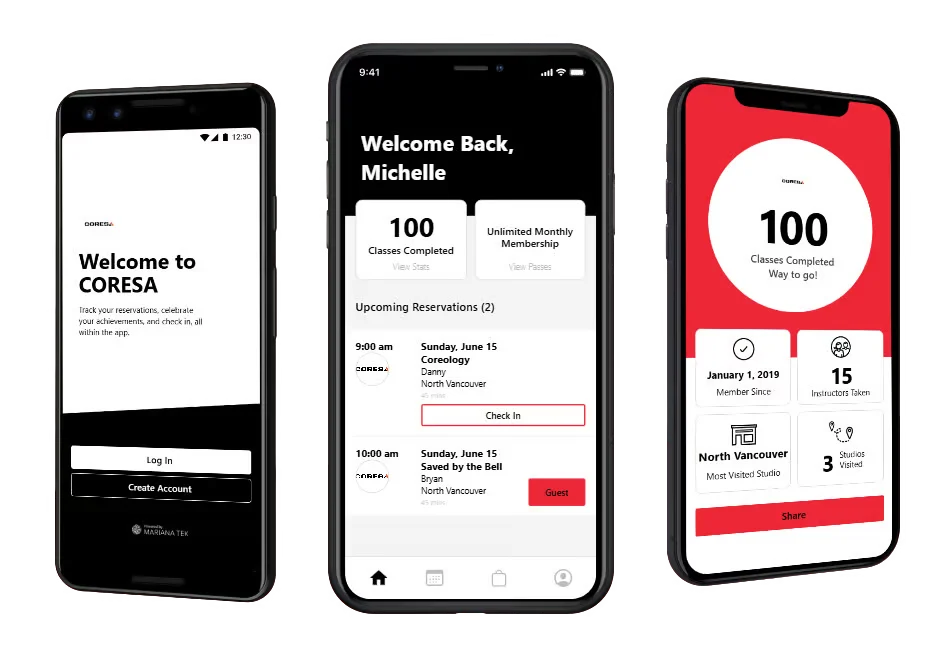
The quiet advantage of a session-based format is that frequency stops being a daily decision. An open gym membership asks you to choose every single day; a booked pattern — decided once — only asks you to show up. Coresa leans on this deliberately: habit development is a stated focus of the programming, and the Coresa app lets you lock a recurring rhythm instead of renegotiating with yourself each week.
If the only hour your week reliably owns is the one before work, make that the anchor — early morning sessions exist precisely because the pre-work slot is the hardest one for life to steal.
Adjusting the number over time
Start at the low end and earn the increase: hold two sessions a week for the first month, move to three once soreness stops lingering between visits, and only consider four when three feels easy to bounce back from. Revisit the number each season too — frequency that survives a January of dark commutes and a July of camping weekends is worth more than a heroic number that collapses at the first disruption.
What each phase of that arc should be producing along the way is mapped in what results to expect from small group training.
Common questions
Is one session a week pointless?
Not pointless — one hard, coached session a week maintains strength, keeps the habit alive, and beats zero decisively. It just builds slowly. If one is all a season allows, protect it fiercely and surround it with easy movement.
Can I train on back-to-back days?
Occasionally, yes — especially when the two sessions emphasize different kinds of work, which varied programming usually ensures. As a weekly default most people do better with a gap between hard days; if back-to-back is your only option, tell the coach so they can help you pace the second one.
Should I cut frequency when life gets chaotic?
Cut to two before you cut to zero. Two protected sessions hold your ground through a brutal month, while abandoning the schedule entirely means rebuilding the habit from scratch later — which costs far more than the missed workouts did.
Does the two-to-four range change with age?
The range holds; what changes is the recovery between sessions. Many people in their 40s, 50s, and beyond thrive at three sessions with deliberate spacing and more attention to sleep. Let how you feel two days after a hard session set the number, not the calendar year.