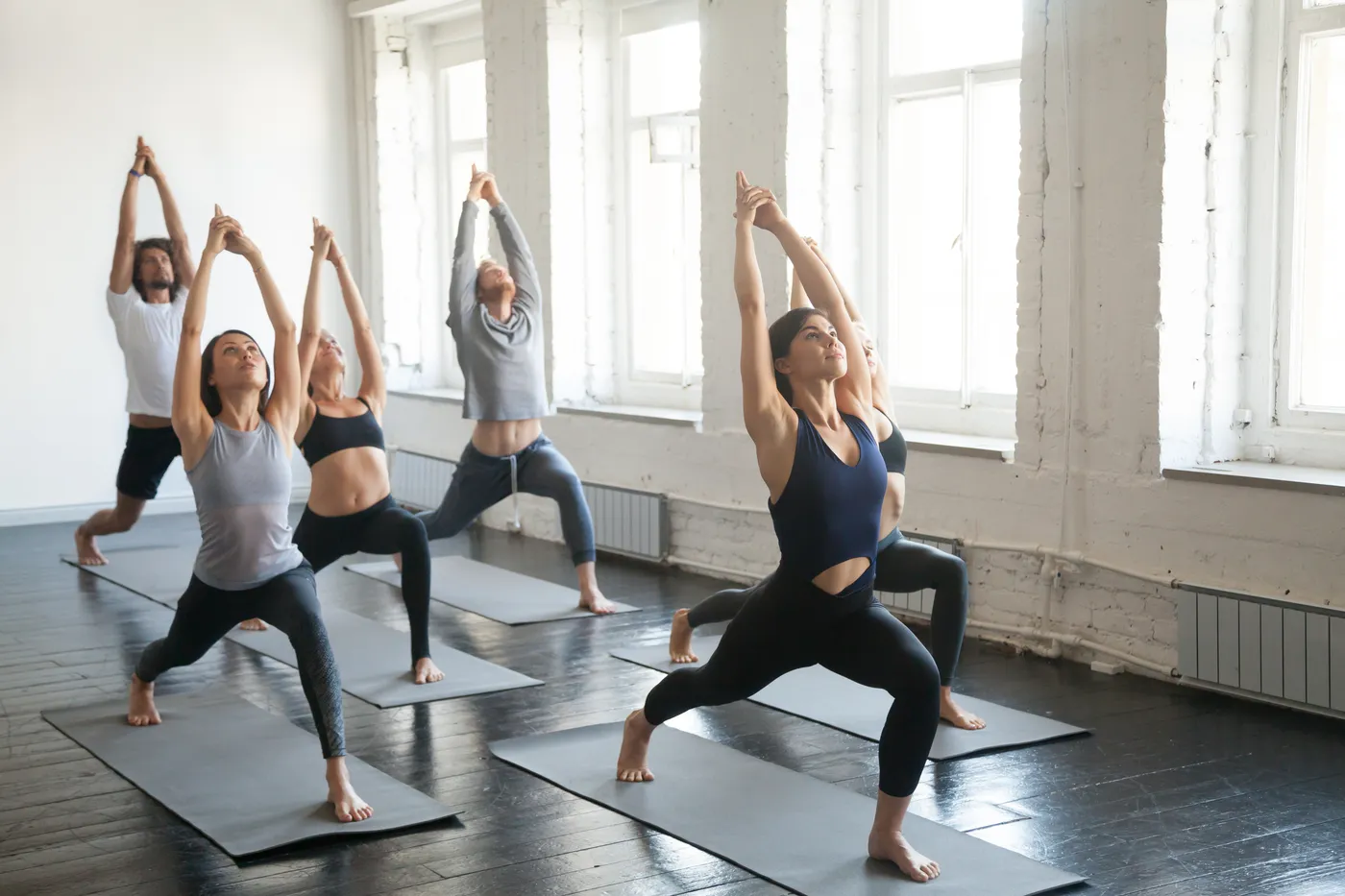
Both — but different kinds at different times. Before training, use dynamic stretching: controlled movements like leg swings, hip openers, and walking lunges that take joints through their range while raising your heart rate. Save longer static holds for after the session, or for a separate dedicated slot.
The order isn't gym folklore. It comes from what each type of stretching actually does to a body that's about to work hard.
Before training: move through range, don't park in it
A pre-workout warm-up has two jobs — raise tissue temperature and rehearse the movements you're about to load. Dynamic stretching does both. Think inchworms before pressing, hip circles and deep bodyweight squats before leg work, arm swings before upper-body work.
Five to eight minutes is plenty. If intervals are on the menu, add a few easy strides so the first hard rep isn't the first fast thing your legs do all day.
Why long static holds get bumped to later
Parking in a stretch for a long time right before lifting or sprinting can slightly reduce force and power output for a short window afterward. The honest framing: the effect is small, temporary, and mostly tied to long holds — brief holds of under thirty seconds or so don't appear to matter much.
So pre-workout static stretching isn't dangerous; it's just the wrong tool for that moment. If one area feels genuinely locked up before a session, a short hold followed immediately by dynamic movement is a reasonable compromise.
After training: where static stretching fits
Post-session is when longer holds make sense. Muscles are warm, there's no performance left to protect, and the slow breathing pairs naturally with winding down — it can double as part of your cooldown.
Be clear-eyed about the payoff, though. The evidence here is modest: static stretching done consistently improves range of motion over time, and many people find it genuinely relaxing. What it hasn't reliably been shown to do is bulletproof you against injury or erase next-day aches.
A weekly structure that covers both
- Before every session: five to eight minutes of dynamic movement matched to the day's work
- After sessions: three to five minutes of easy static holds for whatever you trained
- Once or twice a week: a longer, dedicated flexibility block
That last item is the one people skip when it's left to willpower, which is why booking it works better. Coresa's stretch and recovery sessions give the longer work a fixed spot in the week instead of a permanent home on the someday list.
Common questions
Is static stretching before lifting actually harmful?
Harmful is too strong. Long holds can temporarily blunt power a little, so they're a poor fit right before heavy or explosive work — but a few brief holds won't wreck a session. Dynamic work is simply the better pre-lift tool.
How long should I hold a static stretch after training?
Somewhere around thirty seconds to a minute per position, breathing slowly, at an intensity you'd describe as firm but not painful. Repeat a position once or twice if an area feels particularly restricted.
Can stretching replace a proper warm-up?
No. A warm-up's core job is raising temperature and rehearsing movement patterns, and static holds do neither well. Stretching can live inside a warm-up, but easy movement has to carry it.
What counts as dynamic stretching, exactly?
Any controlled movement that takes a joint through its range without stopping to hold the end position — leg swings, lunges with rotation, cat-cows, arm circles. If you're moving continuously rather than holding, it's dynamic.