You keep fitness on the road by changing the objective: travel weeks are for maintaining, not progressing. That reframe matters because maintenance is cheap — a couple of short, honest sessions plus plenty of walking will hold your strength and conditioning through even a heavy travel month. The travellers who lose fitness aren't the ones doing modest hotel workouts; they're the ones who decided the trip "ruined the program" and did nothing for nine days.
The system has four parts: a portable session you know by heart, a daily step floor, a booking waiting at home, and a full pardon for imperfection.
Maintenance costs less than you fear
The research direction on detraining is reassuring: fitness qualities fade slowly over days and weeks, not hours, and markedly reduced training volume holds them for a surprising while — provided some intensity survives. Practically, that means two or three brief sessions in a travel week, each containing a few genuinely hard efforts, keep the machine warm. You will not come home weaker from a week of maintenance. You'll come home ready to resume, which is the entire goal.
Carry one workout you know cold
Decision-making is the scarcest resource on the road, so pre-decide the session. Build one 20-to-25-minute template from movements that need nothing but floor space, memorize it, and run it anywhere — hotel room, empty conference hall, park:
- Two minutes of easy movement to warm up — marching, arm circles, air squats
- Four rounds: squats, push-ups, reverse lunges, and a hinge (single-leg deadlifts work), each near honest effort
- Finish with 60–90 seconds of fast work: burpees, mountain climbers, or stair runs
- If the hotel has a gym, swap in dumbbells for the squats and hinges — same skeleton, heavier
Short is the feature, not the compromise — the case for why a compact session genuinely counts is laid out in how long a workout should be.
Hold the step floor
Walking is the fitness constant no itinerary can confiscate. Set a daily step floor you can hit in any city and defend it with travel's natural opportunities: walk the airport instead of sitting at the gate, take meetings on foot where you can, explore the evening on foot instead of by cab. On days when the template workout loses to a 14-hour schedule, the step floor keeps the week from going to zero — and it noticeably blunts the jet lag and stiffness that long flights leave behind.
The re-entry booking: end the trip before it starts
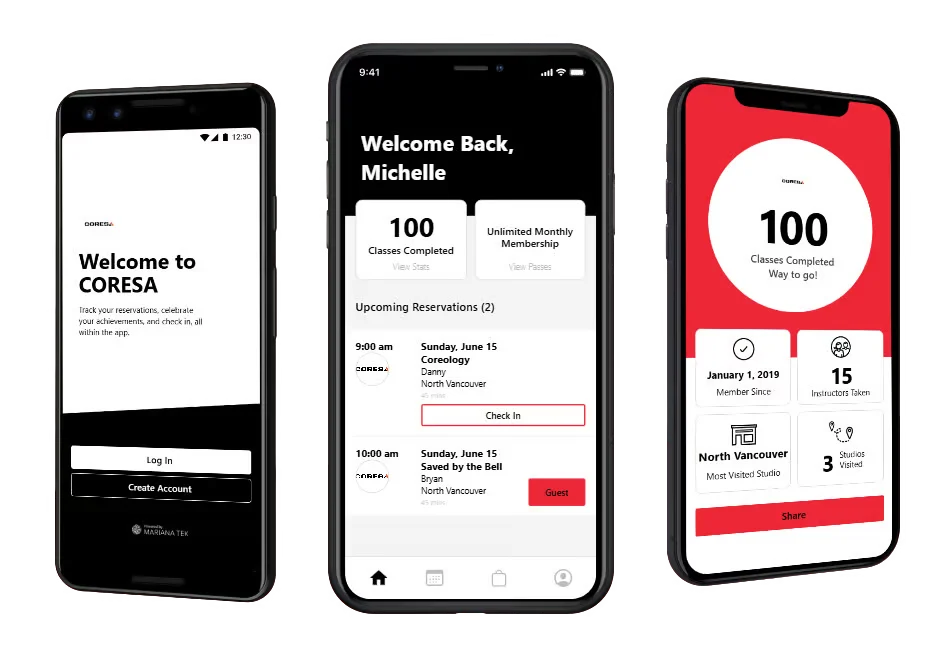
Before you fly out, reserve a class for your first or second day back through the Coresa app. This one click quietly wins the hardest fight in travel fitness: the return. Without it, re-entry gets renegotiated by a jet-lagged version of you surrounded by unpacked bags; with it, the trip has a defined end and your routine has a defined restart that would take an active cancellation to undo. Frequent travellers who stay fit almost universally have some version of this trick.
Let the perfect week die
Travel fitness fails on standards, not logistics — the all-or-nothing traveller skips the 20-minute session because it isn't the "real" workout, then skips the next for symmetry. Grade travel weeks on their own curve: two short sessions and daily walking is an A. Then step off the plane, take your booked class, and fold back into the routine — the same fast-restart thinking behind staying consistent with exercise applies double when a trip is what interrupted you.
Common questions
How quickly do I actually lose fitness on a trip with no training?
A completely idle week costs you far less than it feels like it does — mostly a temporary dip in sharpness rather than real capacity. Meaningful losses build over multiple sedentary weeks, which is exactly what the maintenance dose exists to prevent.
Are hotel gyms worth using or should I just do bodyweight?
Use whichever removes friction that day. A hotel gym with dumbbells lets you load the template; a bare room at 6 am with the bodyweight version costs zero logistics. The best option is always the one that actually happens before the day starts.
How do I train across big time-zone changes?
Train by opportunity, not by home-clock loyalty — the first morning's session, whenever it lands, helps reset your rhythm. Keep intensity moderate for the first day or two after a long eastbound flight, when sleep debt is steepest.
What about eating on work trips?
Aim for directionally fine, not perfect: protein at most meals, restaurant dinners enjoyed without ceremony or guilt, and alcohol as the one lever that most cheaply improves sleep if you ease it. The training and step floor carry more of the week than food perfection does.