
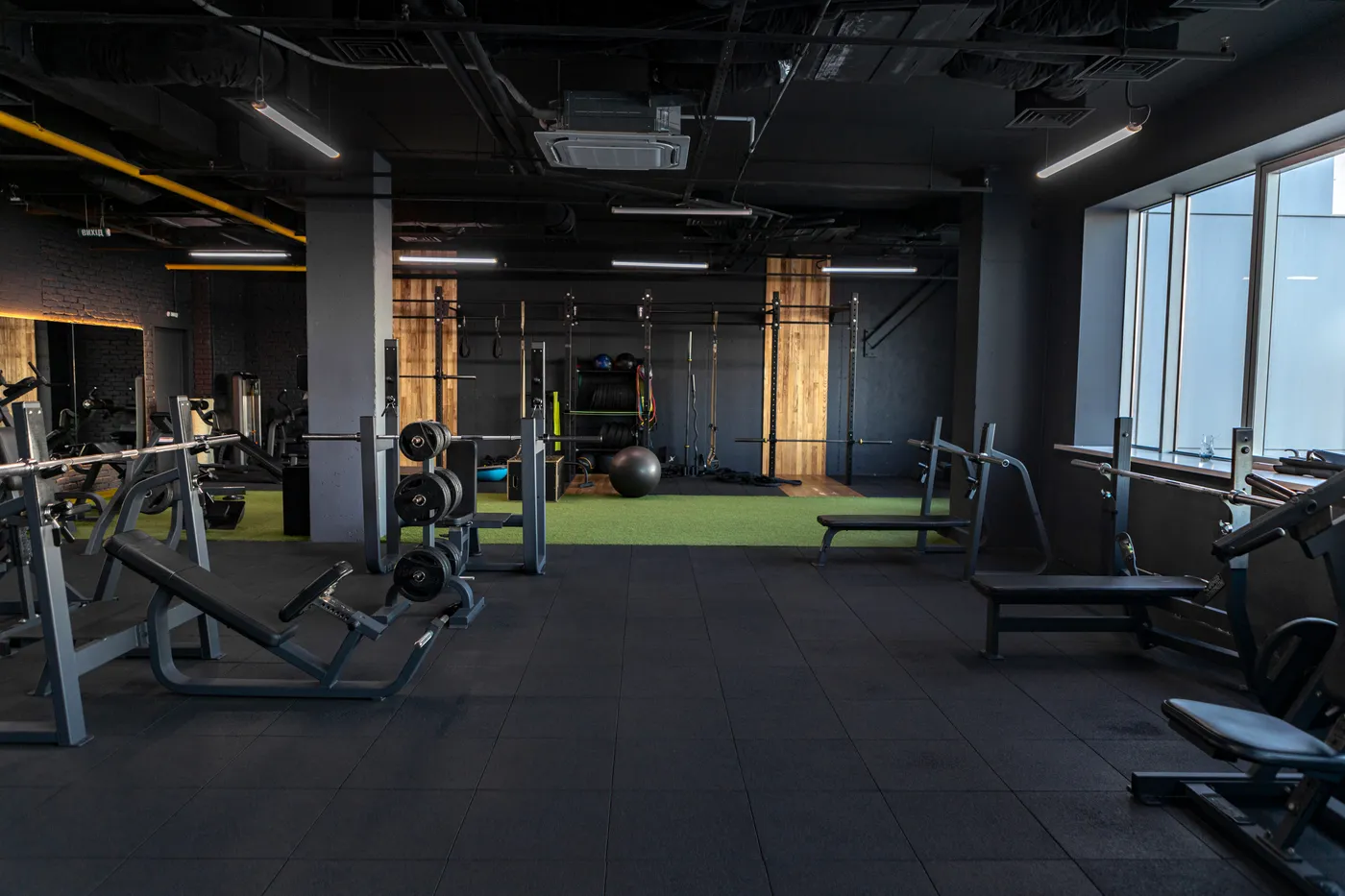
The rack pull is a deadlift that starts from the safety pins of a squat rack set around knee height instead of from the floor. It removes the hardest part of the deadlift, the first pull off the ground, and keeps the part most people can do well: the hinge closing and the hips finishing.
It has two very different jobs on this floor. For people who cannot yet reach the floor with a long spine, it is the deadlift they do this block. For experienced pullers, it is a heavy lockout drill, and that is where it needs a coach, because pins set high enough let anyone move a frightening number.
What it trains
Glutes and hamstrings through the top half of the hinge, the upper back and grip under loads that a floor deadlift cannot reach, and the trunk's ability to stay long while a heavy bar hangs from it. What it does not train is the leg drive off the floor, which is why it never replaces the conventional deadlift for anyone who can do one.
Setup
- Set the safety pins so the bar rests just below the kneecap, or wherever your hinge reaches with a long spine; the coach sets this, not the plates.
- Stand with the shins touching the bar, feet under the hips, and hinge down to it with the hips high and the shins close to vertical.
- Grip just outside the legs, pull the slack out of the bar until it is tight against the pins, chest lifted, lats switched on.
- Stand up by driving the hips forward, finish tall with the glutes, then hinge the bar back to the pins under control and let it settle before the next rep.
The cues we use
- Pins for the hinge, not for the number
- Tighten against the pins before you pull
- Stand up, then stop: the finish is tall, not backward
Common faults, and the fixes
| Fault | Why it happens | The fix |
|---|---|---|
| Bouncing the bar off the pins | Dropping the bar onto the steel and using the rebound turns a set of five into one real rep and four cheats | Let the bar settle dead on the pins and re-tighten every rep; a coach will call the set if the rack starts clanging |
| Pins set too high | At mid-thigh the bar can be shrugged up with a nearly straight body, so the hinge disappears and the lift becomes a grip test | Drop the pins until a real hinge is needed to reach the bar, even if that means less weight. Knee height is the usual ceiling |
| Upper back rounding under an ego load | The pins make big plates available before the back can hold them, and the shoulders roll forward to cope | Cap the load at what the coach set from the floor deadlift, and pull with the chest lifted and the lats tight |
| Leaning back at the top | Finishing by pushing the hips through into an arch feels like a stronger lockout but loads the lower back for no benefit | Stand to vertical and stop; squeeze the glutes rather than the spine. The form basics page shows the finish |
The ladder
Easier: Romanian deadlift — When the hinge itself is not yet learned; the RDL teaches hips-back with a light bar before pins and plates enter the picture
Harder: Lower pins, then the floor — For the entry job: one pin hole lower every block until the bar starts from the ground. For the lockout job: the floor deadlift stays the main lift and the rack pull stays its assistant
How it is loaded here
The loading rule depends on the job. As an entry deadlift it is loaded like an RDL: sets of five to eight, weight climbing only when every rep starts dead on the pins with a long spine, and the pins moving down before the plates go up. As a lockout drill for experienced pullers it is programmed in low reps, modestly above the floor deadlift and capped there; the coach sets the ceiling from your floor pull, because the ego trap is real and a rack pull twice your deadlift teaches your back nothing except how to round. Grip is often the first thing to give out at these loads, and that is treated as information, with the farmer carry added rather than the rack pull dropped. On the small group strength floor it appears in a hinge slot for a block at a time, not as a permanent fixture.
When we swap it
- grip failing well before the hips: Lighter rack pulls with a pause at the top, and carries on the side; grip catches up faster than most people expect
- a back that is currently sore rather than historically fussy: The cable pull-through and the RDL, assessment first; the rack pull returns when the back is quiet
- a rack not free: Romanian deadlifts to the same height cover the entry job for the day; the lockout job simply waits a session
Common questions
How high should the pins be?
At or just below the kneecap for most people, and lower as soon as the hinge allows. The question a coach asks is whether you can reach the bar with a long spine and vertical shins; the pin height is whatever makes that true today, not a fixed setting.
Why won't my coach let me load it heavier than my deadlift?
Because past a modest margin the extra weight is carried by rounding and by the hands, not by the hips, and the carryover to the floor pull disappears. A rack pull slightly above your deadlift, done with a perfect finish, is the whole benefit; the rest is plate-loading theatre.
Is a rack pull the same as a block pull?
Close cousins with different start points. A rack pull starts from the pins with the bar dead on steel; a block pull starts from plates raised on a platform and keeps the floor-deadlift setup with a shorter range. Here it is coached from the pins, and the hinge pattern ladder treats the two as the same rung.