
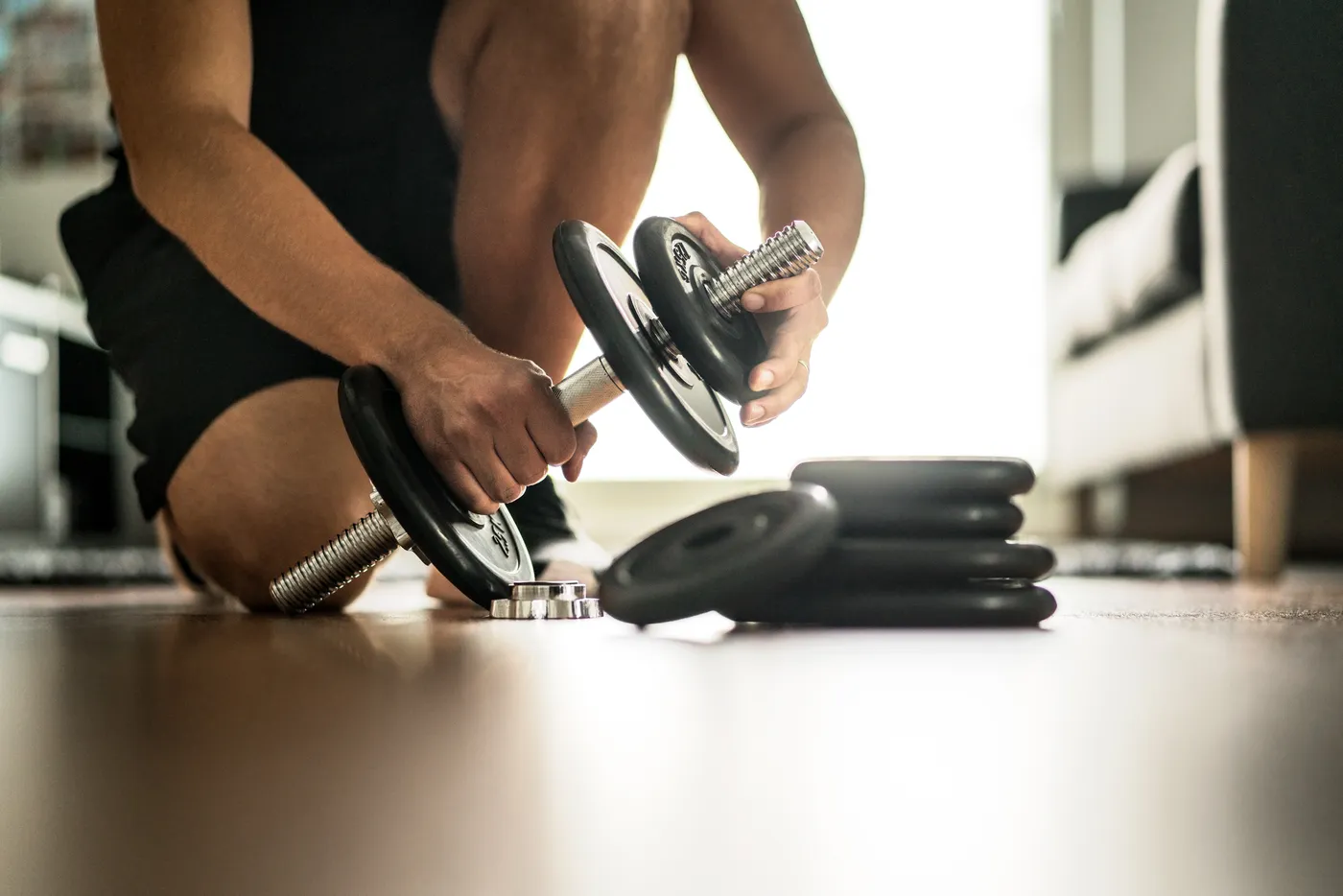
Off-ice strength for adult hockey players is mostly about the groin and the hips: strong adductors so the stride does not tear them, single-leg power so the first three strides are yours, rotation from the hips for the shot, and a lower back that can tolerate the skating stance. A summer block of two or three sessions a week builds it; one session a week in season holds it.
Beer-league and rec hockey on North Shore ice has a specific shape: late ice times, a body that sat at a desk all day, no warm-up beyond a lap, and then a sport that demands the most sudden sideways push in recreational sport. The injuries follow the shape, and so does the fix.
Why rec hockey hurts in the groin and the lower back
The skating stride is a push out and back against the inside of the leg, so every stride loads the adductors, and a stop or a crossover loads them harder. In a player who sat all week, those muscles are short, weak and cold when the puck drops at 10:30 pm. That is where the groin pulls come from. The lower back is the other bill: the skating stance flexes the hips and asks the back to hold an arch for an hour, and hip flexors that shortened at a desk pull the pelvis forward until the back is doing the hips' job.
Neither problem is fixed by stretching alone. Both are fixed by strength in the positions the ice demands, built off the ice, where the loads can be chosen.
Adductor strength: the Copenhagen idea, with what is in the room
The single most useful off-ice exercise for a hockey player is direct adductor strength, and the version physiotherapists reach for is the Copenhagen adductor exercise: a side plank where the top leg is supported and the bottom leg lifts to meet it, so the inner thigh of the top leg holds the whole body. Here it is coached with the top foot held by a coach or a training partner, starting short-lever with a bent knee and a few seconds of hold, and progressed to a straight leg and repeated lifts. It is hard. Nobody starts with the full version.
Around it sit the loaded sideways patterns. The lateral lunge loads the adductor at length with the trailing leg straight, which is the skating stride in slow motion, and the Cossack squat takes the same shape deeper.
Single-leg power: the stride is one leg at a time
Skating is alternating single-leg pushes, so the strength that transfers is single-leg strength and the power that transfers is horizontal hip extension. The split squat is the base, loaded with dumbbells and progressed by weight and by the distance the rear foot sits back; the reverse lunge follows it. The broad jump is the power expression: a few maximal jumps with a stuck landing, early in the session, teach the hips to push the ground away the way the first stride does.
The dose is small on purpose. Three to five broad jumps, two or three sets, is enough; jumping until tired trains the opposite of the first-stride explosiveness a player wants.
Rotation for the shot, anti-rotation for the back
A wrist shot or slap shot is a weight transfer from the back leg into a rotation of the hips and trunk, with the stick arriving last. Rotational throws with a medicine ball and the cable woodchop train that sequence with the hips leading. The Pallof press trains the opposite skill, refusing rotation, which is what the trunk has to do every time a check arrives or a skate catches a rut, and it is the exercise most likely to quiet a hockey player's lower back.
The back itself gets hinge strength, Romanian deadlifts and deadlifts progressed carefully, and hip flexor length work between sets, the 90-90 hip switch and the world's greatest stretch, so the pelvis stops tipping forward in the skating stance.
A summer block and an in-season dose
The off-season is where the strength gets built, and for rec hockey that is May to August. Two or three sessions a week, heavy on the main lifts, with the adductor work and the power dose in every session, and conditioning shaped like a shift: short, hard treadmill intervals with generous rest rather than steady cardio.
| Summer block (May to August) | In season (September to April) | |
|---|---|---|
| Sessions a week | Two or three | One |
| Main lifts | Squat and hinge, heavy, load rising each block | Held at a moderate load |
| Adductor work | Copenhagen progression plus loaded lateral lunges | Kept every session, lighter |
| Power | Broad jumps, medicine-ball throws | A few jumps to keep the pattern |
| Conditioning | Treadmill sprint intervals, shift-length efforts | The games supply it |
In season the one session goes the day after ice, never the day before, and it is short. Late games and 6 am sessions do not mix, so most players book an evening slot on a non-game day; doors are open until 8 pm, seven days a week, and sessions are booked one at a time on the live schedule, so a rescheduled game moves the lift instead of cancelling it.
Where this happens
Everything above is ordinary coached strength work on a rig with squat racks, dumbbells, medicine balls and cables, which is what personal training here is built from: a coach-prepared session, individual loads, a coach who knows your history. Two teammates can book the same session and lift different weights. A player coming back from a groin strain or a back that has flared more than once usually starts with 1-on-1 personal training so the assessment and the physiotherapist's notes shape the first block.
Common questions
I play once a week and sit at a desk the rest of it. Is that the problem?
Largely, yes. One hard hour of sudden sideways pushing on a body that has done nothing sideways since last week is the classic groin-strain recipe. The fix is one or two sessions of the adductor, single-leg and hinge work above, so the week has some load in it besides the game.
Should I stretch my groin more, or strengthen it?
Strengthen it, at length. A muscle that is strong in a stretched position tolerates the stride; a muscle that has only been stretched does not. Lateral lunges and the Copenhagen progression do both jobs at once. Stretching alone, right before a late game, is the part most players already do and it has not been enough.
How far before the season should the summer block start?
Twelve weeks before the first game gives two full training blocks and a taper into the season. Starting in May for a September league is ideal; starting in August still helps, mostly with the groin work, and the heavy lifting simply continues into the season at a lower dose.
I had a groin strain last season. Can I start this?
After a physiotherapist has cleared it and, ideally, with their notes. Adductor injuries respond well to progressive strengthening, which is why the Copenhagen exercise came out of rehab in the first place, but the starting point and the ramp should come from the clinician. A coach then builds the rest of the program around that plan.
Does skiing conditioning cover the same ground?
Some of it. Both sports live on single-leg strength and rotation, and the ski and snowboard conditioning page overlaps on landing mechanics. Hockey adds the adductor emphasis, the horizontal power of the stride and the shift-shaped conditioning that skiing does not need.