Lower Lonsdale might be the easiest neighbourhood in Greater Vancouver to be accidentally fit in. The geography does half the work — every trip inland climbs, every trip home rolls back down to the water — and the rest is done by a waterfront that invites walking, a plaza that reprograms itself with the seasons, and a flat seaside trail stitching the shoreline together. You don't have to schedule movement here; mostly you have to stop avoiding it.
Consider this a walking tour of the possibilities: the Spirit Trail in both directions, the Shipyards' yearly rhythm, the hills and stairways, the loops locals actually use, and — eventually — where structured training fits into a neighbourhood that hands out so much of it for free.
A neighbourhood that tilts
Stand at Lonsdale Quay and look north: the street rises away from you and keeps rising. That grade is the defining fact of life at the bottom of Lonsdale, and residents split into two camps — those who resent it, and those who quietly understand it's a free gym membership. Walk up for your errands and roll back down with the bags, and you've worked your legs and lungs without ever changing into athletic wear; the physiology of why that genuinely counts is laid out in whether hill walking counts as exercise.
The other defining fact is the SeaBus. A commute that starts and ends on foot builds walking into both ends of the workday, at a volume most drivers never accumulate — roughly twelve minutes across the harbour, bracketed by movement whether you planned any or not.
The Spirit Trail, in both directions
The Spirit Trail is the neighbourhood's horizontal axis — a flat, mostly paved waterfront greenway that compensates for all that vertical. Head west and it carries you past Waterfront Park and the marinas toward Mosquito Creek; head east and it threads through the Shipyards along the working harbour. Either direction gives you an easy out-and-back of whatever length the morning allows, with the water for company the whole way.
It's a shared path — walkers, runners, cyclists, dogs, strollers — so its culture is unhurried by design. Runners planning to use it seriously should read the Spirit Trail running guide for etiquette and seasonal footing; everyone else needs only comfortable shoes and, in winter, a rain shell they trust. The trail has been extended in phases over the years, so the municipal maps are the authority on where it currently begins and ends.
The Shipyards calendar
The Shipyards District has become the neighbourhood's outdoor living room, and its year has a rhythm worth learning. Warm months bring markets, festivals, and crowds to the plaza and pier; in the cold ones the plaza trades water play for skating. Programming shifts year to year, so check the City of North Vancouver's event listings for what's actually on — this guide won't pretend to be a calendar.
From an active-living angle, the district matters less as a workout venue than as a destination that gets people moving: the evening stroll that ends at the pier, the weekend loop that happens because something is on. Never underestimate infrastructure that makes walking the obvious choice.
The vertical workout hiding in plain sight
Between the waterfront and the heights, public stairways and steep blocks stitch the slope together — connectors locals use as shortcuts and, increasingly, on purpose. We'll skip the step counts, partly because they vary and partly because scouting your own staircase is half the fun; stair workouts in North Vancouver covers how to turn a found staircase into a structured session.
Dog owners figured this out long ago. The standard Lower Lonsdale dog walk — flat along an avenue, a climb chosen according to everyone's mood, home on the descent — is interval training wearing a leash. The east-west streets supply the recovery; the north-south ones supply the work.
Loops locals actually walk
A few honest suggestions, no distances attached, because your pace and your detours will rewrite them anyway:
- The waterfront out-and-back: Quay to the Shipyards pier and along the water as far as time allows — flat, scenic, and busy enough to feel companionable
- The lunch square: downhill on whichever street you're on, west along the water, back up a parallel street — a loop with a built-in climbing finish
- The market haul: groceries at Lonsdale Quay Market carried home uphill — errand and training in a single trip
- The rainy-day shortie: a brisk circuit of the sheltered stretches around the Quay for when the sky is doing its November thing
None of this requires gear, memberships, or resolve — which is precisely the point. A neighbourhood that makes movement incidental will out-train any January resolution.
Where structured training fits
Honesty requires a caveat: the neighbourhood's free offerings are cardio-shaped. The hills and the trail build an excellent walking engine, but they leave strength — the pressing, pulling, and loaded work that keeps hips and shoulders capable for decades — almost entirely unaddressed, and from November to February the rain tests even devoted outdoor habits.
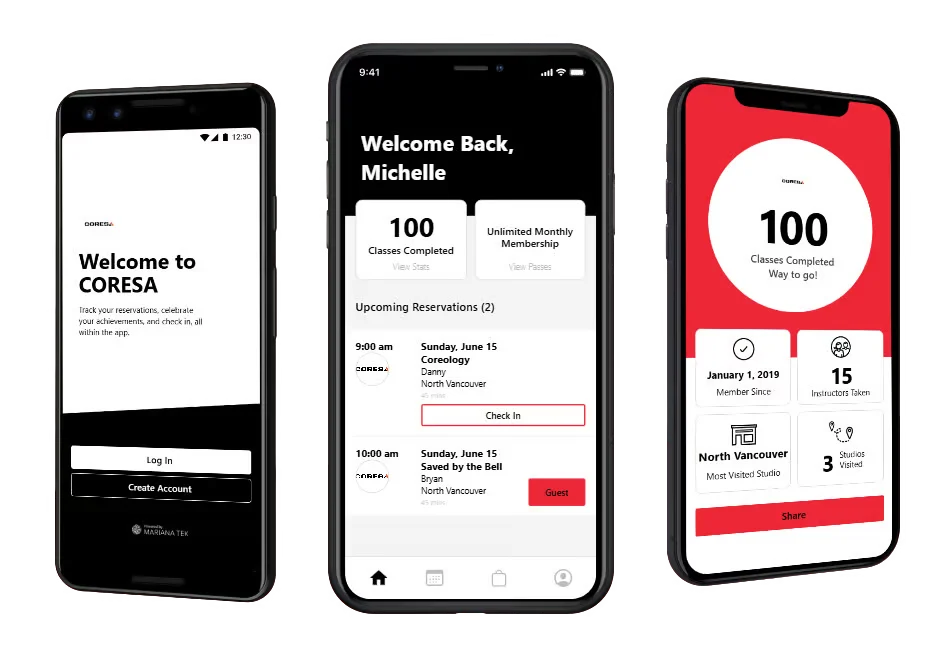
That's the gap structured training fills, and here it's fillable on foot: Coresa sits on 3rd Street West, a short climb from the Quay, running coached sessions from 6 am daily — the case for a studio in Lower Lonsdale is really the case for keeping every part of an active life inside walking distance. If you're curious, the free 15-minute consult fits comfortably inside the lunch square.
Common questions
Can you live car-free in Lower Lonsdale and stay active?
It's arguably easier without the car: the SeaBus, the walkable grid, and the Quay's shops mean daily life generates its own step count, hills included. The trade-off shows up mainly for mountain trips, which take more planning by transit.
When is the waterfront quietest for a peaceful walk?
Weekday early mornings, when the trail belongs to runners, dog walkers, and commuters heading for the SeaBus. Summer weekend afternoons around the Shipyards are the opposite pole — lively and fun, but not peaceful.
Is the Spirit Trail manageable with a stroller or mobility aid?
It's designed as an accessible greenway, and the surfaces are largely paved and gentle, which makes it one of the friendlier options on the North Shore. Sections and connections change as the trail develops, so check municipal maps for current conditions.
What do active locals do when it rains for two weeks straight?
Mostly they buy better rain gear and keep walking. The harder question is what happens to actual workouts — which is where indoor options earn their keep; staying fit through a North Vancouver winter is the survival manual.