A small group training session runs like a well-rehearsed hour: you arrive a few minutes early, the coach briefs the room on the day's stations, then the timer takes over and you rotate through coached blocks of work until a finisher and a cooldown close things out. Most studios run the format in roughly 45 to 60 minutes door to door. The whole thing is choreographed so the coach spends almost none of it talking at the front — and almost all of it coaching individuals.
The first ten minutes: arrival and briefing
You walk in, drop your things, and start moving — usually an easy raise-the-temperature piece while the group gathers on the floor. The coach checks in as you go: how you slept, whether anything's cranky, what you handled last time. Then the briefing: each station demonstrated once, scaling options shown, questions taken. It's kept short on purpose — a tight briefing buys coaching minutes later.
This is also why turning up with time to spare matters more here than at a big gym: miss the briefing and someone has to re-run it just for you. The rest of the unwritten rules live in small group training etiquette.
The middle of the hour: stations on a clock
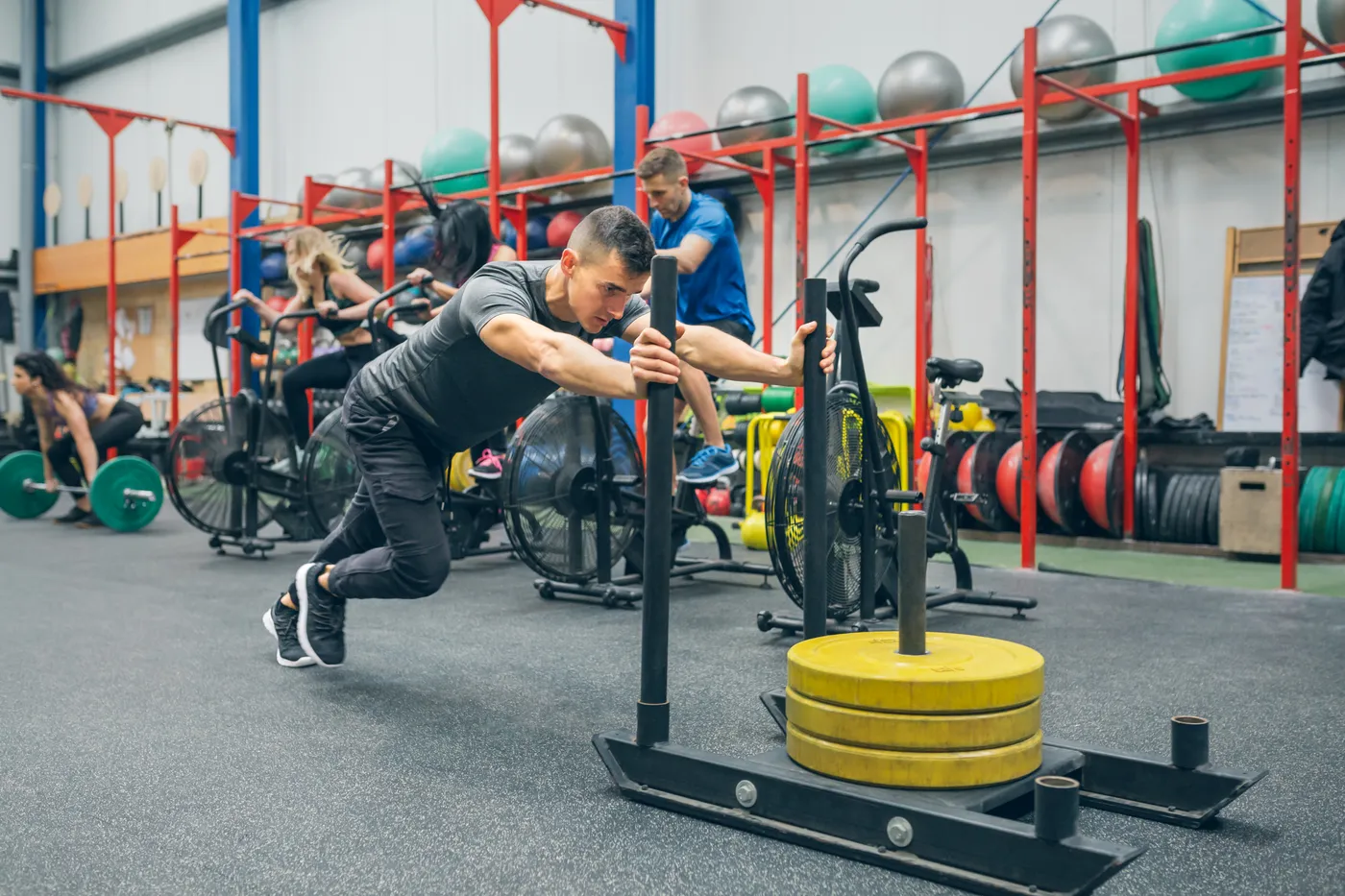
The bulk of the session is timed stations. In Coresa's version, strength and resistance stations sit beside treadmill efforts, and total-body conditioning work — a few minutes per station, a controlled transition, repeat. The timer, music, and lighting run the room, and live heart-rate displays let you see whether an effort was genuinely an effort.
While the clock runs, the coach floats. You'll hear brief individual cues, see loads quietly adjusted, watch substitutions handed out. Transitions double as micro check-ins — a coach who wants to change your plan for the next station will catch you between bells.
The last stretch: finisher and cooldown
Many sessions close the working portion with a finisher — one short, shared, honest effort that empties the tank in a controlled way. It's the one moment the room works as a unit rather than in parallel, and it tends to be everyone's favourite or least favourite ninety seconds of the week, depending on the day.
Then the downshift: breathing slows, movement gets easy, some targeted stretching lands where the session did its work. If you enjoy that closing chapter enough to want a whole hour of it, that's exactly what stretch and recovery sessions are for.
Before you book your first one
If you're new, the hour is busier in the reading than in the living — the coach steers you station to station, and no memory of the briefing is required. Whether the format suits a newcomer at all is its own question, answered in is small group training good for beginners; the day-one packing-and-prep side is covered at your first class.
Common questions
Is every session the same workout?
No — the structure repeats while the contents rotate. Patterns and stations change across the week so strength, conditioning, and skill work each get their turn, but the familiar shape means you never have to relearn how the hour operates.
Can I rest mid-station if I need to?
Yes — the timer defines the window, not a rep quota. Breaking a station into work-and-breathe chunks is completely normal, and a coach would much rather see honest pacing than watch form fall apart to beat a clock.
What if the music and lighting aren't my thing?
Fair question — atmosphere is personal. The room runs with music and low lighting because most people work harder in it, but nothing about the training depends on that. Book a free consult call, ask exactly what a session is like, and judge whether it would energize or annoy you before you book anything.