
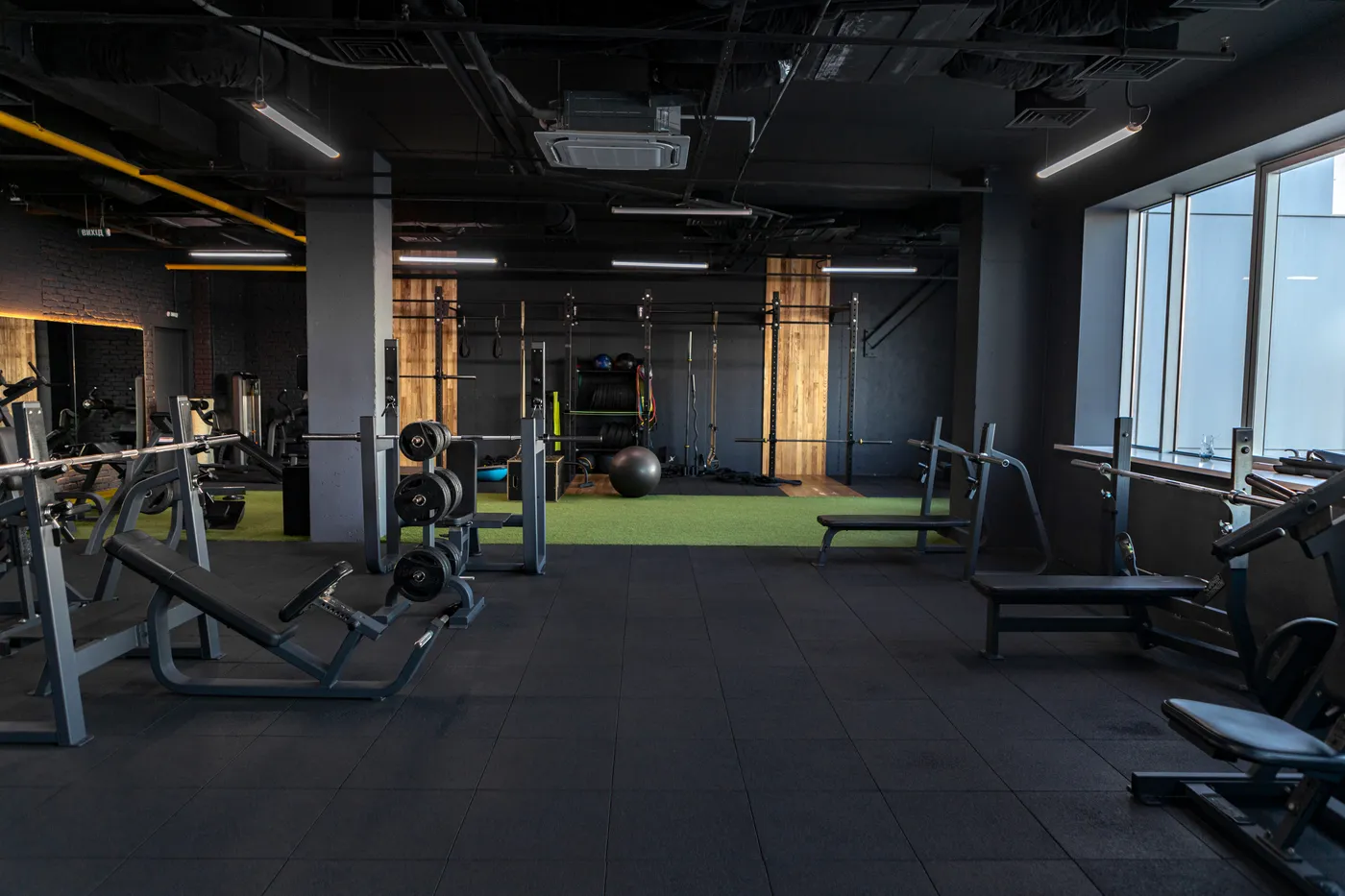
Update, October 2026: Coresa no longer runs small group training; coaching is now personal training, 1-on-1 or semi-private. The arithmetic below is the reason the small end won.
Eight is the most consequential number in this studio, and it was not chosen for the brochure. It comes out of an arithmetic problem every group-training operator solves one way or another, usually without showing the working. Here is the working.
One coach. One session. Each person performing somewhere around fifteen to twenty sets of real work. The question every cap answers is: what fraction of the sets that matter can one professional actually watch?
The arithmetic nobody prints
Not every set needs eyes. The third set of a movement someone has owned for two months runs safely on autopilot. The sets that matter are the heavy ones, the new ones, and the ones performed by somebody tired enough to lose position — in a typical session, maybe a third of the total. At eight people, that is a few dozen moments an hour, spread across a room a coach can cross in seconds: demanding, and doable. The coach can also hold eight histories in their head — whose shoulder is cranky, who is chasing a first chin-up, who slept badly.
At twelve, the watchable fraction shrinks and the coach starts triaging. At twenty, supervision becomes choreography: the instructor runs the room, keeps energy and timing, and catches the loudest errors — which is a genuinely different job, done well by good instructors, and no longer coaching individuals.
We run both jobs, and label them honestly
That second job is our HIIT class: up to twenty, instructor-driven, built for energy — and we say exactly that on its page rather than calling it coaching with a crowd. The first job is small group training, and the cap of eight is what makes its promises physically possible: loads chosen for you, corrections mid-set, a record that decides when weight goes up. A studio claiming those outcomes at sixteen people per coach is describing a wish.
What the cap costs, and why we pay it
Small rooms are expensive rooms. Every empty ninth slot is revenue a bigger cap would collect, and the price of coached sessions reflects that arithmetic too — the cap is most of the answer to why studios cost more than floors, as our comparison pages keep saying plainly. We pay it because the cap is the product: the difference members actually feel between a coached session and a supervised workout lives in those watched sets and remembered histories. Drop by during open hours, stand in the room and count for yourself — where the coach is, who gets spoken to, what gets written down. The number holds up better in person than any post about it.
Common questions
Is eight the industry standard for small group training?
There is no standard, which is exactly why we publish ours. The label gets used from four people to fourteen; the honest question at any studio is the maximum, not the name.
What if a session only has three people booked?
Then three people get an unusually good ratio that day. The cap is a ceiling, not a target, and session sizes vary by hour.
Why not cap at six, or four?
Lower caps buy more attention per person at meaningfully higher prices — that trade exists in the market as semi-private training. Eight is where the coaching stays genuinely individual and the price stays defensible for two-to-four sessions a week, which is the frequency results actually come from.