
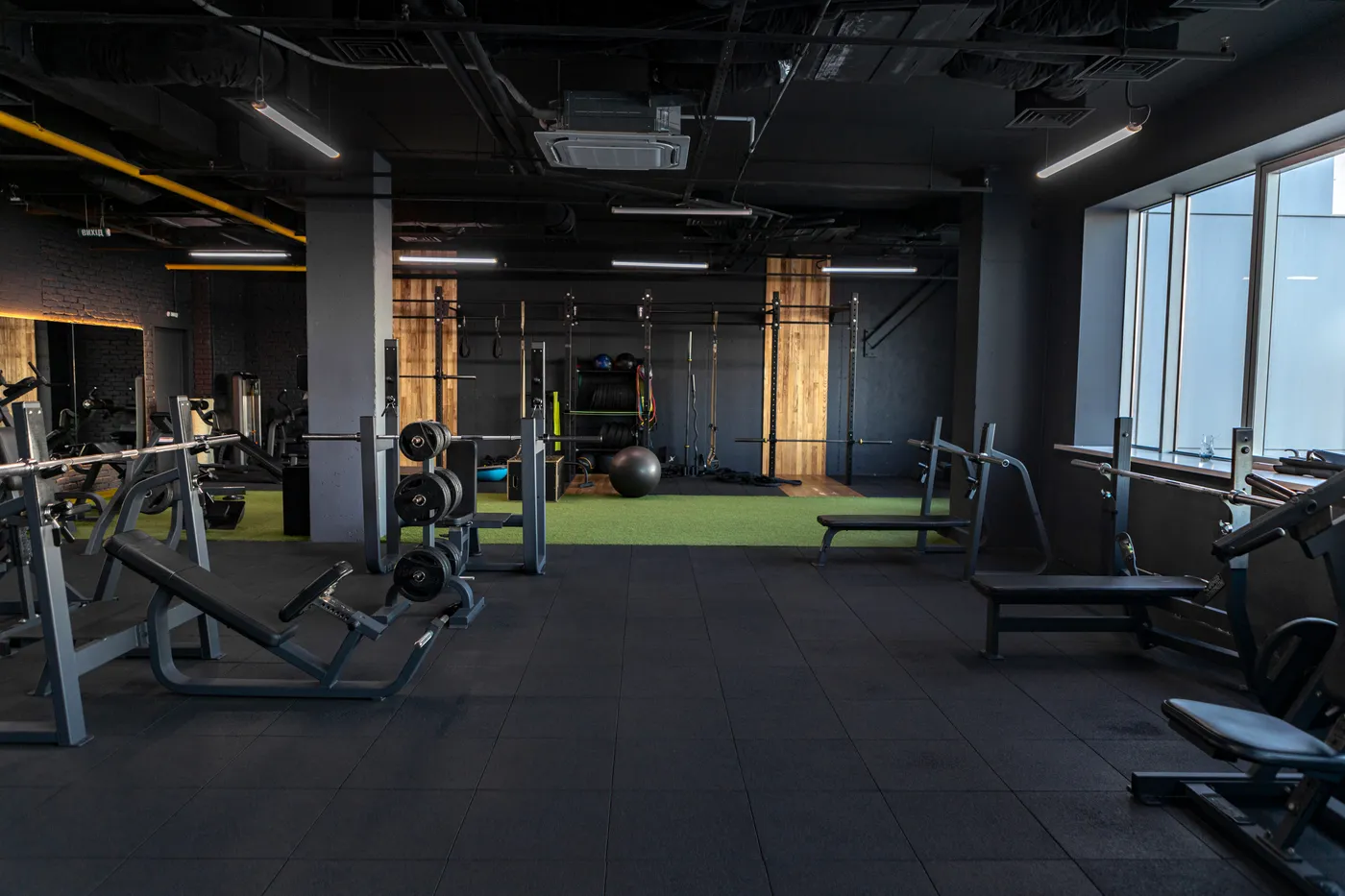
Three full-body days is the quiet consensus of strength programming: frequent enough that every pattern gets practised twice-plus a week, spaced enough that recovery keeps up, flexible enough that a missed day dents rather than derails. This template rotates the library's patterns across three sessions so no day repeats and no pattern waits long.
Each day leads with a different big lift — squat, hinge, push — and the accessories rotate behind them. The structure is the point; the specific variants swap freely as the library's ladders progress.
Time: about 45 minutes
Equipment: dumbbells and/or barbell, cable machine, rack
For: Anyone who can train three days a week and wants the most reliable return on them; the sweet spot between minimum and maximum.
Not for: Absolute beginners in week one — run the beginner dumbbell session until its movements feel routine, then graduate here.
Warm-up
- Three to five minutes easy cardio.
- A light rehearsal set of the day's lead lift, then a second slightly heavier one.
- Working sets begin when the bar or dumbbells feel familiar, not before.
Day 1 — squat leads
| Movement | Sets × reps | Effort | Note |
|---|---|---|---|
| Back or goblet squat | 4 × 5–6 | 2 reps in reserve | The week's heaviest leg work |
| Incline push-up or cable chest press | 3 × 8–10 | 2 in reserve | |
| Single-arm cable row | 3 × 8 each side | 2 in reserve | The anti-rotation bonus comes free |
| Standing calf raise | 3 × 10–12 | Slow lowering | North Shore insurance, per the page |
| Hollow hold | 3 × 15–20 seconds | Contact never breaks |
Rest: 2 minutes after squat sets; 60–90 seconds elsewhere.
Day 2 — hinge leads
| Movement | Sets × reps | Effort | Note |
|---|---|---|---|
| Conventional or Romanian deadlift | 3 × 5 | 2 in reserve | Reset every rep; the page's standards apply |
| Overhead press | 3 × 6–8 | 2 in reserve | |
| Lat pulldown or chin-up ladder | 3 sets | Quality reps | Whatever rung of the ladder you occupy |
| Split squat | 2 × 8 each leg | 2 in reserve | The single-leg audit |
| Farmer carry | 2 × 40 steps | Heavy, tall |
Rest: 2 minutes after deadlifts; 60–90 seconds elsewhere.
Day 3 — push leads, conditioning closes
| Movement | Sets × reps | Effort | Note |
|---|---|---|---|
| Dumbbell shoulder press | 4 × 6–8 | 2 in reserve | |
| Heels-elevated goblet squat | 3 × 10 | 2 in reserve | The quad-biased change of angle |
| Barbell or cable row | 3 × 8 | 2 in reserve | |
| Medicine ball slam | 3 × 8 | Full intent | Power finisher — every slam honest |
| Suitcase carry | 2 × 30 steps each side | Level shoulders |
Rest: 90 seconds after presses; the finisher pair runs brisker.
Make it harder or easier
Harder: Ride each lift's ladder: reps to the top of the range, small jump, repeat. Every six-to-eight weeks, an easier week at reduced loads — the deload entry explains why the backing-off is part of the progress.
Easier: Three sets on the lead lifts, two everywhere else, efforts at three in reserve. The week still covers everything twice.
Common questions
Which days should I train?
Alternating with rest days — the classic Monday, Wednesday, Friday shape — or any spacing that never stacks all three together. The gaps do the building.
Why full-body instead of a body-part split?
At three days, full-body practises every pattern more often, forgives a missed day better, and matches how mixed real-life demands arrive. Splits earn their keep at higher frequencies than this.
Where does HIIT or cardio fit?
One interval session and one steady zone-2 session on the off days is a complete week for most goals. More than that starts taxing the lifting's recovery — the concurrent-training entry maps the interference.