
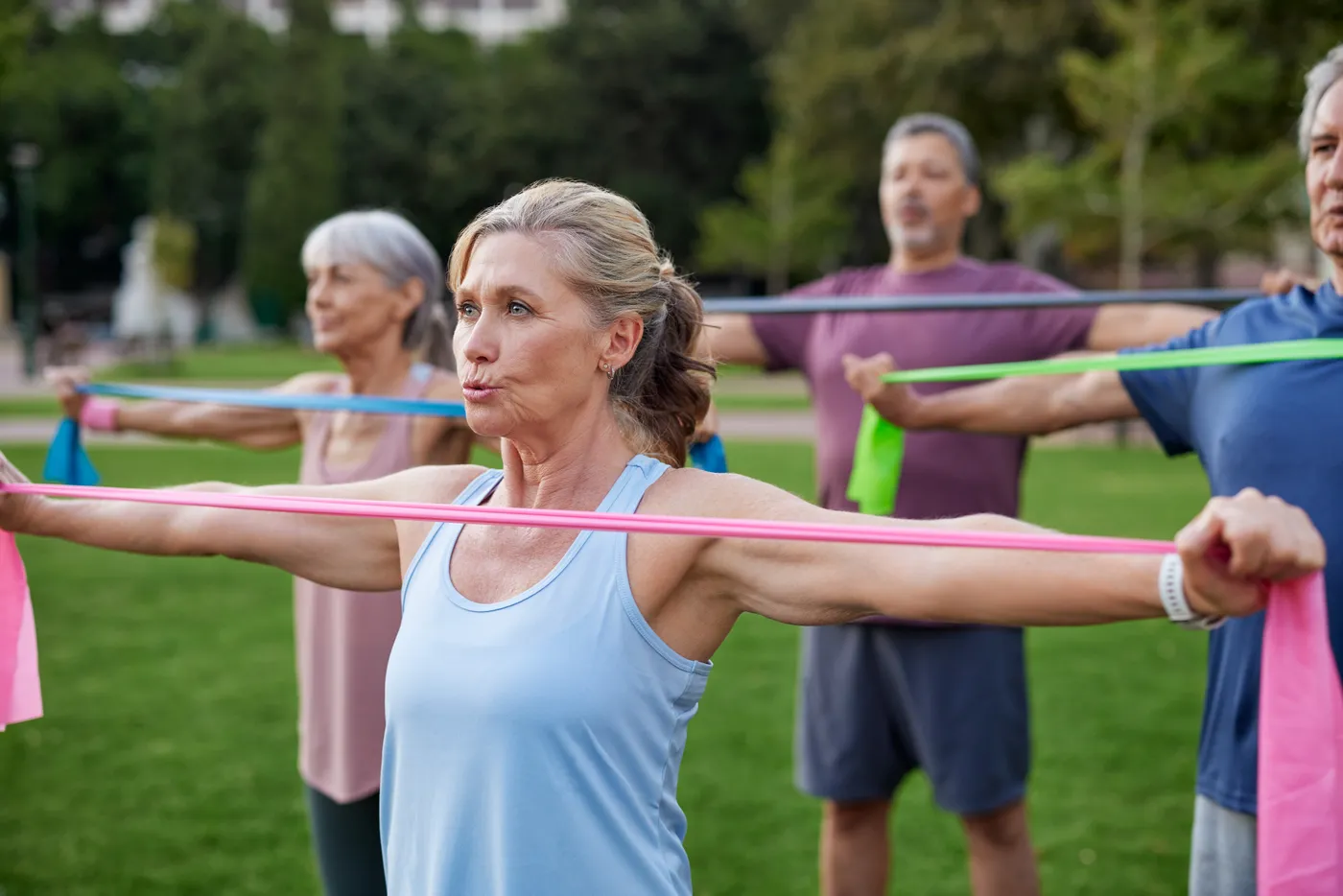
For most people with osteoporosis, appropriately supervised strength training is not just safe — it is part of the modern management picture, because bone responds to loading and because the strength and balance built prevent the falls that fractures actually come from. The non-negotiable first step is your clinician: bone density numbers, fracture history and medications genuinely change the prescription, and this page is general information, not a green light.
What has changed in recent years is the direction of expert caution: away from bubble-wrapping and toward supervised, progressive loading — with a short, specific list of movements to avoid.
What the evidence direction supports
Research on supervised resistance training in lower-bone-density populations — including trials using genuinely heavy, well-coached loading — keeps returning encouraging findings: bone measures maintained or improved, strength and posture better, and safety records strong under supervision. Loading is the language bone speaks; the old instinct to protect fragile bone from all stress mostly guaranteed the continued fragility. Add the fall-prevention arithmetic — fractures need falls, and strength plus balance training is the best-evidenced fall repellent there is — and training becomes protective twice over, which is why the seniors page treats balance as a trained skill rather than a hope.
The specific cautions that survive scrutiny
The avoid-list is short and spinal: loaded or repeated flexion — deep forward rounding of the spine, especially under weight or momentum — is the pattern consistently flagged, which retires loaded toe-touches, crunch variations and rounded-back lifting rather than lifting itself. High-impact and high-fall-risk activities get individual judgement calls from your clinician. Everything else is mostly programming craft: hinge patterns taught with a held-long spine, anti-movement core work in place of flexion work, patient load progression, and impact introduced only as advised. A coach's role is executing that craft; defining its boundaries is the clinician's.
How to start, in the right order
Clinician first, with the actual plan named — "supervised progressive resistance training in a coached group of eight" is concrete enough to approve or amend, and ask specifically about impact and any movement restrictions. Bring the written guidance to a consult; it shapes movement selection from session one, and the swap-not-skip principle does the rest. A private session or two first is a reasonable on-ramp if confidence wants building. What should not happen: waiting for perfect bone density before starting, since the training is part of how the numbers and the fall-risk both improve.
Common questions
Can training reverse osteoporosis?
Improve and maintain bone measures, in some studies meaningfully — reverse is a stronger word than the evidence sells. The strength-and-balance benefits are the surer, larger prize either way.
Are deadlifts allowed with osteoporosis?
Hinge patterns with a long spine are often exactly what supervised programs build toward — it is rounded lifting that sits on the caution list, not lifting. Your clinician's read on your spine comes first; the coaching handles the rest.
What about osteopenia?
The same logic with milder stakes — and the best moment to build the habit, since loading now is the intervention for the trajectory. Clearance conversations are usually simpler at this stage.
Is walking enough for my bones?
Better than sedentary and weaker than loading — bone answers to meaningful stress more than to steps. Walking keeps its other virtues; resistance work is the bone-specific tool.